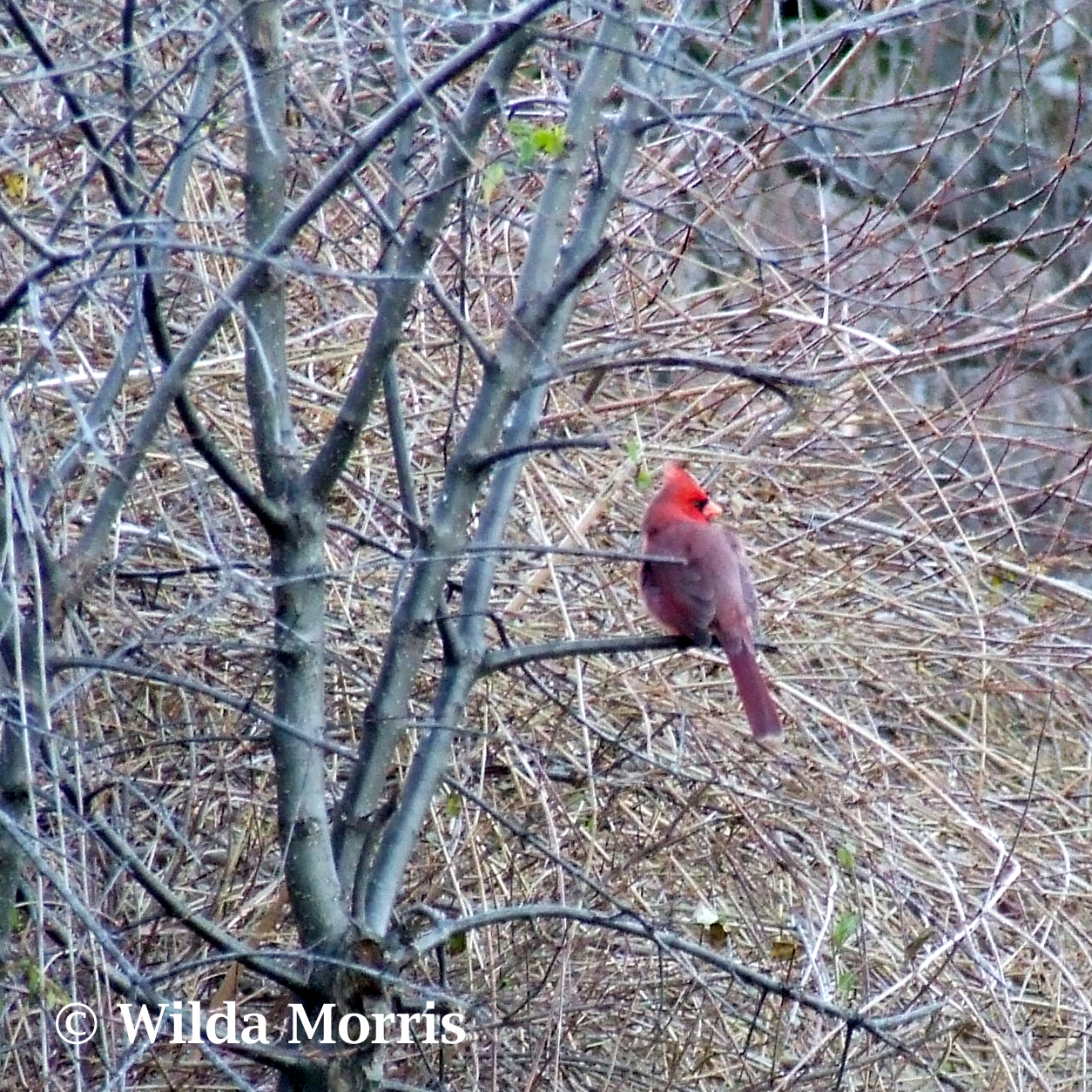
The Illinois state bird—the Northern cardinal—greeted me and two grandsons as we entered the Gateway Wetlands late one cold November afternoon. The northern cardinal is so popular that it has been chosen as state bird by seven states. Illinois school children were invited to vote; their selection of the cardinal was ratified by the Illinois Assembly in 1929.
It was a good choice for a number of reasons:
· The cardinal remains in Illinois all winter, unlike the bluebird, its closest competitor.
Find out what's happening in Bolingbrookfor free with the latest updates from Patch.
· They frequent a variety of Illinois habitats: from backyards to swampy areas such as the Gateway Wetlands; from woodlands to city parks; and from prairie and farm field to bird feeders, especially those offering sunflower seeds.
· The cardinal has several cheerful songs or whistles—and sings year-round, not only in the spring.
Find out what's happening in Bolingbrookfor free with the latest updates from Patch.
· And finally, cardinals are a treat for the eye. The male, in particular, in his bright scarlet feathers, is stunning. What more beautiful scene does winter offer than a male cardinal against a backdrop of Illinois snow?
Ten things you may not know about cardinals:
1. Cardinals were named for the College of Cardinals in the Roman Catholic Church. Their bright scarlet coloring reminded people of the equally bright robes or capes worn by the Catholic cardinals. Perhaps one kind of cap worn by some cardinals also reminded people of the bird’s crested head (see the photo of Cardinal Sodano at http://en.wikipedia.org/wiki/Cardinal_%28Catholicism%29. So far as we know, the Northern Cardinal does not select a pope for the bird kingdom.
2. The color of the plumage of the male cardinal is produced by the bird from pigments in its diet.
3. Cardinals fall prey to hawks, owls, and falcons. Snakes, squirrels, blue jays, chipmunks, skunks, possums, foxes and – yes – your cat may invade the nest, to the detriment of eggs and/or chicks. One wild, banded cardinal lived to 15 years and 9 months. The average lifespan, however, is much shorter, due to the exceedingly low survival rate of the young.
4. Cardinals were once considered good pets, but the Migratory Bird Treaty Act of 1918 made it illegal to cage and sell them.
5. You may sometimes see a bald cardinal. Possible explanations include the possibility that the bird is molting, and lost all his head feathers at once; the bird is infected with mites, lice or other parasites and, since he cannot reach his head with his beak cannot groom his head to get rid of them; or the bird is lacking something in his diet. It is possible that any of these may result in a bald and scruffy-looking cardinal.
6. Cardinals are said to be monogamous. Some say they mate for life, others that they practice the kind of serial monogamy made popular among North Americans by Hollywood, often choosing a new mate each spring. Researchers testing DNA have discovered that a sizable percentage of cardinals practice open marriage; a sizable proportion of the eggs in a cardinal’s nest were fertilized by a male other than the mate of the nest-builder.
7. Cardinal songs differ somewhat regionally because they learn their songs; they are not instinctive. Both male and female cardinals sing. This is somewhat unusual among song birds. You can hear ten different cardinal vocalizations, including a female-male duet (and other cardinal songs) at http://birds.audubon.org/birds/northern-cardinal.
8. The male feeds seeds to his mate, beak-to-beak, during courtship and also while she is on the nest. He also helps feed the young before they fledge.
9. Male cardinals are among the birds known to beat themselves against a window (seeming to want to get into the home or office). If this happens at your house, relax. He doesn’t want to enter—he sees his own reflection and thinks he is seeing another male who has invaded his territory. This generally happens only during the spring mating season. Just cover the window for a while so he doesn’t see himself, and he will desist.
10. Cardinals sometimes feed the young of other species. Most often, this applies to cowbirds. Cowbirds drop their eggs in the nests of other birds, and hope for the best. And who can resist that open, begging baby mouth? Most astounding, however, is the case of the cardinal responding to the open mouth of a goldfish. You can see a black-and-white photo of a northern cardinal feeding the goldfish at http://www.birds.cornell.edu/Publications/Birdscope/Summer2006/mistaken_identities.html. YouTube also has a video of a related species (black-headed cardinal) feeding goldfish.
It is cold in the Gateway Wetlands, but it is always a good place for a walk! You can park at the lot on Anna (off Janes Avenue), or on the street near the bridge on Feather Sound. There is also an entrance up Feather Sound from Walgreens.
© Wilda Morris