Community Corner
After 8 Long Years, Surgeon at Presence St. Mary and Elizabeth Receives Patent Approval on New Dialysis Shunt


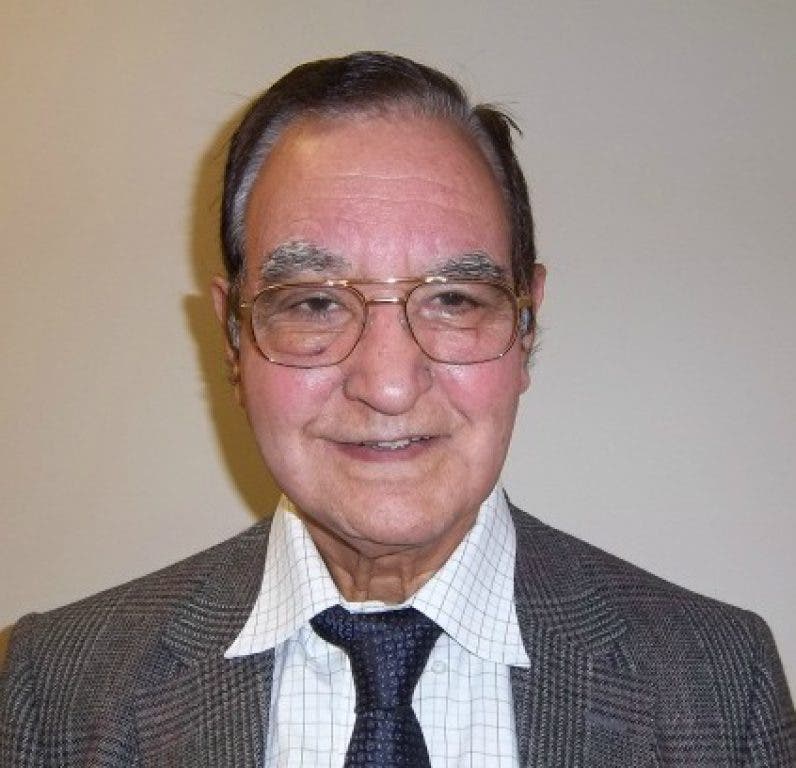
Chicago, Ill. – November 29, 2012 -- Nazir Khan, M.D., of Presence Saints Mary and Elizabeth Medical Center (PSMEMC) knows all about operating rooms. Last summer, the cardiovascular-thoracic surgeon showed he could successfully operate in a setting normally dominated by attorneys and engineers – a hearing room for the U.S. Patent and Trademark Office.
Persistence paid off for Dr. Khan who spent the last eight years seeking patent approval for anew Hybrid Arteriovenous Shunt for chronic renal failure patients on dialysis. On Oct. 9, Dr.Khan was granted a patent by the U.S. Patent and Trademark Office. His dream had come true.
In 2003, Dr. Khan, a Burr Ridge resident, came up with the idea for this first-of-its kind shunt that allows patients to be hooked up to hemodialysis, a process that purifies the blood when a person’s kidneys are not working properly.
Find out what's happening in Burr Ridgefor free with the latest updates from Patch.
The patented design affects two hemodialysis devices currently in use: the conventional hemodialysis shunt and the permacath double lumen catheter.
In a conventional arteriovenous (AV) shunt, a graft connects an artery to a vein, and blood at high pressure flowing into the vein can cause vein-wall damage. In 80 percent of the cases, the conventional shunt will lead to AV graft failure in three years. Dr. Khan invented a hybridarteriovenous shunt where the blood after dialysis goes into the right side of the heart without any contact with a vein wall. This design eliminates 80 percent of shunt failure.
Find out what's happening in Burr Ridgefor free with the latest updates from Patch.
A double lumen catheter uses venous blood for purification by the dialysis machine and is deposited back into the right side of the heart. This catheter comes out on the chest wall and this approach is associated with a higher rate of infection, poor performance and mortality. Dr. Khan’s hybrid shunt replaces the double lumen catheter – reducing the likelihood of infection and mortality.
“This new shunt only will be used in patients where peripheral access sites to the veins areexhausted and no longer options for treatment,” said Dr. Khan, who joined PSMEMC in 1983.
In 2004, Dr. Khan submitted his first application for a patent and was rejected by examiners, who cited four prior patents. Working with a patent attorney, Dr. Khan submitted applications for four years and was denied each time. At that point, he decided to handle the case himself without a patent attorney.
In 2010, Dr. Khan argued the case before the trial court of the Board of Patent Appeals and Interferences (BPAI) in Washington, D.C., and won 19 claims out of 20. Dr. Khan appealed to the court to reopen the case because the examiners’ assertions about prior patent rejections were irrelevant. The court agreed and reopened the case.
In June 2012, he finally had an opportunity to personally present his case before the BPAI in Washington, D.C. He presented his invention before a panel of three judges who heard the case in 25 minutes.
In August 2012, Dr. Khan learned that his shunt had been approved. The U.S. Patent and Trademark Office granted the patent on Oct. 9 – eight years after his initial application. Dr. Khan has begun discussions with a manufacturer for creation of the shunt. Once developed, Dr. Khan will seek approval from the U.S. Food and Drug Administration. Then he will be required to test the shunt on 10 to 20 patient cases. If all goes smoothly, Dr. Khan hopes to begin the clinical study in 2013.
“I was so very happy that eight years of struggle paid off,” Dr. Khan said. “I was persistent and it finally paid off.”
The patent is available online at http://www.google.com/patents/US20050215938.
Get more local news delivered straight to your inbox. Sign up for free Patch newsletters and alerts.