Health & Fitness
Enjoying Life With Knee Osteoarthritis
Living with knee arthritis does not mean you have to stop doing things you enjoy. You just may have to modify some activities to minimize pain and disability.
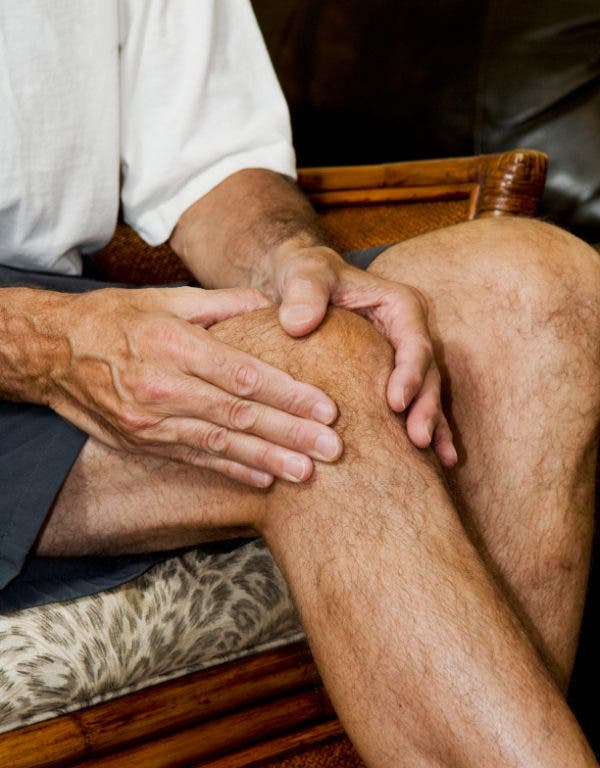
If you have osteoarthritis of the knee, you are not alone. One in five Americans live with knee arthritis. In fact, people are more likely to experience disability from knee arthritis than from heart disease.
So, what is it? Osteoarthritis of the knee is an inflammation of the knee joint that leads to wear and tear damage of the smooth cartilage in the knee. This cartilage coats the end of the femur and tibia bone in the knee, the upper and lower bones, respectively, and is similar to the shiny cartilage you might see on the end of a chicken or turkey bone. It also is found under the knee cap or patella.
Over time, it can wear away to the point that there is no longer a smooth surface for your joint to move, only bone rubbing against bone. This condition can lead to popping, clicking and grinding sensations in the knee. The knee can seem to “give way” and cause disabling pain with sports or everyday activities. With osteoarthritis, there also is degeneration of the meniscus, which is a C-shaped piece of a different type of cartilage that acts like a shock absorber in the knee. There are two of these shock absorbers, one on the inside of the knee and one on the outside. These can become frayed and worn out like the end of an old rope.
Find out what's happening in Burr Ridgefor free with the latest updates from Patch.
Unfortunately, there is no cure. However, living with knee arthritis does not mean you have to stop doing things you enjoy. You just may have to modify some activities to minimize pain and disability.
Here are five things you can do to continue enjoying life while living with osteoarthritis:
Find out what's happening in Burr Ridgefor free with the latest updates from Patch.
Avoid impact exercises. Exercises like jogging, competitive basketball and high-impact aerobics place a lot of stress on the knee joint and can make arthritis pain worse.
Don’t stop exercising. Even though impact exercise is often painful, there are many other ways to exercise that can be fun and help maintain fitness. Studies have shown that patients with osteoarthritis who continue to exercise have better outcomes in the long run. Walking, bicycling, and swimming are great ways to get a workout without stressing the knees. Playing golf and bowling also are good ways to work out if you enjoy those activities.
Maintain a healthy weight. Extra pounds are magnified when it comes to forces across the knee joint. Biomechanical studies have shown that regular walking places five times your body weight across the knee joint, and descending stairs seven times your weight. That means that even if you only lose 10 pounds, you are placing 70 less pounds of stress on your knee when you go down the stairs. A little bit can go a long way.
Try applying heat to your knee before starting an activity and ice when you are done. Heat can help loosen a stiff knee, and ice will help keep it from becoming swollen. This can minimize the pain and stiffness you feel after being active.
On bad days, try using over-the-counter pain relievers. These medications have been shown to provide relief from osteoarthritis pain. If you use them only occasionally, there are few side effects to worry about. However, if you need to use these medications daily or several times a week, check with your doctor to make sure they are not causing damage to your liver or kidneys from long-term use. Most people can use these medicines safely but it is best to be sure. If these medicines are causing problems for your body you can obtain over-the-counter or prescription ointments to rub on your knee to relieve pain. Many people also take glucosamine, chondroitin, or both, but unfortunately these supplements have not been shown to have any benefit in scientific studies.
It is normal to have good days and bad days with knee arthritis, but if you find you are having many more bad days than good days, you should check with your doctor to see if other treatment options are available.
Physical therapy, bracing and cortisone injections can help relieve pain. Prescription strength medication may also be available to help when over-the-counter remedies do not. When these interventions do not work, surgery may be recommended, although this should be considered a treatment of last resort when all else has failed. It is estimated that 90 percent of people with osteoarthritic knees never need surgery.