Health & Fitness
Yikes! It’s the Burners and Stingers
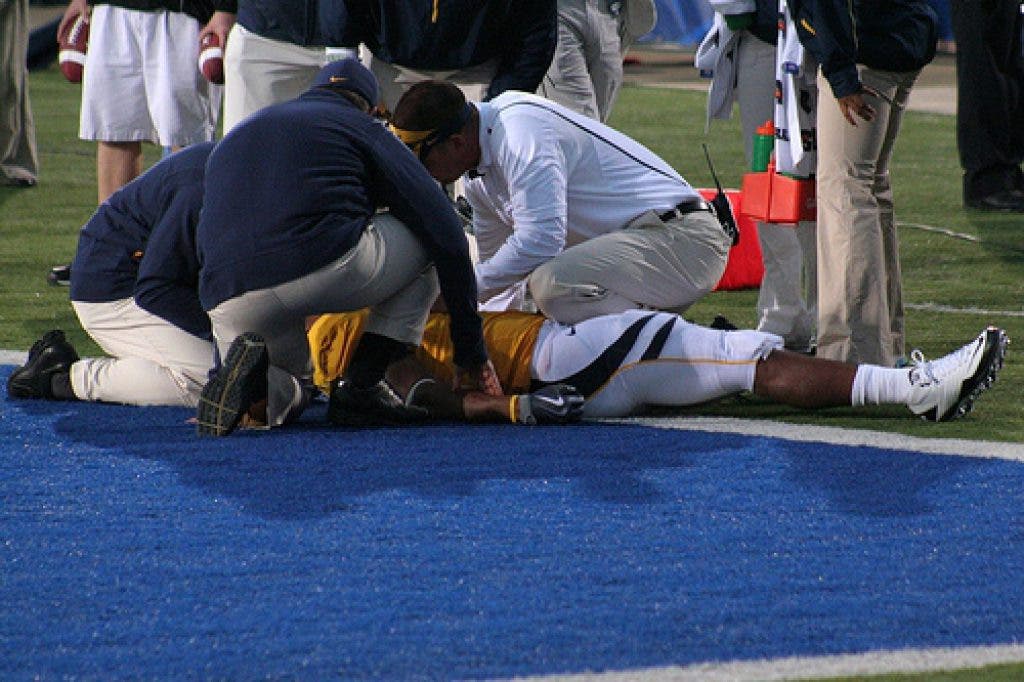
Contact sports, like football, leave athletes with lots of aches and pains some of the most common are burners and stingers.
Loyola Sports Medicine Tips
Loyola University Health System sports medicine physicians are dedicated to enhancing sports performance and getting people back in the game. Each season an LUHS sports medicine expert from our facility in Burr Ridge will offer tips to keep you safe and active. Dr. Pietro Tonino, MD, is the director of the Sports Medicine program for Loyola University Health System and is a professor in the Department of Orthopaedic Surgery and Rehabilitation at Loyola University Chicago Stritch School of Medicine. He has extensive experience in the evaluation and treatment of ACL (anterior cruciate ligament) injuries both in male and female athletes and implementation of prevention strategies for ACL injuries.
Yikes! It’s the Burners and Stingers
Find out what's happening in Burr Ridgefor free with the latest updates from Patch.
The NY Giants may have won the big game, but I’m sure players on both teams are feeling the pains of having played such an intense game. Contact sports, like football, leave athletes with lots of aches and pains some of the most common are burners and stingers. These occur when there has been an injury to the nerve supply in the upper arm.
These names, burners and stingers, come from the burning and stinging pain that spreads from the shoulder to the hand after an injury has occurred. This usually happens when the head is forcefully pushed sideways and down which bends the neck and pinches the surrounding nerves. In most instances the burners and stingers are temporary.
Find out what's happening in Burr Ridgefor free with the latest updates from Patch.
It’s so common that nearly 70 percent of college football players have experienced a burner or a stinger during their four-year careers. Football defensive players and linemen are the most likely to suffer from this injury. Also, athletes who have a small spinal canal are at greater risk. Athletes who have recurrent burner and stinger injuries may have this condition which known as spinal stenosis.
Symptoms typically only occur in one arm and usually last seconds to minute. Still, in some cases they can last for hours, days or even longer. Symptoms for this injury include:
- A burning or electric shock sensation
- Arm numbness and weakness immediately following the injury
- A warm sensation
Athletes who have sustained a burner or a stinger should be immediately taken out of the game and not allowed to return to play until the symptoms are completely gone. This can be anywhere from minutes to days. Athletes who have weakness or neck pain should not be allowed to return to play until they have been evaluated by medical personnel.
Athletes who exhibit the following symptoms will need a more extensive medical evaluation:
- Weakness lasting more than several days
- Neck pain
- Symptoms in both arms
- History or recurrent stingers or burners
If it is determined that an athlete has recurrent stingers a physician may recommend a special neck roll or elevated shoulder pads be worn during sports activities. Although the injury gets better with time, athletes are advised to talk to their doctors about working with a trainer or therapist to regain strength and motion if the symptoms last for several days.