Neighbor News
LTHS District 204's Process In Sale of 71-Acre Parcel Has Been Lacking
LTHS District 204 residents deserve a deliberate, transparent process that both informs them and gives voice to their wishes and concerns
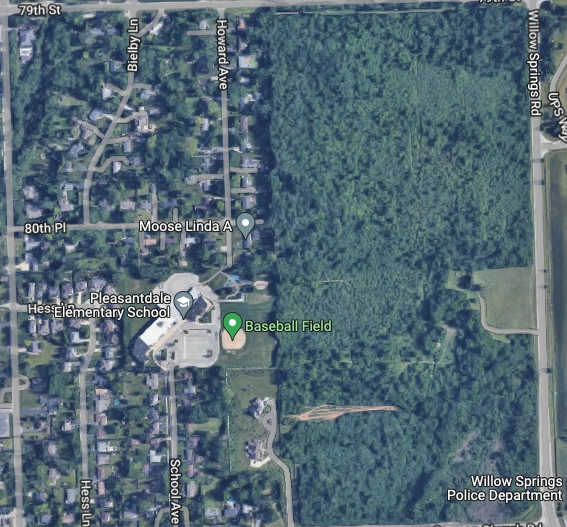
For most residents of Lyons Township High School District 204, the first time we heard about a proposed plan by the district's board to sell 71 acres of district-owned land in Willow Springs was eight months after the district received a March, 2022 letter from Bridge Industrial, Inc. expressing Bridge's interest in acquiring the parcel. Now, one could perhaps forgive the board if, prior to receiving that letter, it didn't already have a formal process in place with which to evaluate an unsolicited offer for district land that it had no previous plans to sell. (Or perhaps it did have such a process, and it simply didn't involve informing the public for eight months.)
Either way, upon receipt of the letter of interest, and considering both the significant value of the public asset involved and the potential impacts such a land sale could have on surrounding communities, it immediately became the board's duty to create a deliberate, clear process that both informed LTHS District 204 residents about the potential sale and provided them an opportunity to participate in the decision-making surrounding it.
What might such a process have included? For starters:
Find out what's happening in Burr Ridgefor free with the latest updates from Patch.
1) Assess the marketability and value of the parcel per its current legal zoning and considering the fact that a sub-parcel - comprising roughly 10% of the overall footprint, and located right in the middle of the parcel - doesn't belong to LTHS and instead belongs to the Pleasantdale Park District;
2) Establish what the district's goals and objectives are with regard to the parcel and its sale/retention, and identify some core values that the board will use to guide it throughout the project, in both the context of
Find out what's happening in Burr Ridgefor free with the latest updates from Patch.
a) the sale itself: is the board simply looking to get the most money, period, end of discussion? Does it have any other considerations/obligations to its constituents other than money? To the specific D.204 residents who live in proximity to the parcel? To the children (and future LT students) at Pleasantdale District 107, whose playgrounds and ball-fields are, literally, located right up against the parcel; and
b) the sales proceeds: taking into consideration the district's current financial situation (existing cash reserves, cash flow, other existing or projected expenses and sources of funding) what are some proposed uses for the funds raised by a potential sale? How do these uses fit in with outstanding items on the district's Strategic Plan? Placing such uses on a spectrum from "desperately needed" to "might be nice", weigh the relative utility of marginal dollars from a potential sale. (e.g. "desperately need" $6.3 million for air conditioning in classrooms vs. "might be nice" to have an extra $40 million sitting in cash reserves with no specific earmarked use);
3) With both that valuation and their clearly defined objectives and values for a potential transaction in hand, live up to the oath that they took when they became board members (105 ILCS 5/10-16.5) and actually "foster extensive participation of the community" in this process by:
a) communicating clearly with relevant stakeholders (LTHS D.204 residents at large, D.204 residents near the parcel area, the Pleasantdale Park District, the Village of Willow Springs) about what its preliminary goals and objectives are in exploring a potential sale; and
b) seeking out and engaging in discussion with and obtaining input and responses from the aforementioned stakeholders on the various pros and cons of selling that land, on potential impacts for the local community, on other potential uses of the land, on both your proposed uses and other potential uses of the sales proceeds, on potential regulatory or zoning issues involved in a sale, and on a whole host of other questions and concerns;
4) After a reasonable period of both public hearing and private discussion with stakeholders, make a now-informed decision on how best to proceed (or not proceed). Establish the final general values and specific objectives that will be pursued with the transaction. Create a formal action plan incorporating these values and objectives;
5) Again communicate this now-formalized plan to the public and relevant stakeholders;
6) Begin the actual process of implementing the plan and bringing the sale to fruition: soliciting bids, engaging in discussions with potential buyers about your now-established goals, requirements, red-lines, reviewing offers, etc.;
7) Continue to communicate with the public and relevant stakeholders about how things are progressing, bids received, formal offers made, etc.
I could keep going, but again, this is just an example of the type of deliberation, public inclusion, and communication that a public body elected to represent the best interests of a constituency might actually engage in before and while undertaking an action in which tens of millions of public dollars are at stake and that can have significant negative externalities for its constituents.
How much of what what the district board has been doing since March, 2022 aligns with these pretty basic, common-sense steps? We don't know! We have to read about it in bits and pieces in the Patch. (Thank you, David Giuliani and the Patch staff!) But it seems as though the actual answer is "very little."
And therein lies the problem and the cause for the anger and resentment that was on clear display at the January 23rd Board hearing. The public is in the dark to so many relevant questions:
-When did the Board first begin exploring a sale of the parcel? Was the March, 2022 letter of interest from Bridge Industrial the first time the idea of a potential sale was conceived? If not, what plans for the parcel existed prior to March, 2022? Were any of these plans ever brought to the public? If not, why not?
-If, prior to March, 2022, the Board had no plans to sell the parcel, and considering that Bridge's proposal was voted down on January 23rd, 2023, why is the Board now continuing to seek offers for its sale? What, if any, benefits of a sale exist now that didn't exist prior to March, 2022? Did the Board simply not realize prior to last March that the parcel was worth a lot of money? Did the district not realize that it needed the money back then? Does it need it now? What changed?
-What is the Board's position on the fact that the parcel is currently not zoned for industrial use? Do they see that as exclusively a buyer's problem? Do they not see it as impacting the marketability or value of the parcel? Was Bridge really prepared to pay $55 million for the parcel irrespective of its current zoning, or, was the deal actually contingent on getting the zoning changed?
-Has the board performed an analysis to determine whether now is, in fact, the best time to sell the parcel? If now is not the best time, are the projected sales proceeds nevertheless urgently needed now? If not, should such a sale be put off until economic conditions might be more favorable?
In short, unless the Board changes its entire approach with relation to this sale by actively including relevant stakeholders in a more open process, then they should expect more angry reactions from the public and local residents when these and other questions they may have go unanswered. (Not to mention that any future buyer should expect a similar level of resistance to their potential plans for the parcel.) In the end, that only serves to the detriment of whatever potential goals and objectives which District 204 might have had for this project in the first place.
As residents of LTHS District 204, as the parents of current and future LT students, of course we want what's best for our high school. And we recognize that this parcel of land represents a significant financial asset to the district that can be used for the betterment of our children's educations and lives. We're all aligned with that goal. But as state above, an opaque process that cuts out constituents generally, ignores impacted constituents specifically, and fails to get buy-in from other relevant public bodies and local governments is not going to result in a sale that is best-suited for that objective.