Schools
Troy Math Educators Present At National Conference
Outreach included new strategies for solving word problems

Word problems might be one of the most difficult math concepts for elementary school students to master, but word problems also present the mathematical situations students are most likely to face as adults in the real world.
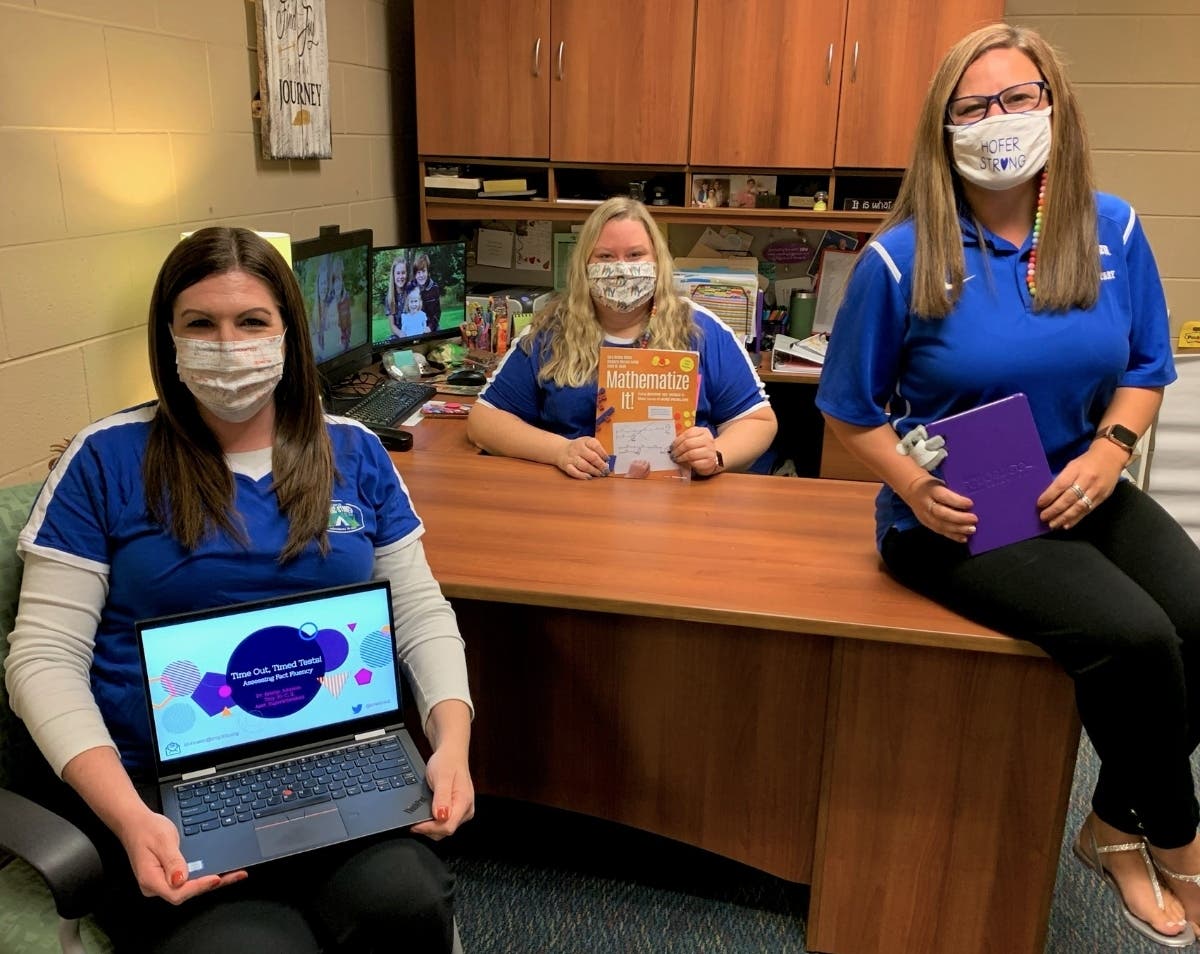
Two Troy Community School District 30-C educators - Troy Hofer Elementary School 3rd grade teacher Elizabeth Whitehead and Hofer instructional coach Diana Coveny - in collaboration with the Hofer third grade team and administration, saw students struggling with to tackle complex word problems and worked out a different way to teach them how to better understand and solve the problems.
The new method worked beautifully, and the educators began a collaboration to incorporate the new method throughout the school.
Find out what's happening in Channahon-Minookafor free with the latest updates from Patch.
Whitehead and Coveny were two of seven Troy educators who recently presented new math teaching methods and other math concepts at the 2020 Stepping Stones Virtual Users Conference, sponsored by Origo Education, which is the math curriculum used by kindergarten through 6th graders in the Troy district.
The other Troy presenters were William B. Orenic Intermediate School 5th grade teachers Alison Radek and Brittany Ward, W.B.O. math instructional coach Theresa Oberding, Troy Heritage Trail Elementary School instructional coach Anne Kasa, and Assistant Superintendent of Curriculum and Assessments Dr. Kristin Johnson.
Find out what's happening in Channahon-Minookafor free with the latest updates from Patch.
They presented on concepts that included progression of and instruction of division in grades 2-6, instruction through learning pathways, and assessment of math fact fluency.
“It was an opportunity for our teachers and coaches to share the great work they’ve been doing day-to-day in their classrooms and in their schools,” Johnson said, “and to inspire other teachers across the world to try new things in their classrooms.”
The method Whitehead and Coveny led in the Hofer collaboration, Johnson said, worked very well, helping students better understand and solve word problems.
“Through their collaboration,” Johnson said, “a really great thing was born. They shared it with other teachers in their school, and this summer, they were able to share it with other teachers across the country. They took this opportunity to give back to the profession, and they did this during a pandemic.”
Whitehead said previously, she would sometimes see a kind of defeatist attitude in her students when they would face a word problem that had more than one step to it.
“I wanted to give them strategies to be able to attack those word problems,” she said, “and to not get frustrated with their learning, but to be able to persevere.”
Whitehead and Coveny’s Hofer team taught their students to analyze and solve one word problem each week, working on each problem for ten or fifteen minutes each day early in the week, then expanding it to more time later in the week so students could discuss the problem with each other.
“Writing about mathematics and talking about mathematics gives students a context through which mathematics concepts can be applied,” Coveny explained. “Making those cross-curricular connections for students enables them to gain a better understanding of and are more confident in tackling those complex word problems.”