Politics & Government
2017 Election: Russell Kohnken, District 202 Board Of Education
Former ETHS teacher says he "will bring a scientific rigor" to the job while presenting successes and shortcomings honestly.


Name: Russell Kohnken
Age: 62
Town of residence: Skokie
Find out what's happening in Chicagofor free with the latest updates from Patch.
Position sought: District 202 Board
Family:
Find out what's happening in Chicagofor free with the latest updates from Patch.
Spouse, Christine Collins. Daughter, Rebecca, (ETHS class of 2005). Son, Philip Kohnken (ETHS class of 2008).
Does anyone in your family work in politics or government?: No
Education: B.S. Biology at SUNY Brockport, 1975, Ph.D. Biochemistry, Michigan State University, 1983, M.A. Teaching, National Louis University, 2001
Occupation: 1983-88 postdoctoral research, Worcester Foundation for Experimental Biology, MA, 1988-1992 postdoctoral research, Northwestern University Medical School, 1992-1993 Alzheimer's disease research, Abbott Laboratories, 1993-2000 Alzheimer's disease research, Molecular Geriatrics Corp., 1996-2000 adjunct teaching faculty, Elmhurst College and Oakton Community College, 2001-2015 faculty, Evanston Township High School.
Previous or Current Elected or Appointed Position: 1986-1987 Town meeting member, Shrewsbury MA
The single most pressing issue facing our (board, district, etc.) is _______, and this is what I intend to do about it.
Equity, that is, that all of our students receive what they need to succeed. Unfortunately, this is, and has been, a chronic problem for which there is no easy solution.
Perhaps the most important thing that I can do is listen - to the students, community, and teachers. Beyond that, I would break my thoughts into three general areas: institutional equity efforts, individual efforts, and outside ETHS efforts.
At the institutional level, the board can listen more. What do the students, staff, teachers, and community perceive is happening? The board should both solicit and receive input from the staff and teachers. It has been suggested to me that they could survey themselves and make the results available to the board. The board should also go out into the community for "listening" forums. We could do this once a month, going to the different wards and Skevanston. What are the ‘structural impediments’ at ETHS to equity? One example is that I feel that the educational paradigm of having to perform well in a broad array of courses and fields reflects a white cultural bias, institutional racism if you will. Could we make something available that resembles a ‘major’ model, as in colleges, that allows us to value a student who is good in one area. After all, as adults, we are generally asked to be good at one thing rather than everything. Another question is how much stereotype threat contributes to our achievement disparity. I would like to see ETHS confer more with Claude Steele or associates to explore strategies to deal with this problem. I would be open to discussing whether cell phones are a greater distraction to weak students than strong ones, and therefore whether we should exclude their presence in school. I would like to see us re-examine the New Trier advisory model. I feel that it would be a more effective strategy to connect students to supports, when they need them, than our current efforts. I also feel that we should make the experience of the students and families with districts 65 and 202 should appear as though we were one district. Our expectations, our communications, our supports, should be integrated more closely, so that students don’t experience culture shock upon entering the doors of ETHS.
At the individual level, and by that I mean the relationships that exist in the school between teachers and staff with students and their families, there are some things that I’d like to see happen. I feel that ‘courageous conversations’ are an important tool in developing these relationships better. When I participated in PEG training, I was fortunate to have facilitators who enabled good conversations. We need more of these! We also need to enable better conversations and communication with families. As a teacher, I needed to have the families engaged with the education of their children, and communication was sometimes a challenge. Perhaps this can be enhanced through the advisory model as well, where there is a good relationship that can grow during four years between the advisor and the family. The advisor can then serve as a conduit or facilitator of information between teachers, the school, and the family.
Efforts outside ETHS not only include closer interaction with district 65, where we provide to the students and their families a seamless experience of communication, support, vertically aligned curricula, and expectations. Finally, one of the more promising long-term strategies involves early childhood literacy, even pre-K. ETHS is already partnering with Evanston cradle-to-career to support these efforts. Perhaps there is little we can do directly, but what we can do, we should!
What are the critical differences between you and the other candidates seeking this post?
I feel that there are two distinctions between me and the other candidates. I have been both a teacher at ETHS and a scientist. These experiences give me insights into what has been happening in our classrooms and in the students' lives. I have taught both high and low-performing students, and worked to provide them with the supports and skills to succeed. As a scientist, I also am trained in data analysis and problem solving, crucial to making decisions about the progress and success of our initiatives towards equity and excellence.
The other distinction is that I appear to be raising more specific suggestions to address the issues that confront us at ETHS. Most of these arise from listening to members of the community as well as my personal experiences in the classroom.
If you are a challenger, in what way has the current board or officeholder failed the community (or district or constituency)?
I think that the board has generally served Evanston well. Most of my proposals are not dramatic changes, but tweaks to the current strategies that may serve our students and community better.
Where the board might most be improved is in communication. I've already talked about how the board can better listen, but the board also communicates, and of course is responsible, to the community. As it is now, most communication is through the administration, particularly to staff and teachers, and through the website and public board meetings to the community. The website is good, and the board meeting videos are available and well worth watching. What I’ve seen is that the board is very good at lauding the successes, of which there are many, of our students and school. It seems to be less vocal about the problems and struggles of ETHS. For example, at the January 2017 board meeting, results about increasing AP access were presented. This was an important presentation, because the Earned honors credit utilizes AP access and success as a measure of that programs success, and we rightly perceive that all students should have the opportunity to experience the rigor of these courses as a way to better prepare for college.
What was presented was mostly about access. Indeed, up until the last three years, there has been a substantial increase in students taking AP courses, essentially doubling. And that increase occurred over each demographic group. This is wonderful. But what of performance? Some data on performance were shown on the slides, but little discussed. Well, the performance of our white students was extraordinary, with about 75% obtaining a passing grade (3 or greater) on at least one AP test. For Latinx students, it was about 60%, and for black students, about 30%. Again, these data were present in the report, but not discussed, at least not in this open board meeting. Should the Evanston community hear both the success and the non-success stories? In my opinion, absolutely!
This is a painful reality. Even though there is value in taking AP regardless of exam performance, Evanston is striving towards equity, and we are a long way from accomplishing that end. But if it is neither discussed in the report nor the board meeting, how is the community to become aware of these outcomes? What are we to tell black families when they hear how wonderful ETHS is doing, yet many of their children are not? How are we, the Evanston community, to recognize not only what is working to improve student performance and promote equity, but also how well it is working?
We depend on the board and administration. If elected to the board, I will love pointing out our successes as much as anyone, but I will not shirk from pointing out our shortcomings as well. Because of my training as a scientist, I am very capable of analyzing and interpreting data. I will bring a scientific rigor to the analysis and presentation of information, so that you, the families of our students, and the members of our community, can better tell what is working and how well.
Describe the other issues that define your campaign platform:
One other change that I would like to see occur involves department chairs. Previously, they all taught at least one section of classes. This had the advantage of keeping their hands in the classroom, enriching their understanding of the struggles of both students and teachers as we strive for equity and excellence. Because they taught, they were also in the union, which provides some protection, freeing the chairs to be more courageous advocates and commentators. Finally, it provides more classroom professionals, so that we can more easily pursue some initiatives such as an expanded advisory with less cost. I would propose that we go back to that strategy.
If you gain this position, what accomplishment would define your term in office as a success?
If board communication is more balanced, transparent and accessible, then that would be a success. Realistically, the issues confronting us, particularly equity, has been with us a long time, and while I hope to see progress, in all likelihood, it will be slow. That we are engaging the community more in that goal is already a success, but will it show up in measurable ways?
Please share with voters a story about wisdom gained from a mistake you made in your life or career.
I only failed one course as a student. It was a shop class in 8th grade. I turned in my final project, which was 50% of the total grade, one day late. The teacher had made clear, and followed through on it, that he would not accept late work, so I failed. I have never turned anything in late again. Failing, if you view it as an opportunity to learn, can be quite valuable. We need to teach students to recognize this, both so that they will try boldly, and if they do fail, that they grow in their own wisdom in response.
Why should voters trust you?
Trust is an odd but crucially important thing. Some people prefer to offer trust initially, and only withdraw it when it is abused. Others feel it needs to be earned. For what it is worth, I'm in the former camp.
I'll share two things of which I'm proud that bear on the question. As a research scientist, everything that I did and reported, has been reproducible by other scientists - my work was trustworthy. More recently, as the treasurer of my church, the congregation has placed their trust in my handling of the finances. I do not abuse that trust and work hard to increase the transparency of what I do.
Finally, there are many former students and their families who are supporting my candidacy, and they would be happy to tell stories that show their trust in me.
Share a quote that defines your philosophy:
Luke 10, verses 36, 37: "Which of these three do you think was a neighbor to the man who fell into the hands of robbers? The expert in the law replied, The one who had mercy on him. Jesus told him, Go and do likewise." I am called to serve others; I try.
What questions should be asked of current government employees accountable to your board?
One thing that I'd like to explore is 360 review for employees at the school. This is an evaluation system for reviewing employees where input is received from customers, peers, and bosses. Those seem like good views to solicit.
The board establishes policies and goals. I would ask 'How have your actions served the policies and worked towards those goals?' It could get more detailed, but that would be the philosophy behind my questions.
Explain your attitudes toward fiscal policy, government spending and how taxpayer dollars should be handled by your office (or board)?
As a teacher planning my lessons, I would ask myself, 'Are the students going to use this later in the course or later in life?' If the answer was no, then I wouldn't teach it.
As applied to fiscal policy, I would ask whether our spending serves the goals of equity and excellence for our students? If not, then why are we spending that money? In my role as teacher at ETHS, I only spent money that served that purpose. My classroom has not been renovated since before 1971; I didn't need it to be, I could teach what was needed with the classroom the way it was. We like things to look good, but I will choose function over form every day.
What accomplishments in your past would you cite as evidence you can handle this job?
My church has three employees. During the time that I was council president, our office manager died, our musician headed off to graduate school, and our pastor moved on to a new call. With much help, our congregation weathered those changes and has come out stronger and growing.
Before becoming a teacher, I spent about seven years developing a diagnostic marker assay for Alzheimer's disease. During much of that time, when things were not working, there were always three possible interpretations: it can't be done, we're not looking well enough, or we're not looking in the right place. We obviously did not accept the first choice, and we did eventually succeed. Can I apply that same tenacity and mindset to the equity issues confronting ETHS? I can and I will.
The best advice ever shared with me was ...
From my father: A job isn't finished until you're done cleaning up. This has taught me to be thorough, careful, and yes, clean up in all my undertakings.
What else would you like voters to know about yourself and your positions?
If elected to the board, I want to hear from you, both good and bad. I will treat your views with respect, whether I agree or not, and I ask you to do the same. I will seek consensus, but will also speak my mind. I will admit it when I don't know, and will apologize when I'm wrong, and then work to make it right. I ask all of Evanston to do the same; we're doing it for our children!
More via Russel Kohnken's campaign website
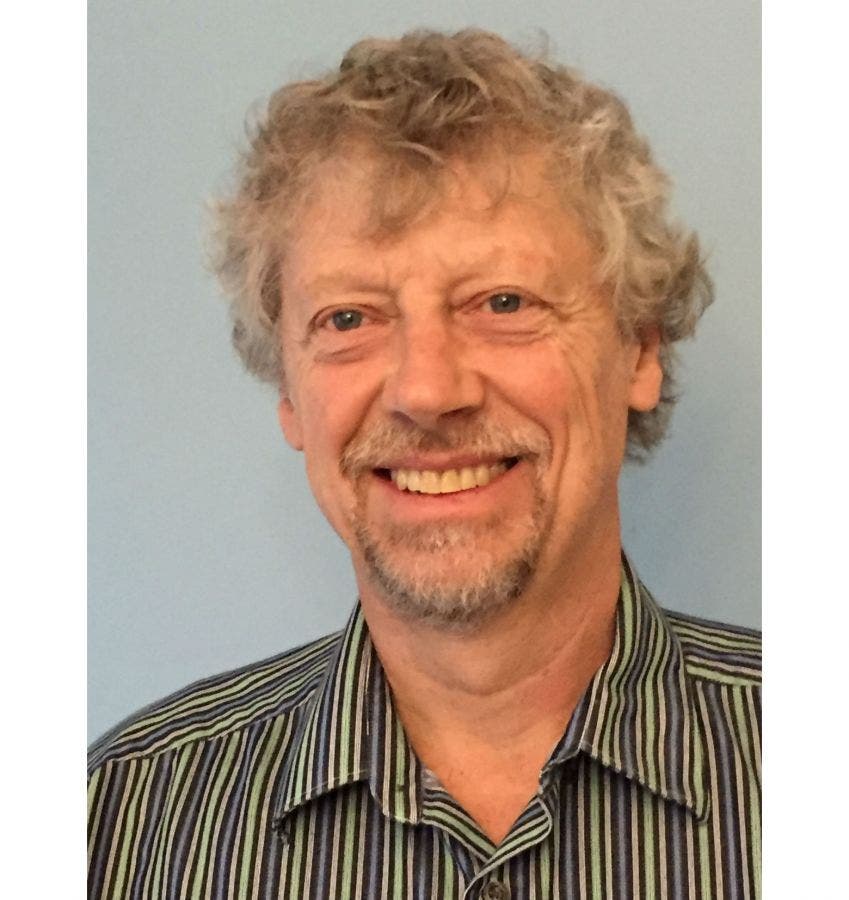
Photo submitted by Russel Kohnken
Get more local news delivered straight to your inbox. Sign up for free Patch newsletters and alerts.