Arts & Entertainment
Classic Rock, Still Burning: Deep Purple and Kansas Light Up Ravinia
Review: Deep Purple with Kansas — Hunter Pavilion at Ravinia Festival, Highland Park, August 25, 2026

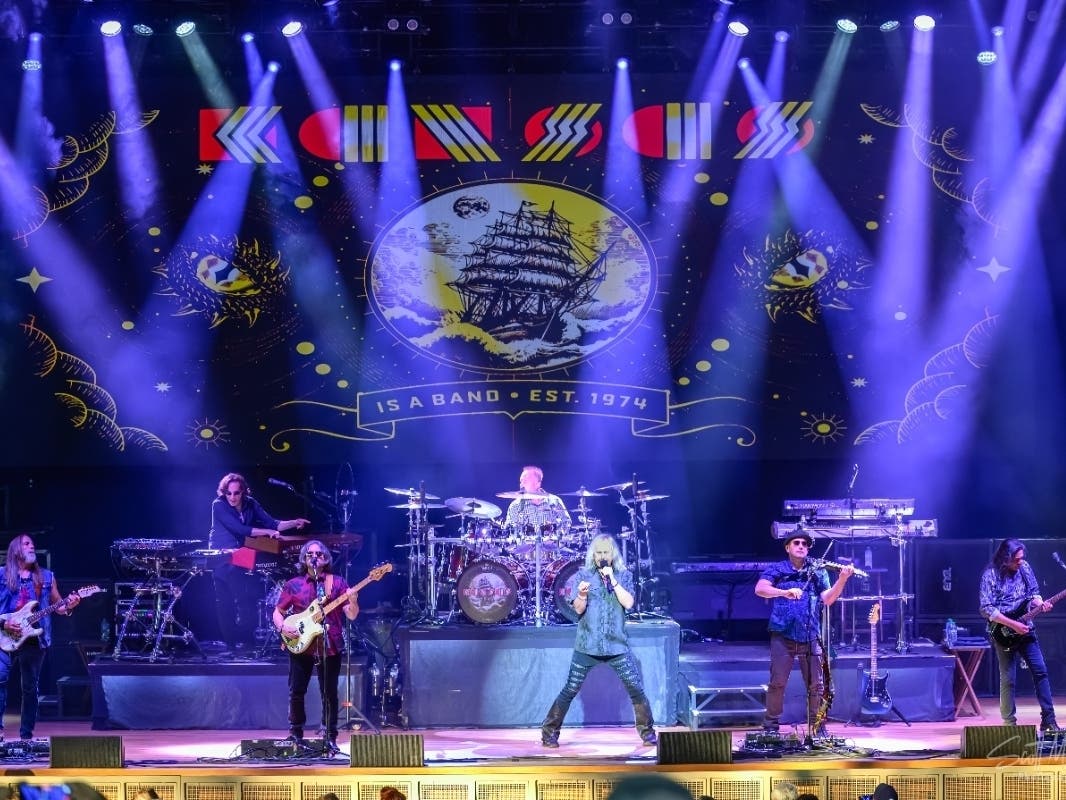


There are concert pairings that make perfect sense on paper, and then there are pairings that make even more sense once the music starts. Deep Purple and Kansas at Ravinia’s Hunter Pavilion was definitely the latter.
On Tuesday night, two legendary bands separated by an ocean but connected by a love of sophisticated, muscular rock delivered a night that was as much a celebration of musicianship as it was of classic-rock nostalgia. And in Ravinia’s newly renovated Hunter Pavilion, the sound was nothing short of spectacular.
Kansas Opens the Night
Find out what's happening in Chicagofor free with the latest updates from Patch.
Kansas took the stage first, opening with “Point of Know Return” and immediately reminding the audience why the band became one of America’s most distinctive progressive-rock groups. Formed in Topeka in 1973, Kansas combined hard rock with intricate arrangements, classical influences and, most famously, the unmistakable sound of the violin. The band went on to sell more than 30 million albums, with “Carry On Wayward Son” and “Dust in the Wind” becoming permanent fixtures of classic rock radio.
Their 12-song set was a terrific overview of that legacy. “Paradox,” “Fight Fire With Fire/Play the Game Tonight,” “The Wall” and “Song for America” showed off the band’s progressive side, while violinist Joe Deninzon was particularly impressive on “Jets Overhead.” The instrumental interplay throughout the set was remarkable.
Find out what's happening in Chicagofor free with the latest updates from Patch.
“Dust in the Wind” provided one of the evening’s most memorable moments. Before the song, the story was shared of original Kansas guitarist Kerry Livgren practicing a guitar exercise at home when his wife told him that what he was playing should be a song. That exercise ultimately became one of Kansas’ most recognizable recordings.
The band also paid tribute to original violinist Robby Steinhardt with “Down the Road.” And finally, with “Carry On Wayward Son,” the entire pavilion was on its feet and singing along.
Then came Deep Purple
Few bands have a legitimate claim to having helped invent hard rock, but Deep Purple is certainly one of them. Formed in England in 1968, the band has sold more than 100 million albums and spent nearly six decades evolving without abandoning the musicianship that made it unique.
And remarkably, several musicians on the Ravinia stage have been part of that story for an extraordinary length of time.
Drummer Ian Paice is the sole musician who has played on every Deep Purple album and is a member of the band's original 1968 lineup. Bassist Roger Glover joined in 1969, while vocalist Ian Gillan joined that same year. Keyboardist Don Airey has been with the band since 2002, and guitarist Simon McBride, the newest member, joined after Steve Morse's recent departure.
That history was impossible to miss as Deep Purple launched into “Highway Star,” following an ominous taped introduction of Gustav Holst's “Mars, the Bringer of War.” From there, the band moved effortlessly between its historic songs and newer material.
“Into the Fire,” “Lazy,” “When a Blind Man Cries,” “Perfect Strangers,” “Space Truckin'” and, of course, “Smoke on the Water” demonstrated just how much musical territory Deep Purple has covered. The band also worked several newer songs into the set, including “A Bit on the Side,” “Arrogant Boy,” “Lazy Sod,” “Diablo” and “Guinnesis.”
The instrumentalists were extraordinary. Simon McBride's guitar work provided a powerful modern edge to the band's classic sound, while Don Airey's keyboard solos were a reminder of the role keyboards have always played in Deep Purple's identity.
And then there was Ravinia
The Hunter Pavilion has just undergone a $70 million renovation, including a complete rethinking of its acoustics. New ceiling reflectors and other design changes were specifically intended to create a clearer, more cohesive sound.
For a night featuring two bands built around guitar, bass, drums, keyboards and, in Kansas' case, violin, the results were impressive. Every instrument seemed to have its own space. The guitars were crisp without becoming harsh, the bass was powerful without overwhelming the mix, and the keyboards and vocals remained remarkably clear. Both Kansas and Deep Purple sounded fantastic.
It was also a reminder of what makes Ravinia such a special place to hear rock music. There are larger venues, louder venues and more elaborate venues. But few provide the combination of atmosphere, intimacy and acoustics found at Ravinia.
Deep Purple closed the night with “Hush,” leaving the audience with one final reminder that these aren't merely bands touring because people remember their old songs. They are still working musicians, still playing challenging music and still capable of delivering a memorable live performance.
Kansas and Deep Purple have collectively been making music for roughly a century. On Tuesday night at Ravinia, they didn't sound like relics from another era.
They sounded like rock bands.
And very good ones at that.
More photos at Scott Margolin Concert Photography