Neighbor News
Despite SNAP’s return, Logan Square residents struggle to prepare for Thanksgiving
Rising food costs, reliance on food pantries exhaust residents while community works to help

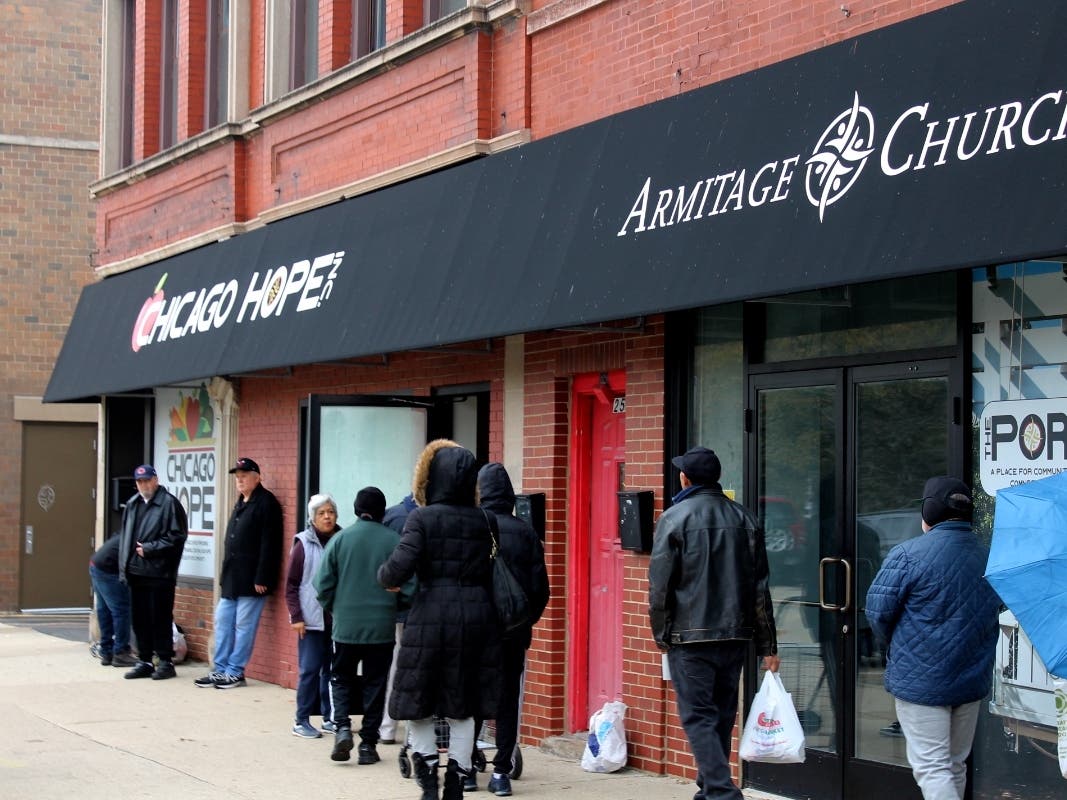


While many have turkey at the top of their shopping lists this Thanksgiving, some are just trying to feed their families. SNAP is back, but the long line outside of Logan Square’s Chicago Hope Food Pantry tells a different story.
Sofia Bautista, 66, a retired resident on SNAP, waited in line Thursday in the chilly November morning with her friend. She said in Spanish through a translator that she will take “whatever they give me.”
This Thanksgiving will cost the average American about $952 — which includes food, drinks, travel, decor and miscellaneous costs — according to a Talker Research study. The survey, which polled 2,000 U.S. adults of various ages who celebrate Thanksgiving, found that food alone averages $175. But for many in Logan Square, Thanksgiving dinner depends on food pantries and SNAP benefits.
Find out what's happening in Chicagofor free with the latest updates from Patch.
Thursday was the last day for recipients of the Supplemental Nutrition Assistance Program to have their benefits reinstated after the government shutdown ended Nov. 12, according to the SNAP Federal Impact Center. The program supports 1.9 million Illinois residents in obtaining nutritious food essential for their health and well-being.
Bautista said it was difficult when she lost SNAP. But now, even with the benefits back, she still finds herself waiting in line at the food pantry.
Find out what's happening in Chicagofor free with the latest updates from Patch.
Single-person households receive $204 a month through SNAP on average, according to the Department of Agriculture. The per-beneficiary amount decreases with each additional member of the household.
Bautista said she has some retirement money, but “very little.” In addition to feeding herself, she has a husky to take care of. SNAP does not cover pet food, but she said she always manages to make sure her dog is fed.
“First the dog, then me,” Bautista said.
There are years when she celebrates Thanksgiving and years when she forgoes. She said it all depends on whether she can get potatoes and chicken, which is why she was waiting in line at the food pantry.
For Thanksgiving this year, the Chicago Hope Food Pantry is giving out turkeys Monday, said program coordinator Maggie Jordan. However, she is worried people won’t be able to get them.
“We’re able to give people two visits a month and normally that’s enough,” she said. “But in this particular case, people who did not have SNAP benefits at the beginning of the month really were forced to take their visits early this month.”
Jordan said a quarter of the 48 people the pantry had seen by 11 a.m. had already exhausted their benefits this month.
According to her, the food pantry’s attendance has grown by about a third since SNAP benefits were frozen. Despite their return, food prices are so high that people are relying more on food pantries than they used to.
“It has made the need for things that people otherwise bought in the grocery store, like bread, milk and eggs, a little bit more important,” Jordan said.
Fortunately, the pantry has a lot more products for the holiday season because of food drives by community members and local businesses like Dill Pickle Food Co-op.
Dill Pickle customers can purchase store-packed donation bags, which the business brings to food pantries like Chicago Hope and the Friendship Center, said Josh Jensen, the store’s ownership manager. The store sold over 300 bags in three weeks, he added. Most of them cost $10, bundling items like ramen, beans and rice.
With the holidays approaching, Jensen said the co-op consulted food pantry workers to introduce a $20 bag with hygiene products like toiletries, detergent and tampons. He said the store hasn’t donated perishable goods — even if they’re what people bring sometimes — since it takes a few days for the food to reach the pantries.
“We don’t want to say (to the pantries), ‘Here’s 10 turkeys, figure it out.’” Jensen said. “For fresh food, it makes more sense to go to them directly.”
Other community members are also stepping in. Along Milwaukee Avenue, residents can drop off food and daily necessities — rice, canned vegetables, paper towels, winter accessories — at businesses such as Pedestrian Coffee, Dill Pickle and Logan Square Pilates, said Adriana Sandoval, executive assistant at the Logan Square Chamber of Commerce. Those businesses will then organize trucks to deliver the items to food pantries.
“I do see a lot more people coming together to help” as the holiday season approaches, Sandoval said.
When kids on SNAP visit Paulie Gee’s, they get a free 10-inch wood-fired cheese pizza with a side of a chocolate chip or sugar cookie, said chef Thomas Adams. The restaurant also has discounted meals for adults on SNAP.
One encouraging sign is that Thanksgiving food prices have seen a 5% decrease since last year, following a trend over the last three years after prices soared in 2022, according to a survey by the American Farm Bureau Federation. The prices of turkey, dinner rolls and stuffing have seen some relief, but the prices of fresh vegetables remain high, according to the survey.
Despite this hopeful trend in prices, the holiday season also comes with new changes to the SNAP program, which might make it harder for people to qualify.
Previously, 18 to 54-year-old able-bodied recipients had to work or volunteer at least 80 hours a month to qualify for benefits. Starting Dec. 1, the upper-age limit will increase to 64 years old. Veterans, young adults who grew up in foster care and people experiencing homelessness — groups previously exempt from the work requirement — must now work as well.
Though outside the age range, Bautista said she is thinking about work already, worried about her SNAP benefits.
“In January, I will need to find work,” she said. “Only a little — four to five hours.”
by R. Taylor Robinson, Kathy Wang, Antony Terence