Politics & Government
Election Postmortem: The Pillars are Frayed But Still Strong
A longtime Chicago journalist and watchdog puts the 2020 election in historical context with Chicago-centric flavor.


Hysteria aside, recent Presidential elections, especially this past one, have raised enough legitimate questions and exposed enough fissures in our basic democratic exercise to merit serious analysis and, if warranted, enough modifications to make the mechanics of the 2024 election less contentious.
Ensuring the integrity of mail-in ballots and the reliability of voting machines top the list, followed by a fine-tuning of procedures and timelines for challenging results and certifying outcomes, and finally, revisiting our reliance on the arcane Electoral College to determine a winner, regardless of who won the popular vote.
But let’s be clear that while this healthy evaluation follows the hyperbolic post-election frenzy we’ve been slogging through, the latter doesn’t necessitate the former. This postmortem should be due diligence to ensure best practices, not to redress baseless allegations.
Find out what's happening in Chicagofor free with the latest updates from Patch.
And it shouldn’t obscure a comforting reality: We are blessed with a strong and resilient election system that generally protects and upholds our basic Democrat practice with a remarkably simple set of checks and balances:
Election officials establish ground rules and protocols for voting; voters cast their ballots; those same election officials count the votes, handle audits and recounts as necessary, and certify the results; and courts adjudicate disputes that arise along the way.
Find out what's happening in Chicagofor free with the latest updates from Patch.
Sometimes the courts have the final word, other times they give the voters a do-over. And if one or more of those pillars falter, as they often do, another will keep the electoral system from collapsing.
I’ve watched this play out as a journalist and good government advocate for nearly 50 years and I still marvel at its durability, so let me share a sampling of my firsthand and anecdotal experience with elections and their fallout:
In 1983, after Harold Washington shocked the political world to become Chicago’s first African American mayor, the leader of the 50-member City Council’s predominantly white Democratic Machine majority, Ald. Ed Vrdolyak, organized a 29-member opposition that thwarted the reform agenda of Washington’s 21 member Black and Latino minority for three years.
The aptly-named “Council Wars” that dominated local politics elevated racial tensions to a fever pitch, but as Vrdolyak famously proclaimed, “In America, 29 beats 21,” and he was right.
Votes matter, and Vrdolyak’s opposition had them.
As does Democratic Speaker Nancy Pelosi in the U.S. House, Republican Mitch McConnell in the U.S. Senate, and now President-elect Joe Biden, after the ministerial votes of the Electoral College validated his victory over President Trump.
Courts matter too, and when federal judges in Chicago mandated special aldermanic elections in 1986 to remedy violations of the Voting Rights Act in seven minority wards, Washington allies won enough new seats to wrest control of the City Council from the so-called “Vrdolyak 29.”
But it wasn’t easy because, in a quasi-comical but ultimately serious example of the infamously corrupt “Chicago Way,” 20 write-in votes for a Vrdolyak ally in one contested ward race were “discovered” in a storage facility by local election officials—yes, they were Vrdolyak allies—and that tied the race, foreshadowing a run-off.
Washington’s lawyers cried foul and challenged the “found” votes in court, but the Vrdolyak side prevailed—judges were also on their “team”—and a runoff was ordered.
The Washington ally won easily, so once again votes mattered.
The behavior of partisan election officials and judges threatened the democratic process, but that third pillar—the voters—had the final word.
—-Would post-election challenges have changed the outcome of the 1960 Presidential race, where John F. Kennedy defeated Richard Nixon with the help of a razor-thin Illinois victory made possible, according to “urban legend,” with votes “manufactured” by an earlier cabal of Democratic Machine operatives?
We’ll never know because Nixon, in an uncharacteristically magnanimous gesture a decade before his craven Watergate downfall, declined to call for a recount, an investigation or a legal challenge.
“It’d tear the country to pieces,” he reportedly said. “You can’t do that.”
So voters, dead or alive, prevailed.
Forty years later, in 2000, the country’s small-d democratic fabric was tattered if not torn when the U.S. Supreme Court handed the presidency to George W. Bush over Vice President Al Gore after a titanic post-election brawl in Florida, the decisive battleground state.
Florida was a toss-up, with the candidates separated by only a few hundred votes, so there was no clear winner. And with stories about “hanging chads” and disenfranchisement of Black voters swirling around, and a nation transfixed, it was left up to the courts to resolve.
The Florida Supreme Court, controlled by Democrats, tried to steer the election Gore’s way, but the U.S. Supreme Court, with its narrow Republican majority, superseded, voting 5-4 to give Bush the presidency.
And that was that. Bush supporters rejoiced, Gore supporters steamed, but the “Supremes” ruling was final and the beat went on.
Citizens and candidates generally abide the process because the checks and balances legitimize the outcome.
So it was with Hillary Clinton, who endured the pain of her narrow 2016 loss to Donald Trump in enough swing states to give him an Electoral College victory, even though she had 3 million more actual votes. Her supporters fumed but she accepted the result because that’s how our constitutional system works.
Perhaps someone should have explained that to President Trump after he lost most of the same swing states, ensuring an Electoral College majority for Biden, who also got 8 million more popular votes.
But Trump keeps decrying alleged vote fraud and a foreign-engineered voting machine invasion that reversed an election he actually won, in a landslide, even though every state audit and recount, every court, and multiple investigations by federal and local election authorities, including his own handpicked attorney general, confirmed the legitimacy of Biden’s victory.
The voters, the election officials, the constitution and the courts have spoken, with one unified voice.
That’s not always the case, as Chicago in 1960 and 1986, and Florida in 2000, illustrate.
One or more of our pillars often get it wrong, so one or more of the others has to get it right, and prevail. That, fortunately, has happened in nearly every election I’ve covered, witnessed or researched
In 2020, sound and fury notwithstanding, all the pillars stood strong. But some have admittedly displayed enough wear and tear, enough fraying, to merit close inspection and a few tender repairs.
That realization—that our enduring election system may, like an iconic landmark, need minor tweaks but certainly not a massive overhaul or menacing Tweets—is arguably the one valuable takeaway from the outgoing President’s otherwise unconscionable histrionics.
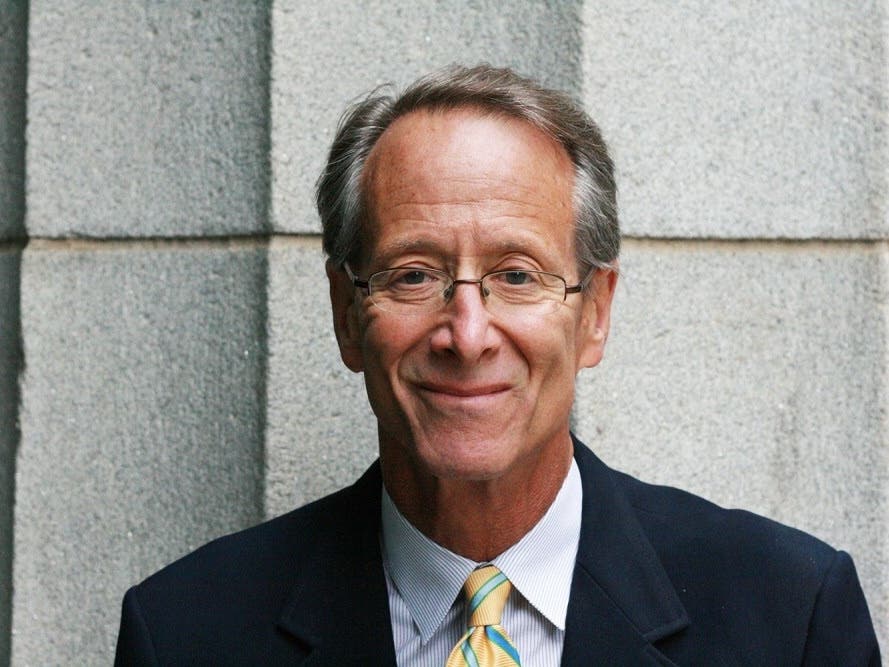
Andy Shaw was ABC 7’s longtime political reporter and former head of the Better Government Association. He now serves on good government reform boards.