Crime & Safety
John Wayne Gacy Victim's Remains Identified As Missing Minnesota Teen
Cook County Sheriff solves 40-year-old mystery of Minnesota teen runaway whose remains have been identified as John Wayne Gacy "Victim #24."


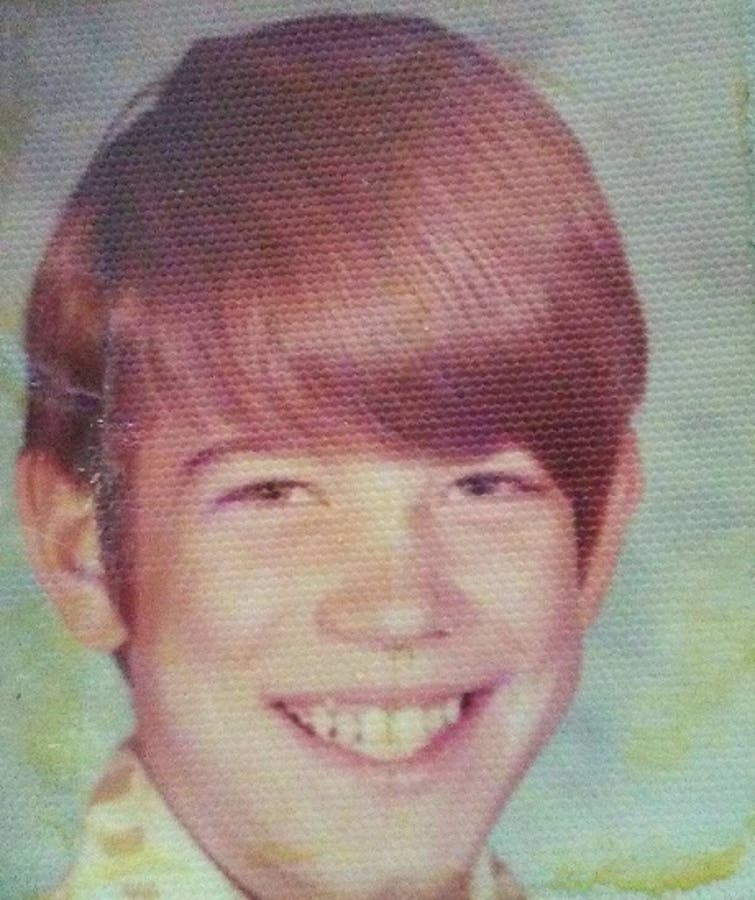
COOK COUNTY, IL — A Minnesota runaway is the latest victim of notorious serial killer John Wayne Gacy to be identified, solving a 40-year-old mystery. Sixteen-year-old James “Jimmie” Byron Haakenson was identified through DNA samples provided by his two siblings, Cook County Sheriff Tom Dart announced Wednesday. The Minnesota teen's remains were discovered in a mass grave beneath the then-37-year-0ld serial killer's house on Chicago's Far Northwest Side in 1978.
Gacy’s crimes horrified Chicagoans and the nation in 1978 when the bodies of 29 young men were exhumed from the crawl space of Gacy's nondescript tract house in unincorporated Norwood Park Township. Four other bodies were discovered elsewhere, when it is believed that Gacy started running out of room on his property and began disposing his victims' bodies in rivers. Of the 33 victims recovered, eight remained unidentified until recently. Gacy was executed by lethal injection for his crimes at the Statesville Correctional Center in 1994.
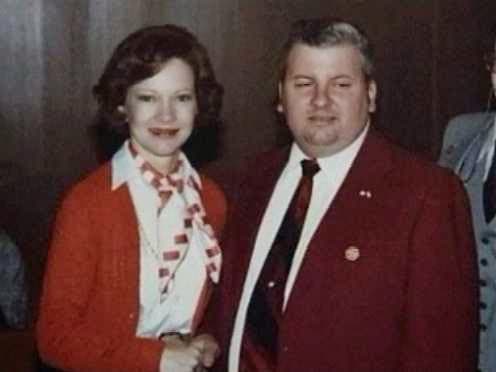
From 1972 through 1978, Gacy, a divorcee who ran his own construction business, embarked on his killing career, preying upon vulnerable boys and young men. His hunting ground covered Greyhound bus stations, concert venues and gay bars, often luring his victims with the promise of lucrative construction jobs for his company, or posing as a police officer. In addition to entertaining youngsters at children’s hospitals dressed as a clown, Gacy ingratiated himself with civic leaders and politicians. He was famously photographed in 1978 with First Lady Rosalynn Carter at a Chicago political function.
Find out what's happening in Chicagofor free with the latest updates from Patch.
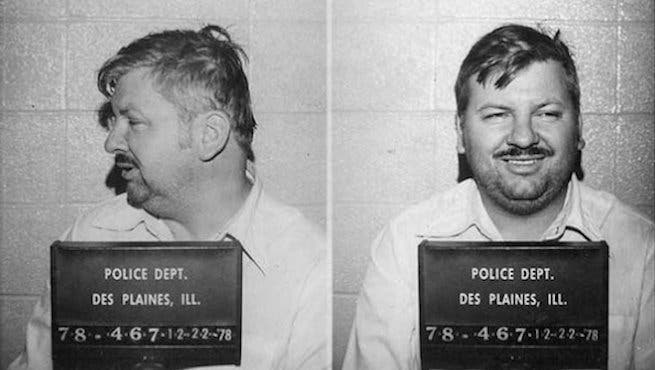
Jimmie Haakenson was just 16 when he left his home in St. Paul, Minnesota in the summer of 1976. His mother last heard from her son on Aug. 5, 1976, when he called to tell her that he was in Chicago. After that phone call, he was never seen or heard from again, Dart said.
At the time the bodies were discovered buried under Gacy’s house, dental X-rays were then the main tool of post-mortem identification. Dart said Haakenson’s mother tried to learn in 1979 if her son was among Gacy’s victims, but the teen’s dental X-rays were not available.
Find out what's happening in Chicagofor free with the latest updates from Patch.
In 2011, Dart reopened the investigation to identify the eight remaining unknown Gacy victims in an attempt to bring some closure to their families. The victims’ bodies were exhumed and DNA samples collected. Using modern scientific techniques and “old-fashioned detective work,” Cook County Sheriff’s Police learned that a body found on Dec. 29, 1978 in the mass crawl space grave was Haakenson’s.
DNA samples were collected from the long-missing teen’s two siblings by their local police departments at the request of sheriff’s police. The samples were submitted to the University of Northern Texas Center for Human Identification, where the samples were tested against the unidentified victims. Dart said there was strong genetic association between Jimmie’s siblings and that of the remains labeled “Victim #24.” Sheriff’s police have since notified Haakenson’s family of the positive identification on Monday. Unfortunately, the teen’s mother passed away before learning the fate of her missing son.
Haakenson was found in a grave with two other young men. One of them, Rick Johnston, was identified at the time of the original murder case. The other victim -- Victim #26 -- is still unidentified. Due to the position in which the bodies were found, sheriff’s police believe Johnston was killed around the same time as Haakenson, whose last contact was Aug. 6, 1976, one day after Jimmie’s.
RELATED: John Wayne Gacy Investigation Leads to Break in 36-Year-Old California Case
Only six Gacy victims now remain unidentified. In November 2011, the remains of Victim #19 were the first to be matched against the victims' DNA. A 19-year-old construction worker, William George Bundy, known as Bill to his friends, disappeared in October 1976. His family had long feared that he had been one of Gacy's victims. Since reopening its investigation, the sheriff’s office has also solved four cold cases unrelated to Gacy, located five missing persons alive and two missing persons who had died without their families’ knowledge.
Gacy’s bizarre murder spree during the 1970s changed how homicide cases, especially those with similar patterns and modus operandi, were investigated in the United States. According to news reports at the time, Gacy was interviewed by detectives from various Chicago police precincts in at least three cases of missing young men. However, investigation records were kept manually and police contacts with Gacy were not related among the precincts.
RELATED: Sheriff Finds Missing Man as Part of Ongoing Gacy Investigation
It wasn’t until the disappearance of 15-year-old Robert Piest in December 1978 in suburban Des Plaines, leading to the grisly discovery of bodies in Gacy’s crawl space. Piest had been seen talking to Gacy at a local pharmacy where the teen was employed and Gacy had been contracted to do construction work. Des Plaines police identified Gacy as a possible suspect in Piest’s disappearance after learning that Gacy had served time in an Iowa prison for sodomizing a 16-year-old boy.
Anyone who may believe their missing male relative was a Gacy victim is urged to visit the Cook County Sheriff’s website for additional information.
COVER PHOTO: James “Jimmie” Byron Haakenson | Via Cook County Sheriff
Get more local news delivered straight to your inbox. Sign up for free Patch newsletters and alerts.