Politics & Government
More Cops, More Respect, More Mentors, More Jobs: Rahm's Plan to Save Chicago
Patch breaks down the 3 R's of the mayor's strategy to stem the tide of crime and gun violence in the city.


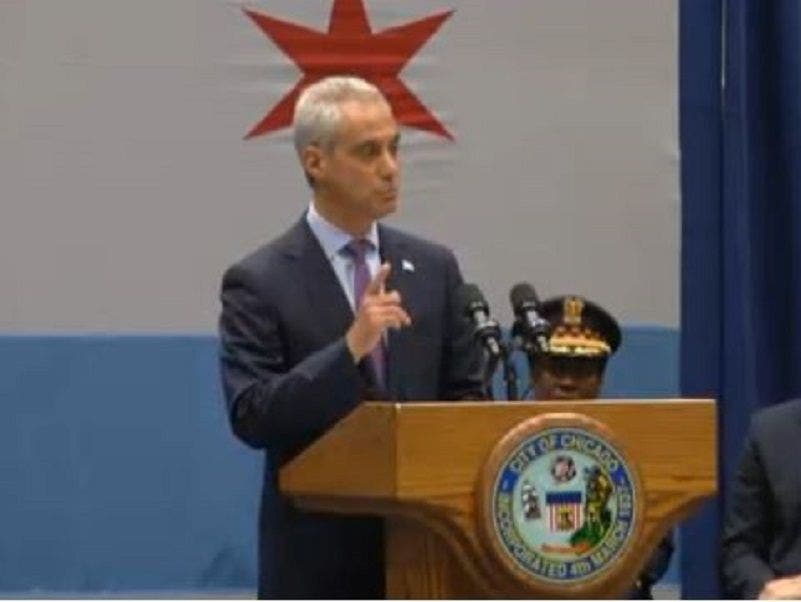
CHICAGO, IL — Over the years, Mayor Rahm Emanuel has broken down the keys to effectively fighting crime in Chicago to four P's of public safety: policing, prevention, penalties and parenting.
While those principles still apply, the mayor sounded like he's replaced his four P's with three R's after he laid out his new public safety plan to community and faith leaders Thursday night, making the setting of Malcolm X College on the West Side even more fitting.
What are the key elements — let's call them Rahm's 3 R's — in Emanuel's plan to stem crime and gun violence throughout the city? Patch breaks them down.
Find out what's happening in Chicagofor free with the latest updates from Patch.
Reform the Ranks
There has long been a cry in the city not only to replenish the vacancies in the Chicago Police Department, but also to put more cops on the street. In his address, Rahm reiterated the pledge he made earlier this week to fill those openings and add 970 new positions to the force by 2018. Some of those additions will include:
- 516 beat cops
- 92 field training officers
- 200 detectives
But changing the size of the department probably will be an easier, smoother task than changing its culture, something Emanuel and Police Superintendent Eddie Johnson say they are intent on doing as part of city government's "commitment to transparency and accountability."
Find out what's happening in Chicagofor free with the latest updates from Patch.
RELATED: Hey, Donald Trump, Should Chicago Cops Stop and Frisk White Gun Owners, Too?
To that end, all officers will be outfitted with body cameras, and the department will have a new policy on releasing police videos in a timely fashion. A new independent agency to investigate police misconduct is in the works, along with the adoption of a citizen oversight board with "a strong and active voice for the community."
In fact, the makeup of communities will be part of how officials staff the department.
"As we hire and promote new officers, sergeants, lieutenants and detectives we will be guided by the recognition that our police department needs to reflect the communities it serves," Emanuel said.
Rebuild Relationships
Throughout his entire speech, Emanuel emphasized the importance of communities and the people living in them when it comes to curbing the city's crime problem. And the mayor wasn't shy about admitting to the damage that has been done over the years to the relationship between the CPD and the communities they serve.
"But while we are going to add significant resources, nothing will match the resource of an officer knowing that the neighborhood they work in supports the work they do," Emanuel said. "Fighting crime requires a partnership between the police and the community. And we all know that this partnership has been tested in Chicago. It is a problem that has festered in this city for decades. The shooting of Laquan McDonald brought it to the breaking point."
Rebuilding that partnership is arguably the biggest challenge and the one that's most important if Chicago wants to curb violence in its neighborhoods. But it's not a challenge that will solely be on the shoulders of the police department, according to Emanuel.
"As I have said before, and I want to repeat today: respect is a two-way street," he said. "There can be no permission slip for people taunting police officers trying to solve a crime in their community. And there can be no pass for officers belittling a citizen who has turned to them for help. Both of which we have seen in recent videos.
"Every one of us has a role to play in rebuilding the vital partnership between our police and the community. We all have to hold ourselves, and each other, to a higher standard."
Remove the Root Causes
When it comes to dealing with crime, most elected officials look for a single magical, law-and-order solution to sell the public, as evidenced by presidential candidate Donald Trump's support of stop and frisk tactics as the answer to Chicago's problems. Rarely do they go after the root causes. But that approach is part of Emanuel's plan.
For criminals, it means working with state legislators to strengthen sentencing guidelines for repeat gun offenders. It also means creating stronger state regulations for gun dealers and stores that holds them "accountable for flooding our streets with weapons."
"Thousands of guns recovered by the Chicago Police Department can be traced back to just a handful of stores. And some of these stores continue to sell to people who used those guns in previous crimes," Emanuel said. "[A] proposed new state licensing law for gun stores will allow local law enforcement to inspect business records, require safety measures, and train store employees to detect traffickers."
For Chicagoans, it's about creating opportunities and hope in order to eliminate criminal activity as an option for the city's youngest citizens. That's why Emanuel wants to "invest in programs and supports that cut off the schools-to-prison pipeline and ensure that more of our children remain on track to graduate and go to college," according to an outline of the mayor's public safety strategy. Mentoring programs, such as Becoming a Man and Working on Womanhood, are ways to keep kids on the right path and away to the path offered by street gangs.
"I have seen firsthand that when we provide an alternative to the life of guns and gangs, our young people will choose that positive alternative," Emanuel said. "We owe them that choice."
Another aspect to this part of the plan is employment. The mayor's office is working with more than 50 businesses to create jobs for more than 2,000 kids. Emanuel also has worked to build incentives into Chicago construction contracts for contractors that hire apprentices who had been in prison.
"Because the old adage is true; the best anti-crime program is a job," Emanuel said.
* * *
Emanuel might have three R's to replace his once-popular four P's. But there's one P that the mayor will need to keep in mind if he wants his trio of R's to be successful: Paying for it.
Video screen capture via the Office of the Mayor, City of Chicago
Like What You're Reading? Stay Patched In!
Get more local news delivered straight to your inbox. Sign up for free Patch newsletters and alerts.