Politics & Government
Pritzker Signs Illinois Budget With $1.8B In Election Year Tax Breaks
"Our state is in its strongest fiscal position in generations," the governor said.


CHICAGO — Gov. J.B. Pritzker signed the final budget of his first term in office Tuesday at Chicago State University.
The $46 billion budget for fiscal year 2023 includes a projected surplus of $444 million.
It also allocates the remaining $4 billion included in last year's federal coronavirus relief bill, sets aside $1 billion for the state's "rainy day" fund and provides direct tax rebate checks to most families.
Find out what's happening in Chicagofor free with the latest updates from Patch.
Joined by Democratic lawmakers at a signing ceremony, Pritzker said the budget is fiscally responsible and will improve the lives of working families.
"Our state is in its strongest fiscal position in generations," Pritzker said. "And as a result, we are able to provide $1.8 billion in tax relief for our residents."
Find out what's happening in Chicagofor free with the latest updates from Patch.
Those election year tax breaks include a six-month delay on the 2-cent-per-gallon motor fuel tax that had been due to take effect in July, a one-year suspension of the 1 percent state sales tax on grocery and a "back-to-school" sales tax holiday on clothing and school supplies between Aug. 5 and Aug. 14.
The budget also permanently expands the number of households covered by the earned income tax credit, offers property tax rebates of up to $300 and provides for direct payments of $50 per individual and $100 each for up to three dependents.
Households with federal adjusted gross incomes below $200,000 for individual filers or $400,000 for joint filers are in line to receive one-time tax rebate checks totaling nearly $1.2 billion ahead of the November election.
The governor contrasted the budget surpluses included in the past two years of pandemic-era budgets with the financial fallout that followed former Gov. Bruce Rauner's two-year budget standoff with former House Speaker Mike Madigan.
"Compare that to today: investments in stronger schools, modernized airports and newly paid highways, hundreds of thousands of well-paying infrastructure jobs, a better-funded pension system," Pritzker said. "These are just some of the kind of priorities that we can invest in when our state is governed responsibly with a focus on working families and those who have been left behind."
In addition to replenishing the state's depleted "rainy day" fund, the Budget Stabilization Fund, with a $1 billion contribution, this year's budget establishes a permanent, ongoing funding mechanism for the fund for the first time, according to a summary of the budget provided by the governor's office.
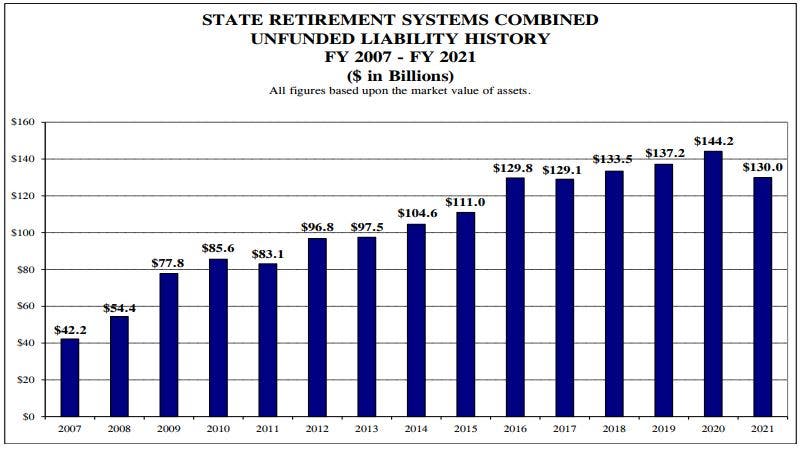
The FY 2023 budget also sets aside an extra $300 million this year and $200 million next year to pay for pensions beyond what is legally required. While the governor's office estimates it will eventually save $1.8 billion in interest, the state still has an unfunded pension liability of $130 billion.
"Balancing the budget allows us to save for the future and live up to our financial obligations," Pritzker said. "On all of these things, the only members of the General Assembly who voted to kick the can down the road — and to stick you and your children with the bill — were the Republicans who voted against it, who seem to prefer spelunking for misery over offering real solutions."
The budget also allocates $2.7 billion in federal coronavirus relief money toward repaying the $4.5 billion the state owes after borrowing to cover the cost of unemployment insurance benefits during the pandemic.
Republicans called for all the $3.5 billion in remaining American Rescue Plan Act money to be used to pay back the money and prevent an additional $509 million in annual tax hikes on employers until the balance is paid.
After Democratic legislative leaders announced a budget agreement between the House, Senate and governor's office, Illinois Senate Republican leader Dan McConchie, of Hawthorn Woods, issued a statement criticizing the temporary nature of the budget's highly touted tax relief.
"What is most unfortunate about the Democrats’ budget plan is we have an opportunity right now to provide permanent tax relief for the people of Illinois, yet instead, the Democrats are choosing to provide one-time checks and other temporary relief just before the election which expires right after the election," McConchie said. "Additionally, we are significantly increasing government spending. Evidently, they think they know how to better spend your money better than you do."
On Tuesday, the campaign of Republican gubernatorial candidate and Aurora Mayor Richard Irvin described the budget as full of election year gimmicks.
“With unaffordable increases in state spending alongside a massive hole in the Unemployment Insurance Trust Fund and ComEd’s announcement to use the energy bailout to raise electricity rates, even more Pritzker taxes are on the way," Irvin said in a statement. "When Pritzker signs the budget today, he will secure his title as the tax-hiker-in-chief of Illinois.”
State lawmakers agreed to a budget earlier than usual this year after deciding to cut the legislative session short to allow for more time to campaign ahead of primary elections, which were postponed from March to June.
The 2023 fiscal year begins in July.
Get more local news delivered straight to your inbox. Sign up for free Patch newsletters and alerts.