Community Corner
CHSD170s Wilson School Students Explored an Engineering Workshop
Wilson School Explorando Taller de Ingeniería grados 3-5
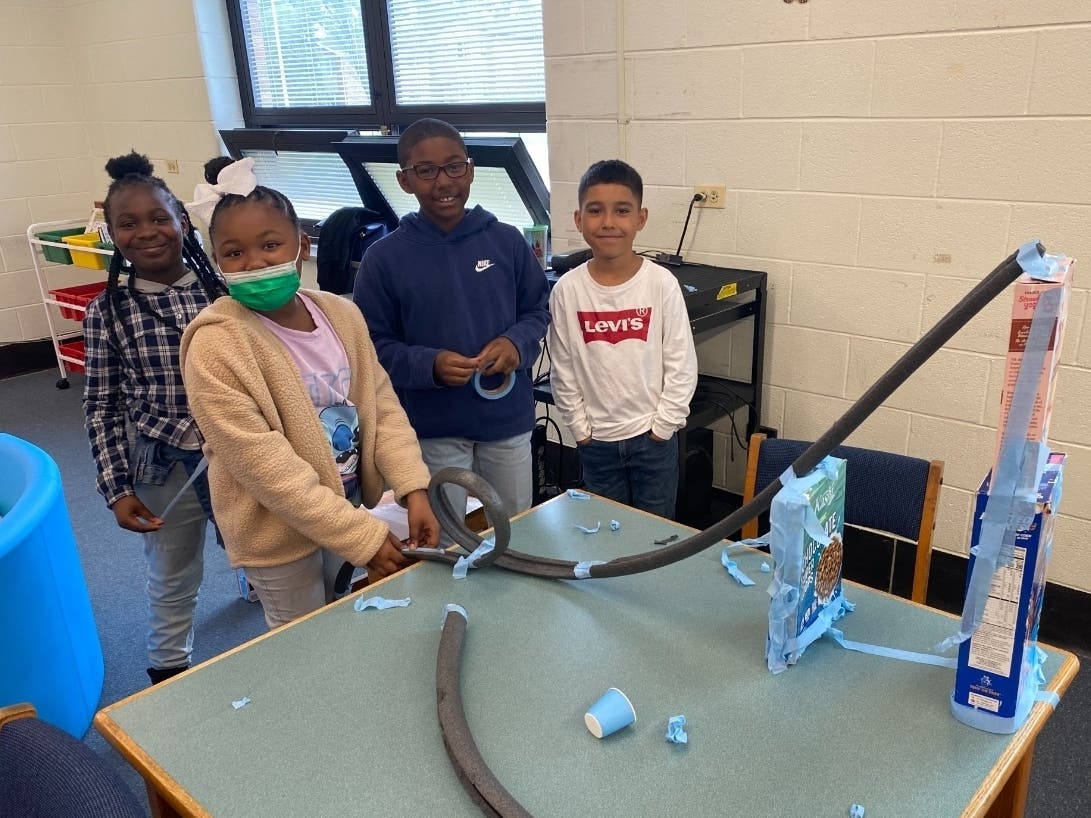


Third-, fourth- and fifth-grade students at CHSD170's Wilson School recently enjoyed an in-school field trip entitled "Exploring Engineering" presented by the Homewood Science Center.
During the program, students learned the history of Homewood's John Miller, a roller coaster inventor in the 1900s. They learned about and experienced the engineering design process first-hand as they created roller coaster hills using everyday materials.
Students gained skill, understanding, and self-efficacy in the engineering design process using pipe insulation, cereal boxes, tape, and marbles to build their own small-scale gravity-driven roller coasters. Next, they analyzed their designs using physics principles of potential energy and frictional effects, which they had learned as part of the Science Center's digital presentation.
Find out what's happening in Chicago Heightsfor free with the latest updates from Patch.
"Our scholars were engaged and enjoyed the time they spent building roller coasters. They definitely looked like engineers in using their problem-solving skills," said third-grade teacher Natalie Lewis.
Third-, fourth- and fifth-grade teachers Keturah Byrd, Kristi Jones, and April Williams, reiterated Lewis' thoughts, adding that it was edifying to see the students working in teams and collaborating on their creations.
Find out what's happening in Chicago Heightsfor free with the latest updates from Patch.
***
Los estudiantes de tercer, cuarto y quinto grado de la escuela Wilson de CHSD170 disfrutaron recientemente de una excursión dentro de la escuela titulada "Exploring Engineering" presentada por el Homewood Science Center.
Durante el programa, los estudiantes aprendieron la historia de John Miller de Homewood, un inventor de la montaña rusa en el siglo XX. Aprendieron y experimentaron el proceso de diseño de ingeniería de primera mano mientras creaban montañas rusas utilizando materiales cotidianos.
Los estudiantes adquirieron habilidades, comprensión y autoeficacia en el proceso de diseño de ingeniería utilizando aislamiento de tuberías, cajas de cereales, cinta adhesiva y canicas para construir sus propias montañas rusas impulsadas por la gravedad a pequeña escala. A continuación, analizaron sus diseños usando principios físicos de energía potencial y efectos de fricción, que habían aprendido como parte de la presentación digital del Centro de Ciencias.
"Nuestros estudiantes estaban comprometidos y disfrutaron el tiempo que dedicaron a construir montañas rusas. Definitivamente parecían ingenieros al usar sus habilidades para resolver problemas", dijo la maestra de tercer grado Natalie Lewis.
Las maestras de tercera, cuarto y quinto grado, Keturah Byrd, Kristi Jones, y April Williams, reiteraron los pensamientos de Lewis y agregaron que fue edificante ver a los estudiantes trabajando en equipos y colaborando en sus creaciones.