Politics & Government
State Considers Bans on Powdered Alcohol, Powdered Caffeine and e-Cigs
Powdered "party" supplied put teens at risk, some lawmakers contend, and the risks are too great.


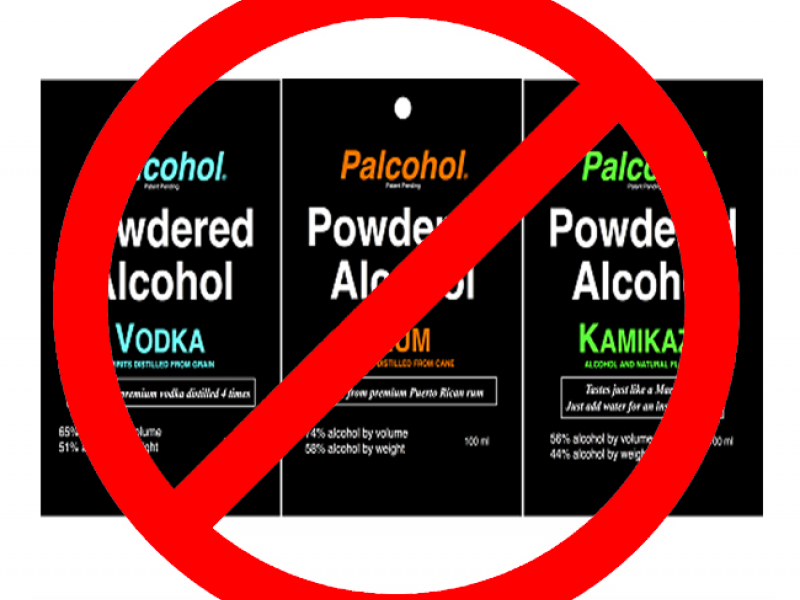
Illinois lawmakers are close to banning — or partially banning — new versions of some of the most popular products on any convenience store shelf. The Illinois Senate is poised to vote on two proposed laws outlawing powdered alcohol and powdered caffeine.
Chicago Democrat Ira Silverstein is pushing the powdered alcohol ban, and the proposal cleared a legislative committee last week.
Find out what's happening in Crystal Lake-Caryfor free with the latest updates from Patch.
Illinois Watchdog reached out to Silverstein, but he did not immediately return our calls.
Silverstein has said, however, that he’s afraid for young people.
Find out what's happening in Crystal Lake-Caryfor free with the latest updates from Patch.
“It’s the type of item that can be sprinkled on food or put in drinks,” Silverstein told the State Journal Register.
But Sherzod Abdukadirov, a research fellow at the Mercatus Center at George Mason University, said the fear about what could possibly, maybe, perhaps occur is a dangerous one.
“The problem with banning (these things) proactively is that you’re actually focusing on hypothetical risks,” Abdukadirov said. “And there are some many hypothetical risks, that if we keep chasing every potential or possible harm our job will never be done.”
Abdukadirov said the proposed bans are real-life examples of the “precautionary principle.”
But Illinois’ ban-happy lawmakers defend their plans.
“My legislation is more about consumer and public education than it is about regulation,” State Sen. Jennifer Bertino-Tarrant (D-Shorewood) said in an email to Illinois Watchdog. “I would argue that it is hard to use caffeine powder safely. It is hard to accurately measure the substance and it is not comparable to coffee granules a consumer purchases at the store.”
Sen. Bertino-Tarrant is pushing her ban on selling powdered caffeine to anyone younger than 18.
She points to the death of Ohio high school student Logan Stiner as proof powdered caffeine is so much more dangerous than a couple of cups of coffee or a few extra energy drinks.
Abdukadirov said we shouldn’t think of powdered caffeine or powdered alcohol as new products. Rather, we need to think of them instead as examples of new technologies.
“When we ban new technologies, it’s easy for people to not see what we’re giving up,” Abdukadirov said.
But Bertino-Tarrant said there isn’t much to miss with powdered caffeine.
“While people need to take personal responsibility for their actions, there are many people out there who may not be aware of the dangers of caffeine powder,” she said.
Make Money, Save Money
Illinois makes a lot of money from the alcohol, caffeine and cigarettes now on store shelves.
The state adds $1.98, per pack, in cigarette taxes and tacks on a 6.25 percent sales tax.
For liquor, taxes range from 23 cents per gallon for beer — about 50 cents per case — to $8.55 a gallon for hard liquor.
The state’s Commission on Government Forecasting and Accountability in early March reported Illinois had already collected $228 million in cigarette taxes and $114 million in liquor taxes.
Illinois has a caffeinated beverage tax, though lawmakers have proposed several ‘sugary beverage’ taxes over the years.
Supporters of a soda tax say it could help reduce skyrocketing costs of healthcare in Illinois.
But so can e-cigarettes, one report says.
A new study from State Budget Solutions says e-cigarettes hold the promise of dramatically improved health outcomes for today’s smokers. Consequently, smoking-related health-care costs should decline as more traditional smokers convert to e-cigarettes.
“E-cigs offer a rare win-win for both public health and public finance,” said State Budget Solutions CEO J. Scott Moody, who wrote the report.
The study notes that Medicaid is disproportionately composed of smokers — at levels twice that of the nation at large — 51 percent versus 21 percent. The study suggests getting smokers to switch from regular cigarettes to e-cigarettes could cut the number of smoking related illnesses and deaths, and save lots of money in the process.
“The issue is the public perception of smoking,” State Rep. Kathleen Willis (D-Wood Dale) said. “The perception is that smoking, or vaping, is wrong. So we banned smoking (in restaurants and offices).”
Willis said until the FDA weighs in she’s comfortable with a ban on e-cigarettes in schools, day-care centers and the common areas of state buildings.
“This is a compromise,” said Willis, who had introduced a total ban, “but we’re giving people a little more leverage to make their own decisions.”
Get more local news delivered straight to your inbox. Sign up for free Patch newsletters and alerts.