Business & Tech
Elgin Area Chamber Of Commerce: Prices Rise Faster Than Expected In June For Both Consumers And Businesses
Prices for used cars and trucks rose by 10.5 percent in June over May and have grown by 45.2 percent in the past 12 months.

July 28, 2021
Federal Reserve Chairman Jerome Powell continued to emphasize that inflation is transitory during his testimony to the House Financial Services Committee last week. However, he also admitted that inflationary effects have been larger and more persistent than expected. While there are signs that current inflation pressures are generally tied to the aftermath of the pandemic, longer-run forces might shift the economic landscape and merit some consideration.
Find out what's happening in Elginfor free with the latest updates from Patch.
Powell’s testimony came a day after the Bureau of Labor Statistics released its consumer price index report for June, which showed the headline figure growing by 0.9 percent — the highest month-over-month number in 13 years. Combined with the previous three months, when the consumer price index grew by at least half a percentage point each month, inflation has grown by 2.9 percent over the past four months — an annualized rate of 8.7 percent. The less-volatile core inflation index, which excludes food and energy, also grew by 0.9 percent in June.
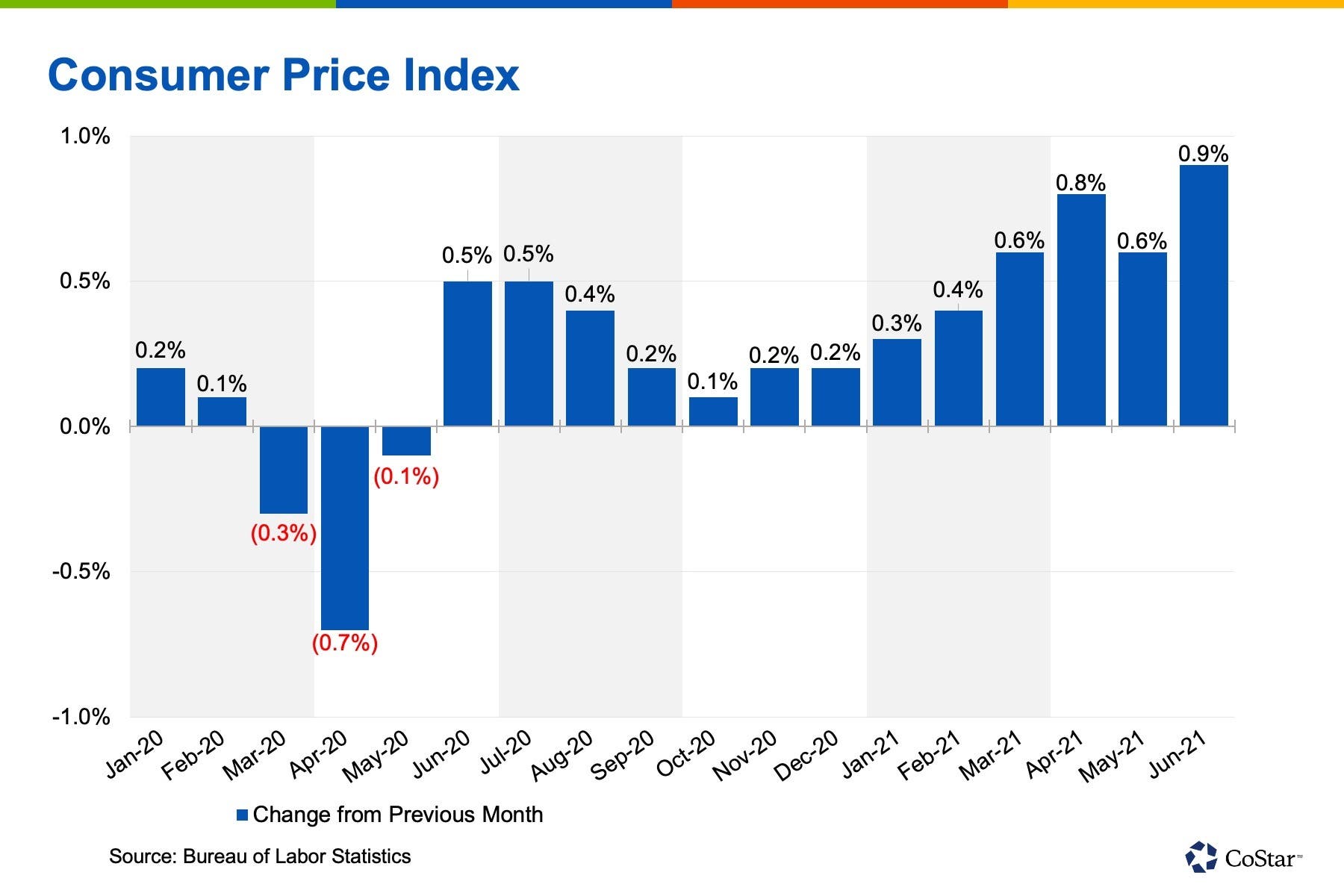
Reopening continues to have a major impact on inflation in areas related to supply chain disruptions and travel as pent-up demand overwhelms businesses.
Find out what's happening in Elginfor free with the latest updates from Patch.
Used automobiles have been in high demand, a byproduct of a global chip shortage that has limited new car production. Prices for used cars and trucks rose by 10.5 percent in June over May and have grown by 45.2 percent in the past 12 months. New cars and trucks have experienced slower price growth of 2 percent in June and 5.3 percent year over year as sales have pulled back on inventory shortages. Note, however, that both indexes tend to underreport the change in actual prices paid for automobiles because they are adjusted for quality changes, including more advanced technology and improved fuel economy, which generally have the effect of weighing on price increases by adding value from year to year.
Three travel-related categories saw outsize price gains:
• Lodging away from home (including hotels and motels), where prices rose by 7 percent in June and 15.1 percent over the past 12 months.
• Car and truck rental rates grew by 5.2 percent in June and 87.7 percent over the past 12 months.
• Airfares grew by 2.7 percent in June and 24.6 percent over the past 12 months.
While significant increases, price hikes in these categories rarely affect the overall price index as they represent a small portion of consumer spending. However, combined they accounted for 0.5 percentage points of June’s CPI growth, whereas their expected contribution is less than 0.1 percentage point based on their relative importance to spending.
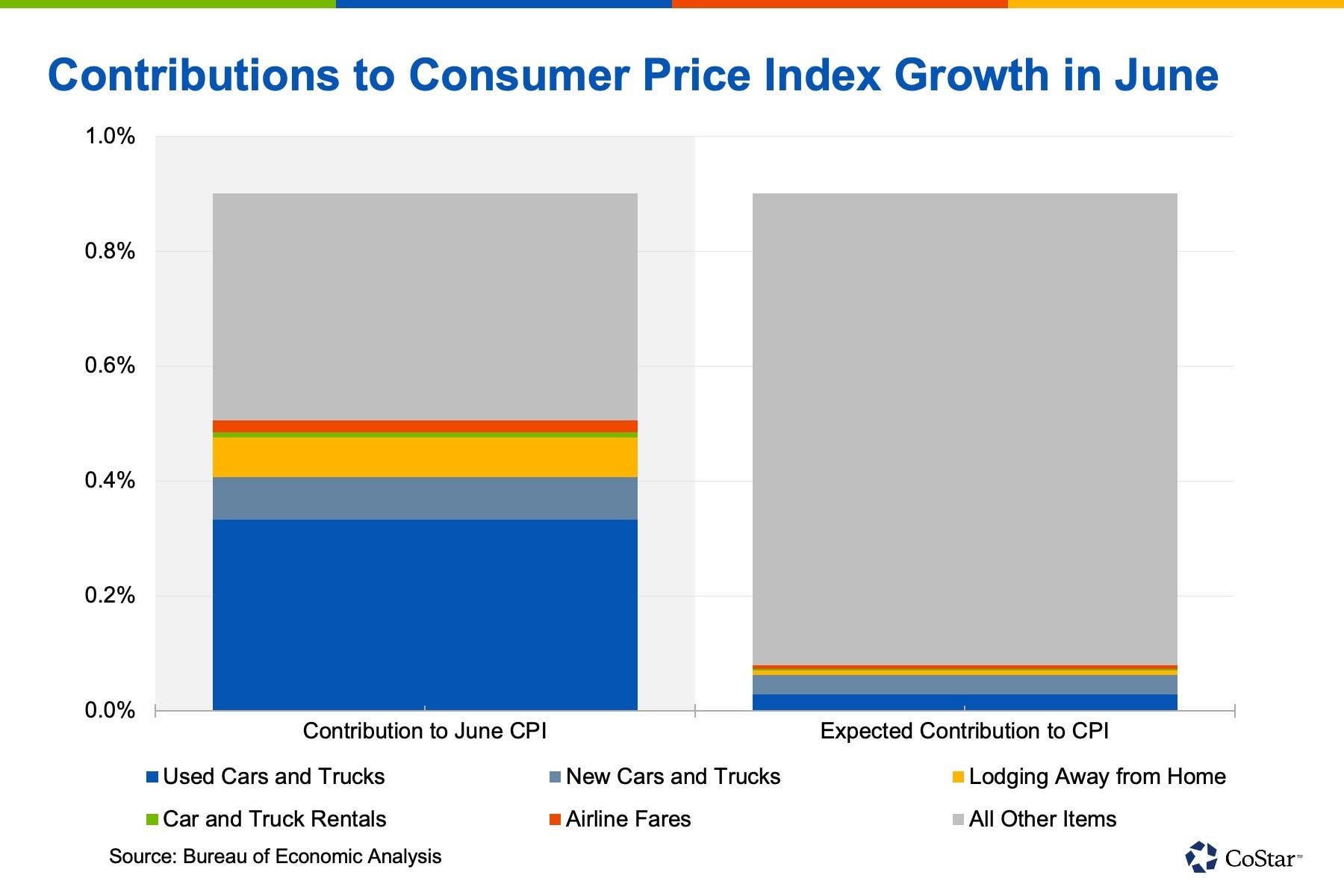
For inflation to really take off, prices for a broader set of goods and services would need to grow faster. But so far, few other categories have demonstrated material growth in prices. Notably, shelter costs, which include rents and owners' equivalent rents, are experiencing just modest growth. This may seem like a disconnect, given recent apartment asking rents in the U.S. and home prices. But both of those represent prices paid by recent lessees and homebuyers, not necessarily the broader renter and homeowner pools. Moreover, many homeowners have been able to lower their monthly payments by refinancing their mortgages at lower rates.
Firms are facing similar increases in prices. The BLS’ producer price index for final demand grew by 1 percent in June and 7.3 percent over the past 12 months. The annual rate represents the fastest pace in the series' nearly 11-year history.
Firms also reported much higher growth in the price for intermediate demand, the goods and services used as inputs into production. Prices in June grew by 1.9 percent for processed goods, 2.6 percent for unprocessed goods, and 1.1 percent for services. Processed goods related to construction, in particular, have seen outsize price growth in recent months, including for lumber — which has more than doubled in the past 12 months and has only recently fallen back to earth — other wood products, metals and metal products. Like consumers, firms are also paying more for intermediate services related to travel.
While Powell insists that this recent boost in inflation will be transitory, less attention is being paid to the concept that inflation, while stabilizing, could remain higher than the sub-2% range that prevailed during pre-COVID days. Several factors support expectations of a higher level of inflation post-COVID, most of which are due to forces that kept inflation low in the last decade. For example, the rise of globalization encouraged the outsourcing of jobs and supply chains, opening competition from lower-cost sources and keeping prices tame. Over the past few years, though, trade policy and nationalism have shut some doors, levied tariffs on trade partners and encouraged the re-shoring or near-shoring of far-flung supply chains, resulting in higher costs and reversing the trend of falling (or contained) prices.
Demographics also could play a larger force in the American economy, in particular the aging of the American population. As the cohort of Americans in retirement grows, their savings impact falls, as retirees tend to save less during their sunset years. That spending helps fuel aggregate demand, adding price pressures. The loss of savings from this cohort is not about to be offset by increased savings by Gen Xers, a cohort too small to outweigh baby boomers and the millennials who are heavily into their spending years.
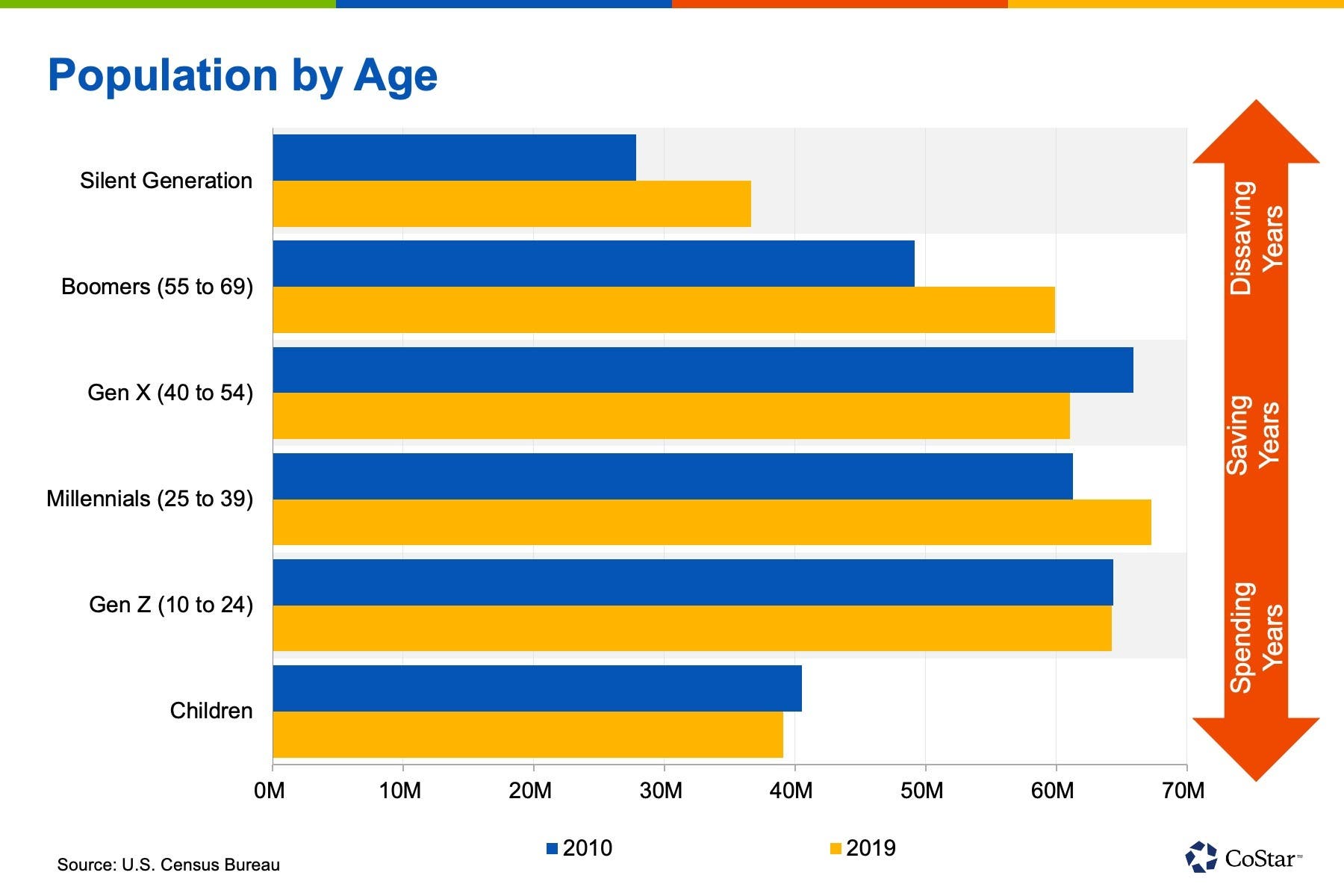
At the same time, the expected slowdown of growth in the working-age labor force should tighten labor markets, pressuring wages, which are likely to work into higher prices. Both trends foretell the coming of a higher price regime independent of a post-COVID environment.
The Week Ahead …
The housing market will draw most of our attention this week, as data on housing starts and existing home sales for June is released. Homebuilders are sitting on a pile of permits that have yet to be used to break ground, but the recent plunge in the price of lumber might induce a pickup in much-needed construction of new homes.
Sales of existing homes have fallen for the past four months on lean inventories and higher prices, but pending sales in May surged, and as these run about four to six weeks ahead of contract closings, we would expect to see June sales to have made a turnaround.
This press release was produced by the Elgin Area Chamber of Commerce. The views expressed here are the author’s own.