Business & Tech
Elgin Area Chamber Of Commerce: The US Hispanic And Latino Population, In Four Charts
See the latest announcement from the Elgin Area Chamber of Commerce.

September 28, 2021
Find out what's happening in Elginfor free with the latest updates from Patch.

By Rohit Diwadkar
CoStar News
Find out what's happening in Elginfor free with the latest updates from Patch.
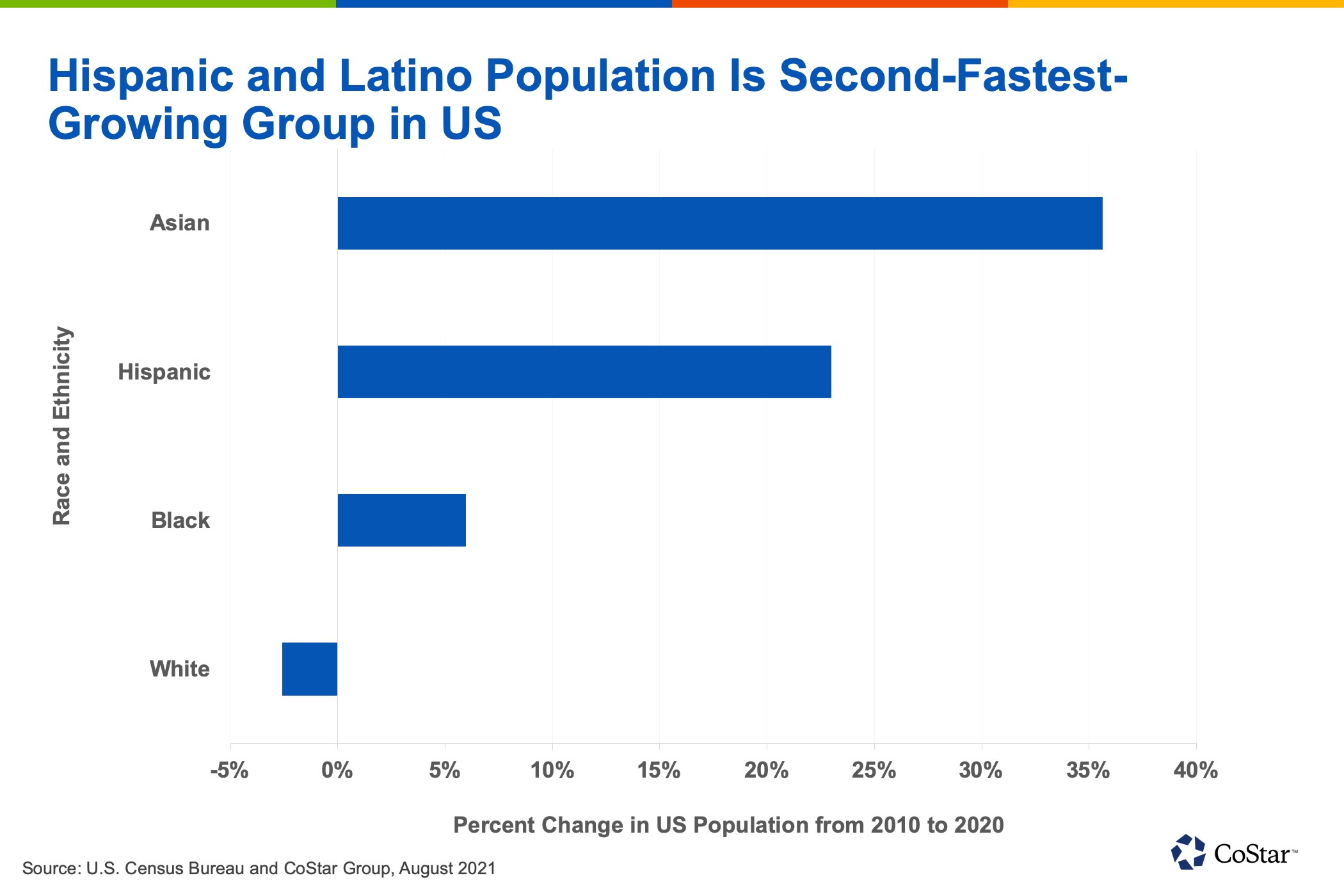
Sept. 15 through Oct. 15 is Hispanic Heritage Month in the United States, so let's take a look at one of the fastest-growing demographic groups over the past decade.
Hispanics and Latinos have been a major part of U.S. population growth during the past 10 years, representing the second-fastest-growing group in the country. In 2020, 1 in 5 people in the U.S. identified themselves as Hispanic or Latino. Also, the number of Hispanics and Latinos who consider themselves multiracial increased: More than 20 million identified with more than one race, according to the 2020 census, up significantly from just 3 million in 2010.
Breaking Down the Growth
Hispanics and Latinos have become the largest racial and ethnic group in California. Texas, California and Florida together accounted for 43% of the nation’s Hispanic and Latino population growth and increased by more than 1 million from 2010 to 2020. But North and South Dakota have seen the fastest growth in their populations since 2010. Each of these states, though, sport relatively small Hispanic and Latino populations at fewer than 40,000.
Immigration Plays Smaller Factor in Population Growth
Newborns accelerated growth of the U.S. Hispanic and Latino population as the number of people immigrating here declined. Since 2010, 9.3 million Hispanics and Latinos were born in the U.S. compared to 3.5 million Hispanic and Latino immigrants who came to the U.S. from 2010 to 2019. In the 1980s and 1990s, immigration drove much of the groups' population growth in the U.S.

Source: CoStar Group, www.costar.com
This press release was produced by the Elgin Area Chamber of Commerce. The views expressed here are the author’s own.