Seasonal & Holidays
After 60 Years 'Hardrock, Coco and Joe' Is Still A Chicago Holiday Classic
Stuff you didn't know about the "three little men two-feet high."


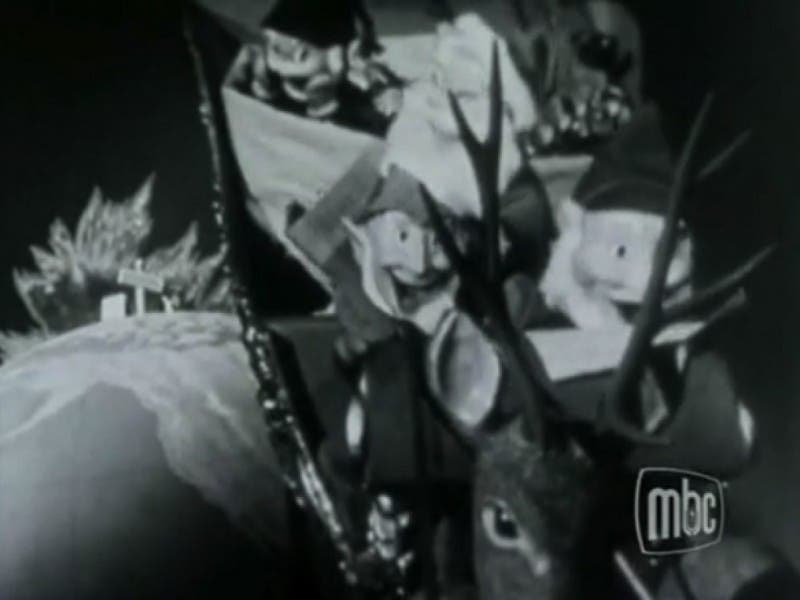
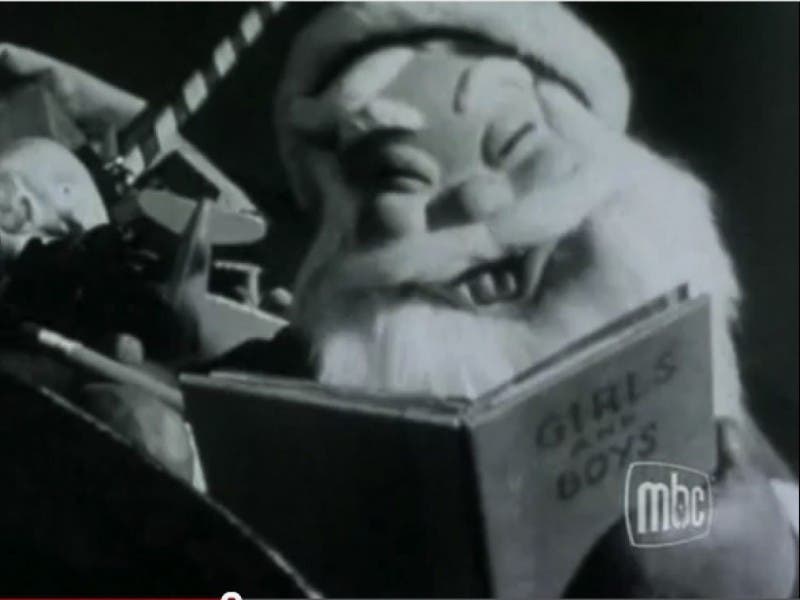


If you’re a Chicagoan of a certain age—and we won’t say what age—the annual airing of Hardrock, Coco and Joe on WGN was probably one of your holiday traditions.
The black-and-white “cartoonette” employed all of the state-of-the-art technology available to stop-action animators in 1951. Buried in shadows and set high above a spinning earth, a chorus of male yodelers sang the story of Santa’s three favorite helpers acted out by scary Laplander-looking elves and a Santa that bore a striking resemblance to its Chinese-American creator.
Children were first introduced to the “story so queer” about Hardrock, Coco and Joe by the genial host of WGN’s Garfield Goose and Friends, Frazier Thomas, on Dec. 18, 1956.
Find out what's happening in Elmhurstfor free with the latest updates from Patch.
WATCH THE ‘Hardrock, Coco and Joe’ cartoonette.
Find out what's happening in Elmhurstfor free with the latest updates from Patch.
Museum of Broadcast Communications
The two-minute, forty-five-second animated short was created by a fledgling animation studio called Centaur Productions for a music publisher, Hill and Range Songs Inc., that wanted a cartonette to go with its holiday ditty The Three Little Drawfs (sic). Centaur would also go on to produce another similar, stop-action short that has also become a cult classic,Suzy Snowflake.
While Hardrock and Coco had actual jobs assisting Santa on his midnight flight as reindeer teamster and navigator, Joe was generally useless, but Santa brought him along anyway “because he loved him so.”
So why does “Hardrock, Coco and Joe” continue to endure 60 years later and reduce most lifelong Chicagoans to an emotional puddle of sap?
“The appeal of [the Centaur films] is the stop-motion animation,” said Rick Goldschmidt, a pop culture historian from the south suburbs. “It’s almost like decorations moving. It captured a believable world of puppetry that you can’t capture on a computer.”
Aside from Centaur Productions and Hill and Range Songs, the only credits noted on the IMDB website, little else is known about the production of Hardrock, Coco and Joe.
Here are a few things you probably never knew about “the three little men two feet high.”
- Before Hardrock, Coco and Joe became a Chicago-thing, it was a Johnstown, Penn.-thing. While WGN is often credited for being the first station to air HCJ, it was actually shown on WJAC-TV in 1952 to fill airtime in the broadcast day—four years before Frazier Thomas showed it on Garfield Goose.
- Special-effects pioneer Wah Ming Chang, a Chinese-American sculptor who rose through Walt Disney’s Models and Effects Department developing the wooden model for Pinocchio so Disney’s animators could study its body movements, handcrafted the puppet-models for Hardrock, Coco and Joe.
- Santa, who has an Asian flair, is said to be based on Chang.
- Chang and an associate formed Centaur Productions in 1948 with the express purpose of creating commercials for early television. The studio folded in the early 1950s after a failed attempt to animate hand-cranked toys with sound.
- Chang would go on to become a major designer for film and television, creating special effects and props for the 1961 film The Time Machine, the phaser in Star Trek, and the Pillsbury Doughboy. He also designed the early prototype Barbie doll for Mattel.
- Stuart Hambien, a Christian songwriter, who prior to his conversion by evangelist Billy Graham was a hopeless drunk and gambler, wrote the title song for HCJ. Hambien went on to pen such popular songs as This Ole House and It Is No Secret (What God Can Do), inspired by a remark by John Wayne.
- The Les Tucker singers are often mistakenly credited as the male yodelers that sing the famous chorus, “O lee o-lady, Oh-Lady, i-Oh.” According to Goldschmidt, the Les Tucker singers weren’t involved in the HCJ production, but worked out a sponsorship deal with Frazier Thomas and re-recorded the song, emulating the original singers as close as possible. The records were sold at Walgreen’s.
- For Chang and Hambien, their work on HCJ was but a blip in their long successful careers in Hollywood and is not even mentioned in their biographies.
Photo Captions: (Photos 1 and 2) Screenshots from the original “cartoonette” I (Photo 3) Wah Ming Chang the Chinese-American creator of ”Hardrock, Coco and Joe,” who went on to long, successful career designing special effects for ’Star Trek,’ movies and even the Pillsbury Doughboy. (Photo 4) Original molds used to make the puppets in “Hardrock, Coco and Joe.”
Get more local news delivered straight to your inbox. Sign up for free Patch newsletters and alerts.