Business & Tech
Metra and the Union Pacific Railroad Get the Word Out About Safety Upgrades, Increased Traffic on the West Line
Officials say $132 million project will improve Metra's on-time performance, increase safety for pedestrians and end the curfew for freighters.


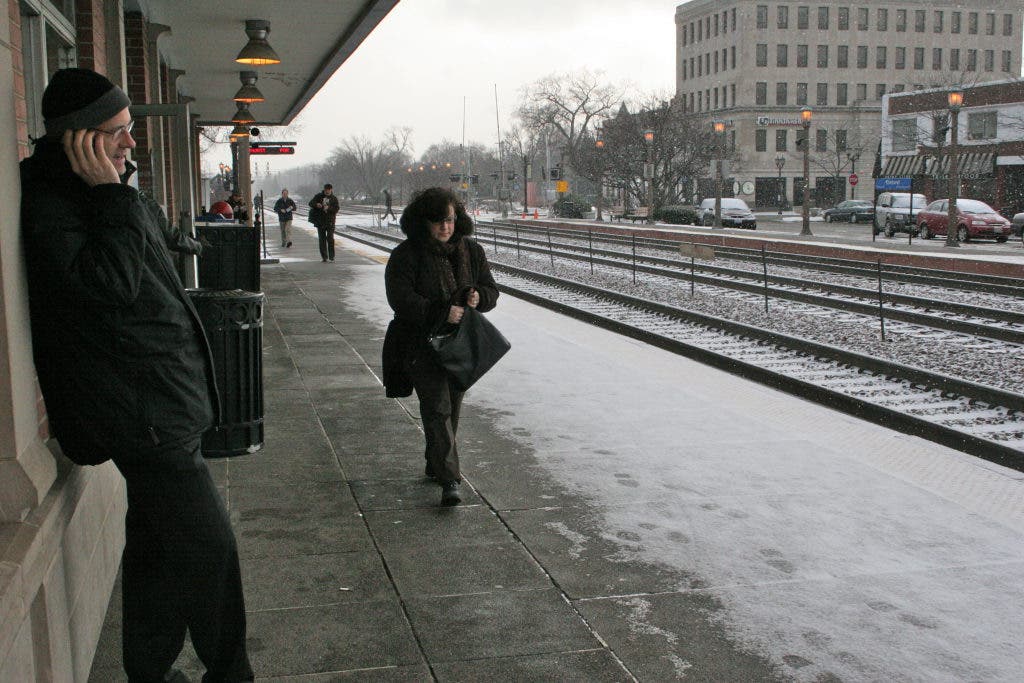


The idea of increasing train traffic while also increasing pedestrian safety might seem counterintuitive, but Metra and the Union Pacific Railroad are marrying the two objectives with a $132 million initiative.
Stations all along the Union Pacific west line are seeing pedestrian grade improvements, such as train warning systems with pedestrian gates, new pedestrian paths, right-of-way fencing and more. The stations affected are: College Avenue Station in Wheaton, and the Elmhurst, Geneva, Glen Ellyn, Maywood, Melrose Park, Villa Park and Winfield stations.
“The repairs and the work being done is somewhat different at each station down the line,” said Union Pacific spokesman Mark Davis. “All of the stations received a little pedestrian guidance. We’ve extended the sidewalk areas and put fencing so it literally guides people to the streets.”
Find out what's happening in Elmhurstfor free with the latest updates from Patch.
The train warning systems use audible and visual alerts to warn pedestrians if a second train, that they might not otherwise see because another stopped train is blocking their view, is coming. Pedestrians have been known to dart in front of a stopped commuter train, only to be struck by another oncoming train that was out of view.
“Our team and Metra studied best practices on how to guide people safely as they try to cross the tracks,” Davis said, adding workers have been testing and putting up the electronic signs for weeks to get them ready to be activated on March 1.
Find out what's happening in Elmhurstfor free with the latest updates from Patch.
But there’s a lot more to the plan for the Union Pacific and Metra.
Keeping it Moving
“A lot of it is not only enhancing safety, but it also enhances the ability to operate trains more fluidly,” Davis said.
The project is expected to reduce by 50 percent delays in passenger and freight trains on the West line, improving Metra’s on-time performance. Metra says the project will also result in an 11 percent reduction in crossing-gate downtime.
Part of the initiative is geared toward allowing freight trains to operate during rush hour, when commuters are loading and unloading, Davis said. West line freight trains have, up until now, been operating under a curfew, he said.
“The plan is, once this is implemented, we’ll operate freight trains during rush hour, much like they do on the (Burlington Northern line)—on the center track,” he said. “Also important to the west line is adding a third main (track) in a couple of areas and enhancing railroad signaling so the trains can move more fluidly. We’re adding crossovers, switches, that guide trains from one track to another.”
Davis said when the work is completed in 2013, trains can be guided around one another if one train should stop, so as not to shut down the whole system.
‘Good Morning! Safety Day on the Railroad’
Sheldon Soldwisch of Bensenville, a locomotive engineer for the Union Pacific, was one of about a half-dozen railroad employees handing out flyers on the new train warning system to commuters Tuesday morning at the Elmhurst station.
“We’re handing out safety information to let them know the rules have changed and that the trains are going to be moving while the passengers load and unload,” he said. “We have 100 trains running simultaneously during rush hour, getting people from their job to home, home to job, and that’s quite a feat, logistically. When you stop the trains, they fall like dominoes.”
He paused to hand out some more flyers.
“Good morning! Safety day on the railroad,” he called to passers by.
“With this new rule change, freight trains can keep coming through—or even passenger trains—while they’re loading and unloading so you keep the movement.”
Even with the greater traffic, the new train warning system will make the west line safer, he said.
“If you do what you’re supposed to do, it’s a safe world,” he said.
It’s also very good for business, and consumers, he said.
“You can’t go five minutes without touching something that the railroad has delivered,” he said. “Electricity, your car, your refrigerator—everybody really needs this stuff. And everyone wants everything cheaper. If we are more efficient and more productive, it’s better for everybody.”
‘People Seem Receptive’
Elmhurst is the busiest station on the Union Pacific West line, with about 1,900 riders a day, said Michael Gillis, spokesman for Metra.
“Most people have been receptive to it,” he said. “I’ve seen a lot of people reading the flyer. I haven’t gotten a lot of feedback this morning because everyone is rushing to get on the train, but I think the word’s getting out.”
The $132 million cost will be split between Metra and Union Pacific. Riders will see no increase in fares to pay for the work, Gillis said.
Upgrades will continue over the next couple of years. To see exactly what work is being done in each town, and for more information on the project, visit the Metra UP West page.
Get more local news delivered straight to your inbox. Sign up for free Patch newsletters and alerts.