Health & Fitness
This 3-D Printed Ovary Might Help Restore Fertility
Northwestern scientists have found the "holy grail of bioengineering for regenerative medicine" in functioning artificial ovaries.


EVANSTON, IL — Researchers at Northwestern University created bioprosthetic 3-D printed ovaries and implanted them in mice, who have been able to ovulate and give birth to healthy pups, according to a study published Tuesday in Nature Communications.
The goal of the research has been to restore fertility in mice. So far, the artificial ovaries, made up of 3-D printed saffolds housing immature eggs, have been successful in boosting hormone production, researchers said.
“This research shows these bioprosthetic ovaries have long-term, durable function,” said Teresa K. Woodruff, a reproductive scientist and director of the Women’s Health Research Institute at the university's Feinberg School of Medicine. “Using bioengineering, instead of transplanting from a cadaver, to create organ structures that function and restore the health of that tissue for that person, is the holy grail of bioengineering for regenerative medicine.”
Find out what's happening in Evanstonfor free with the latest updates from Patch.
In the Northwestern study, scientists managed to find the right material (gelatin) at just the right temperature in order to keep the 3-D printed ovary strong enough to be handled during surgery and porous enough to interact with the internal tissues of the mouse.
Find out what's happening in Evanstonfor free with the latest updates from Patch.
Most hydrogels are made up of water and are very weak, according to Ramille Shah, assistant professor of materials science and engineering at Northwestern's McCormick School of Engineering and of surgery at Feinberg.
“But we found a gelatin temperature that allows it to be self-supporting, not collapse, and lead to building multiple layers," Shah said. "No one else has been able to print gelatin with such well-defined and self-supported geometry.”
“Every organ has a skeleton,” said Woodruff. “We learned what that ovary skeleton looked like and used it as model for the bioprosthetic ovary implant.”
» Sign up to get Patch real-time email alerts for the latest news for Evanston— or another community in the area.
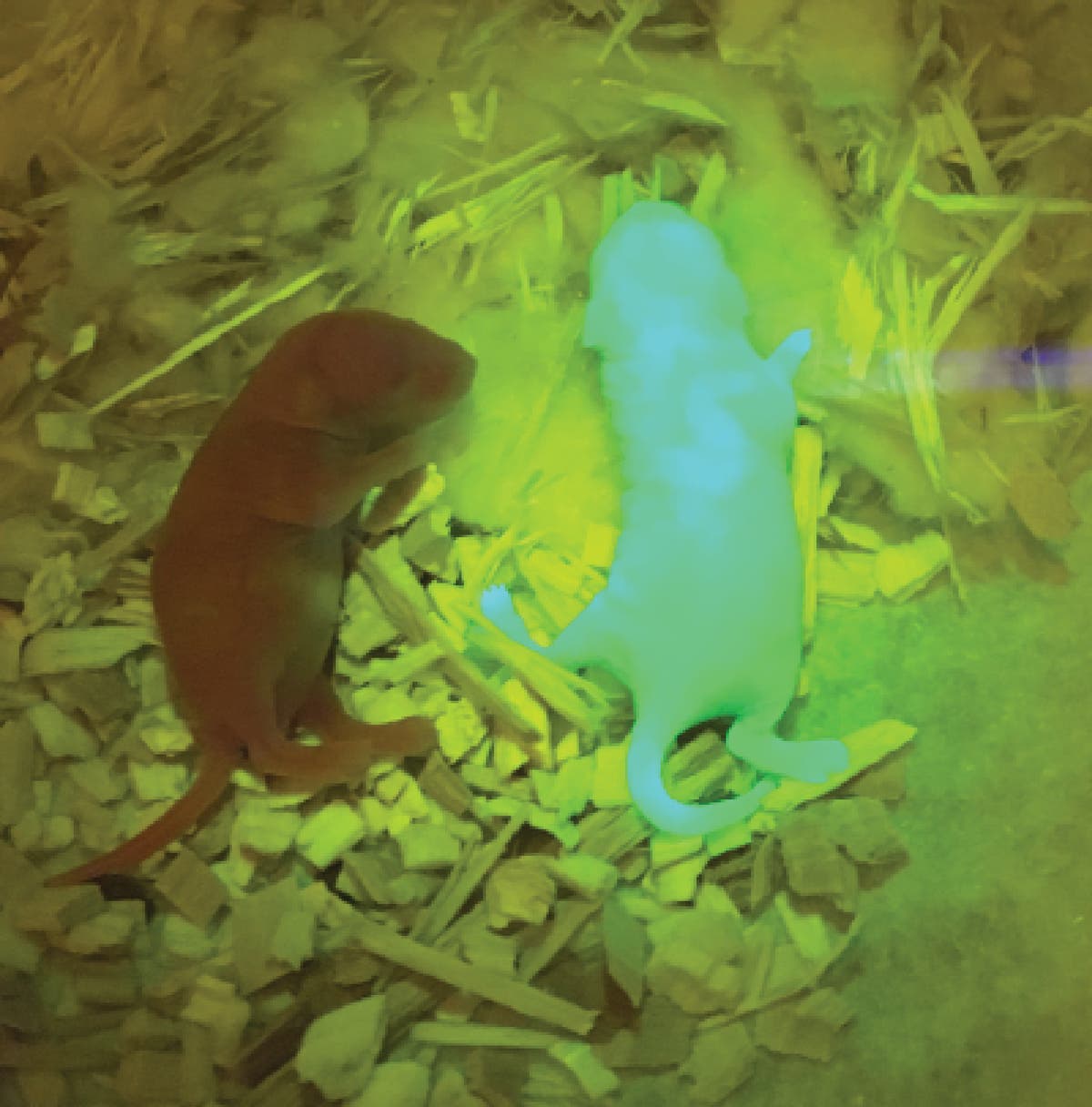
The researchers hope that developing bioprosthetic ovaries can help restore fertility and hormone production in women who have had cancer treatments as adults or children. 3-D printed implants could also have a significant impact on the future of soft-tissue regenerative medicine.
Shah said it was motivational to be part of an all-female research team (a "very fruitful" collaboration between Feinberg and McCormick) doing research to find solutions to female health issues.
“What really makes a collaboration work are the personalities and being able to find the humor in the research,” Shah said. “Teresa and I joked that we’re grandparents of these pups.”
» Read more from Northwestern Now
Top photo | Scaffold for bioprosthetic mouse ovary printed with gelatin | Northwestern University
Get more local news delivered straight to your inbox. Sign up for free Patch newsletters and alerts.