Arts & Entertainment
Block Museum to Unveil Complex Legacy of Kashmiri Art
Bold exhibition at Northwestern explores history of cultural impact and timely questions of collecting.


Submitted by Northwestern University
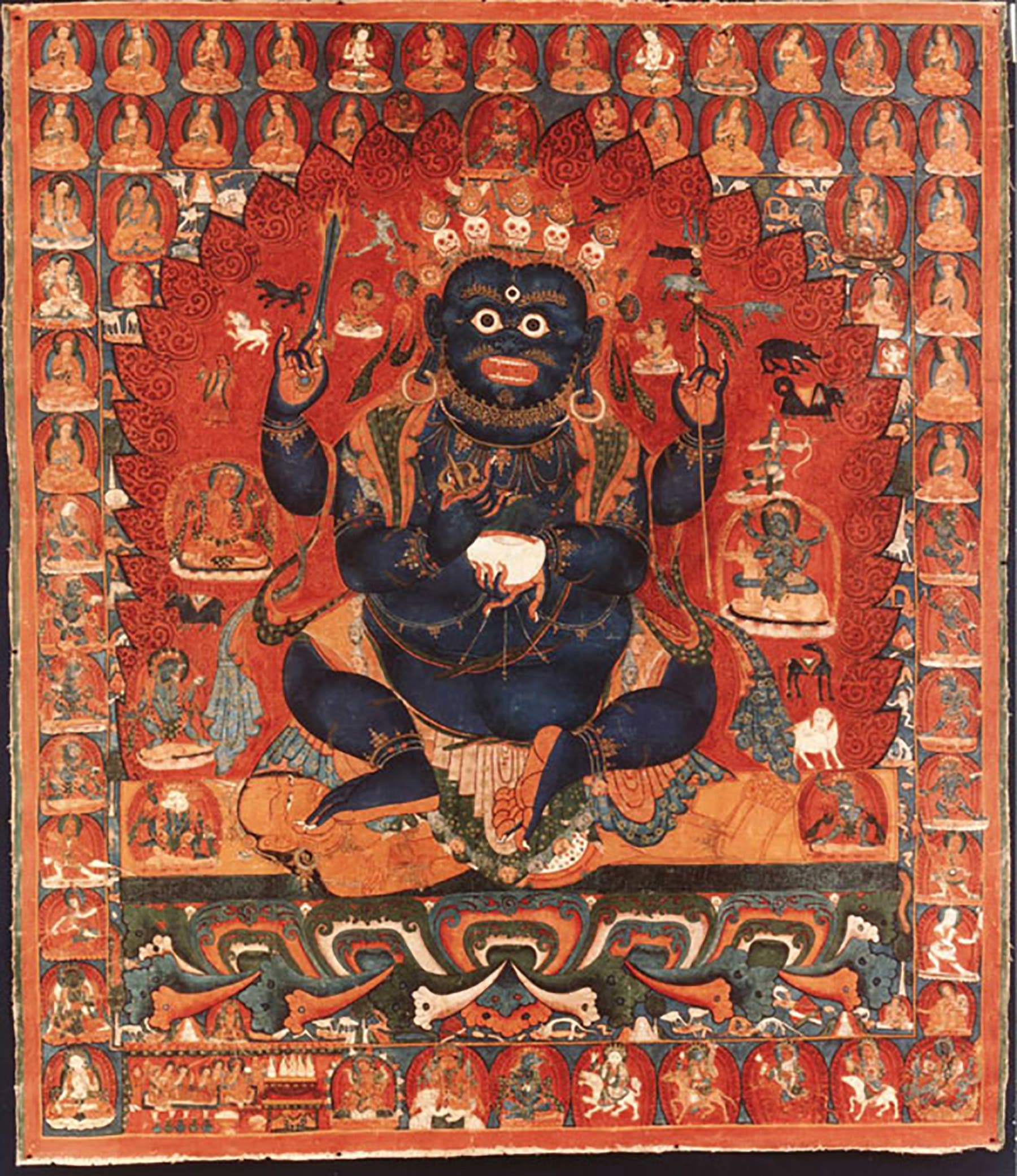
What is the impact when one culture acquires the sacred objects of another? The Mary and Leigh Block Museum of Art at Northwestern University is putting that question under the microscope this winter with the exhibition “Collecting Paradise: Buddhist Art of Kashmir and Its Legacies.”
Free and open to the public from Jan. 13 through April 12, 2015, this Main Gallery exhibition takes a penetrating look at how Buddhist art from Kashmir and the Western Himalayas has traveled across centuries and borders -- first within the region and later to the U.S. and Europe -- raising questions about cultural impact and the varying motivations behind modes of collecting.
Find out what's happening in Evanstonfor free with the latest updates from Patch.
“Collecting Paradise” features Buddhist objects, including manuscripts, paintings, and sculptures in ivory, metal and wood, dating from the 7th to 17th centuries. With 44 objects, the exhibition presents an original and innovative look at art from the region of Kashmir and the Western Himalayas, as well as how it has been “collected” over time.
The exhibition was curated by a leading scholar in the field, Robert Linrothe, associate professor of art history in Northwestern’s Weinberg College of Arts and Sciences, with the support of Christian Luczanits, the David L. Snellgrove Senior Lecturer in Tibetan and Buddhist Art at The School of Oriental and African Studies (SOAS), University of London.
Find out what's happening in Evanstonfor free with the latest updates from Patch.
“‘Collecting Paradise’ is the most ambitious exhibition in the Block’s history, and we are very grateful to the National Endowment for the Arts for recognizing its significance,” said Lisa Corrin, the Ellen Philips Katz Director of the Block Museum. “As part of our new global initiative, this exhibition brings together works of Asian art that are true masterpieces -- among the most important of their kind in the U.S.”
“Professor Linrothe is one of the few experts in art of this region teaching in the U.S. today. He has spent decades traveling to remote locations to study historic sites and form relationships with local experts. This direct experience of the art of Kashmir and the Western Himalayas in situ has contributed to his innovative and thought-provoking thesis on the migration of culture,” Corrin added.
A companion exhibition, “Collecting Culture: Himalaya through the Lens,” Jan. 13 through April 12, in the Alsdorf Gallery, further examines the impact of centuries of collecting in the region. Co-curated by Kathleen Bickford Berzock, the Block’s associate director of curatorial affairs, and Robert Linrothe, “Collecting Culture” looks critically at U.S. and European engagement in the Himalayas beginning in the mid-19th century through lenses, including photography, cartography, natural science and ethnography. It reflects on the ways Westerners have perceived, defined and acquired the Himalayas, raising questions about what is gained and what is lost when objects are removed from their intended cultural context.
“Collecting Culture” presents the expeditions of four individuals from the late 1920s through the 1940s -- Italian scholar Giuseppe Tucci; American zoologist Walter Koelz, who worked with Thakur Rup Chand, his Indian partner and guide; and Northwestern University professor William McGovern.
Eleven of Tucci’s, Koelz’s and Rup Chand’s acquisitions are included in “Collecting Paradise.” This enables museum visitors to consider the motivations and actions of these individuals, as well as contemplate the impact of transferring consecrated objects from religious shrines to museums, where they are presented for their aesthetic value.
“With these exhibitions, we are raising questions that a university museum is uniquely capable of addressing -- specifically, the complex issues surrounding the origins of an object and how its meaning can shift with context. Through a dynamic schedule of free public programs this winter, we will present audiences with unique opportunities to consider and examine these questions,” Corrin said.
“Collecting Paradise” brings together works from The Art Institute of Chicago, the Asia Society (New York City), the Cleveland Museum of Art, the Los Angeles County Museum of Art, The Nelson-Atkins Museum of Art, the Rubin Museum of Art (New York City), the Saint Louis Art Museum, the University of Michigan Museum of Anthropological Archaeology, the Virginia Museum of Fine Arts, and four private collections.
The exhibition is accompanied by an illustrated, color catalogue that shares new research and perspectives that have developed during the formation of the exhibition. After its premiere at the Block, “Collecting Paradise” will travel to the Rubin Museum of Art, the foremost museum of Himalayan art in the U.S.
- See more at: http://www.northwestern.edu/newscenter/stories/2014/12/block-museum-unveils-complex-legacy-of-kashmiri-art.html#sthash.jhJz9ef2.dpuf
Get more local news delivered straight to your inbox. Sign up for free Patch newsletters and alerts.