Politics & Government
Combating International Islamophobia Act Passed By U.S. House
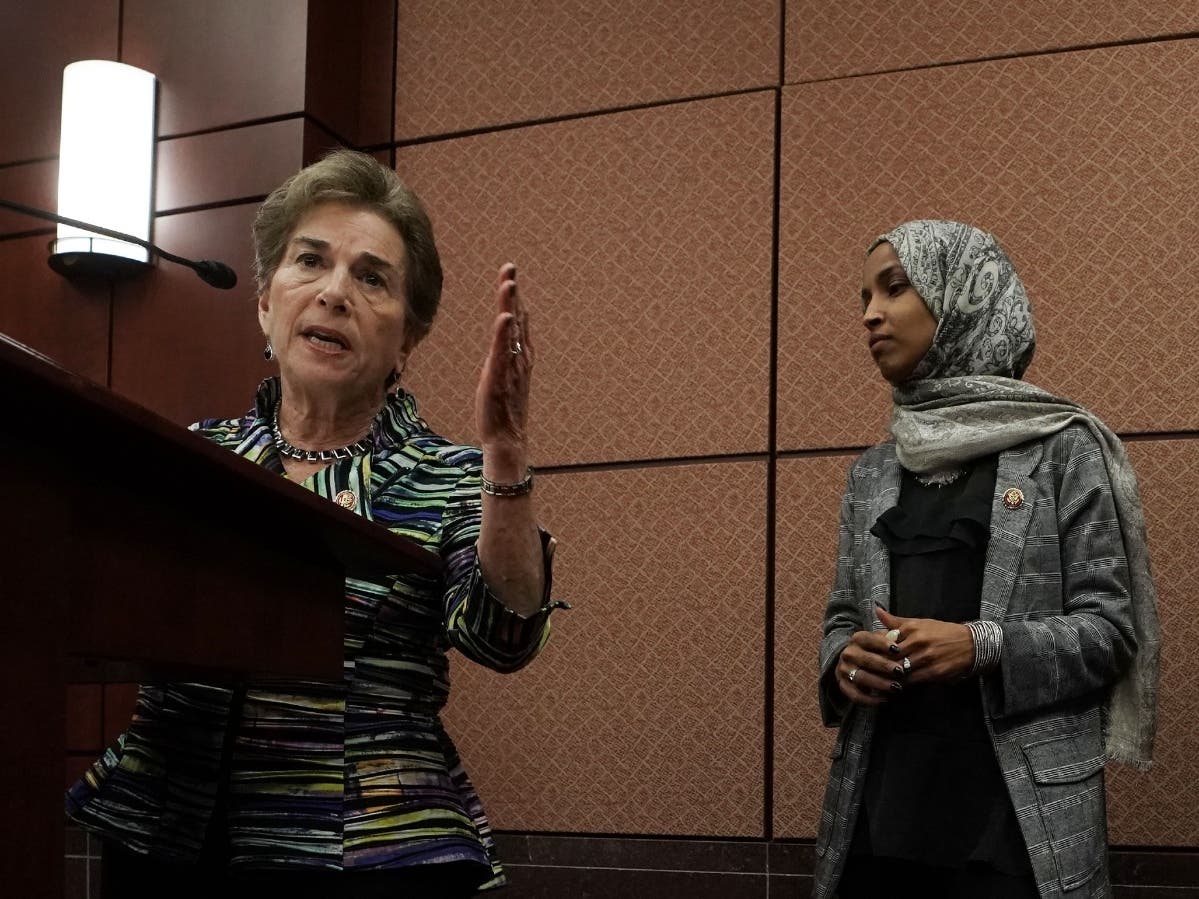
U.S. Rep. Jan Schakowsky co-sponsored the bill, which was introduced in October by fellow Democratic congresswoman U.S. Rep. Ilhan Omar.


WASHINGTON, D.C. — In a party-line vote, the U.S. House of Representatives on Wednesday passed legislation establishing a special envoy to address Islamophobia.
Congresswoman Jan Schakowsky (D-Evanston) was a co-lead on the legislation, which was introduced in October by U.S. Rep. Ilhan Omar (D-Minneapolis).
Schakowsky cited surveys showing nearly 70 percent of American Muslims have personally experienced anti-Muslim hate, bigotry or violence.
Find out what's happening in Evanstonfor free with the latest updates from Patch.
"This anti-Muslim hate isn't just confined to certain communities and areas of this country," Schakowsky said. "It has reached out in ugly ways, including in my own community and my own district, to a member of my staff and her family."
Patch requested more information about that incident from Schakowsky's, including when and where it occurred, what happened, and how it was handled. Miguel Ayala, Schakowsky's communication director, declined to provide any details, citing the privacy of the staffer.
Find out what's happening in Evanstonfor free with the latest updates from Patch.
The vote to approve H.R. 5665, the Combating International Islamophobia Act, was 219 to 212, with three members not voting.
The bill requires the Secretary of State to establish an Office to Monitor and Combat Islamophobia in the State Department headed by the new special envoy. That office would be responsible for assessing "acts of Islamophobia and Islamophobic incitement" and consulting with any organizations or institutions the special envoy may wish.
The nine-page bill also calls for the inclusion of descriptions of violence, harassment, vandalism, racist propaganda, hate speech and detention targeting Muslims, as well as the response by foreign governments, in State Department reports on human rights practices and international religious freedom.
"This should not be a controversial bill," Schakowsky said ahead of the vote in a speech on the House floor.
"We have had a special envoy to monitor and combat antisemitism for years, and I proudly support that office's work," she said. "And as a Jew myself, I see the parallel quite directly between antisemitism and Islamophobia, and we need to be combating both. As a nation that prides itself on defending human rights and standing up against hate and bigotry, creating a special envoy to monitor and combat Islamophobia makes perfect sense."
Omar, who came to the U.S. as a child in the mid-1990s before being elected to the Minnesota House of Representatives in 2017 and Congress in 2019, said Wednesday during her floor speech the nation's leadership in protecting religious freedom requires the recognition that Islamophobia is a global problem.
“We are in the midst of a staggering of anti-Muslim violence and discrimination around the world,” Omar said.
“At its worst, it is Uyghurs in concentration camps in China and a genocide against the Rohingya in Burma. But those atrocities are part of a deeper fabric of violence against Muslims and impunity for violence against Muslims at a global level," Omar continued. "In India, Prime Minister Modi’s government has moved to strip citizenship from millions of Muslims and has occupied Kashmir. In Sri Lanka, anti-Muslim laws and violence have imposed terror on the community. In Hungary, Belarus and Poland, politicians have stoked fear of Muslim refugees and immigrants. In New Zealand and Canada, white supremacist violence has targeted Muslims, including at their places of worship."
In a United Nations Human Rights Council report earlier this year, UN Special Rapporteur on Freedom of Religion Ahmed Shaheed said that suspicion and fear of Muslims and people perceived to be Muslims had risen to "epidemic proportions" following the 9/11 terrorist attacks and subsequent acts of violence carried out in the name of Islam.
Schakowsky noted that Omar herself has been subjected to anti-Muslim rhetoric from some of her congressional colleagues.
"She has been subjected to relentless attacks and horrifying threats, not just from her fellow Americans, but even within the halls of Congress, and enough is enough," Schakowsky said.
Last month, Colorado Republican U.S. Rep. Lauren Boebert called Omar a member of the "Jihad Squad" and suggested she might be a suicide bomber. Boebert later apologized to "anyone in the Muslim community I offended."
Several GOP members of Congress criticized the bill for its lack of a definition of Islamophobia. And Rep. Scott Perry, a Pennsylvania Republican, suggested that Omar was "affiliated with" unspecified terrorist organizations and that her bill would finance them, the Washington Post reported. Democrats objected and requested that his remarks be removed from the Congressional Record.
President Joe Biden's office issued a statement endorsing passage of the bill, including language that highlights forced labor and concentration camps targeting Muslim ethnic minorities.
"The Administration looks forward to working with Congress to ensure the Secretary of State has the necessary flexibility and permissive authority to designate such an office and special envoy," it said, "and to provide for an annual report monitoring concerning acts of Islamophobia in foreign countries."
Related:
Get more local news delivered straight to your inbox. Sign up for free Patch newsletters and alerts.