Neighbor News
Evanston playwright paying tribute to fellow author with emotional project
There are five free events coming up in Chicago and Evanston to get a sneak peek of The Afterlife Trilogy.
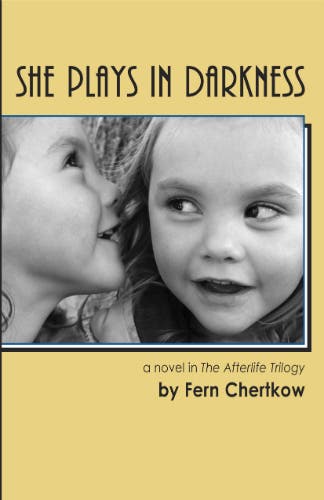
EVANSTON, Ill. – It has been almost 30 years since award-winning author Fern Chertkow ended her own life, but her legacy lives on through the Afterlife Trilogy, a unique undertaking that fuses her writing with the work of Evanston novelist, playwright Richard Engling and his creative team at Chicago’s Polarity Ensemble Theatre.
Paying tribute to the late author, the trilogy combines two novels – “Visions of Anna” by Engling and “She Plays in Darkness” by Chertkow (October 7, 2014, Polarity Ensemble Theatre Books) – with a powerful play written by Engling, “Anna in the Afterlife,” which will run April 23 to May 24, 2015. The three works span 35 years of creation, offering a multi-sensory experience when taken as a whole.
In addition to a book release, Polarity will present a number of readings throughout October and November at bookstores, libraries and book groups (details below).
Find out what's happening in Evanstonfor free with the latest updates from Patch.
“The Afterlife Trilogy is about honoring our lives, our loved ones and our heroes even as they pass out of this world,” Engling says. “It is about the sacred qualities of our memories. It is about the wounds that become the sources of our greatest gifts. It is about making sense of that which cannot be understood.”
Engling and Chertkow became close friends in graduate school studying fiction writing. They had each come from other disciplines: music for Chertkow and theatre for Engling. The two spent a year in Europe after graduate school and experienced a particularly magical time living as novelists in Paris.
Find out what's happening in Evanstonfor free with the latest updates from Patch.
Deeply affected by Chertkow’s death in 1988, Engling used his friend as inspiration to pen his novel “Visions of Anna” and play “Anna in the Afterlife,” both touching on friendship, death and self-destruction. “Anna in the Afterlife” went through an in-depth development process with Polarity Ensemble since first appearing in the theatre company’s 2011 Dionysos Cup Festival of New Plays.
Disturbingly prophetic and brimming with lyrical prose, “She Plays in Darkness” is the earliest of the trilogy’s works, written by Chertkow just a few years before her death. Chertkow infused much of herself in the lead characters, twins Cynthia and Rosemary, slowly revealing a self-destructiveness that echoes the mystery of her suicide explored in “Visions of Anna” and “Anna in the Afterlife.”
Engling is the co-founder and artistic director of Polarity Ensemble Theatre in the Windy City. He is an actor, director, playwright, novelist and musician.
###
There are five events scheduled so far to launch The Afterlife Trilogy, including one in Evanston.
EVENT DETAILS
The Afterlife Trilogy Launch Party
7 p.m. on Oct. 7
Greenhouse Theater Center, 2257 N. Lincoln Ave. in Chicago
Selected scenes from “She Plays in Darkness” and “Visions of Anna” followed by a book signing and complimentary hors d’oeuvres and half price drinks at the bar.
Free; no reservations required.
(773) 404-7336, http://greenhousetheater.org/
The Afterlife Trilogy Event
6:30 p.m. on Oct. 16
City Lit Books, 2523 N. Kedzie Blvd. in Chicago
Selected scenes from “She Plays in Darkness” and “Visions of Anna” followed by a book signing. Free; no reservations required.
(773) 235-2523, http://www.citylitbooks.com/
The Afterlife Trilogy Event
8-10 p.m. on Oct. 29
Uncommon Ground, 1401 W. Devon Ave. in Chicago
(773) 456-9801, http://www.uncommonground.com/
Reader Theater Event for the Afterlife Trilogy
7 p.m. on Nov. 5
Celtic Knot Public House, 626 Church St. in Evanston
(847) 864-1679, http://www.celticknotpub.com/
The Afterlife Trilogy Event
7 p.m. on Jan. 30
The Book Cellar, 4736 N. Lincoln Ave. in Chicago
(773) 293-2665, http://www.bookcellarinc.com
In addition to these events, Polarity Ensemble will be performing throughout the weekend at Andersonville Arts Weekend on Oct. 10-12.
###
Q&A with Richard Engling
How was “The Afterlife Trilogy” conceived?
Not long after I’d started writing “Anna in the Afterlife,” I began thinking in terms of the Trilogy. The other two pieces existed already, of course. Fern Chertkow had written “She Plays in Darkness” in the 80’s. I was at Fern’s apartment in Salt Lake City with her parents after her death at the time of her memorial. They entrusted her manuscripts to me to see if I could find a publisher. In the 90’s I wrote “Visions of Anna” with the character of Anna inspired by Fern. I think I didn’t want to allow her to be dead. I couldn’t really understand her death, so I invented a reason in the book. Also a fictional version of Fern seemed to me to be a perfect tribute to Fern. We were both fiction writers. We believed in a truth that reveals itself in fiction. So for people like us, to be realized in a fictional character, I felt would be a high honor.
Then in 2010 I had a new idea about how to approach this material and began writing the play, “Anna in the Afterlife.” It wasn’t long into writing the play that the Trilogy occurred to me: What a fascinating experience it would be to read “Visions of Anna,” see the play, and read a novel by Fern Chertkow. Originally I was going to propose publishing a different one of Fern’s novels, but in rereading the manuscripts, I saw that “She Plays in Darkness” had some really fascinating parallels with the works I’d written. Both Anna (in “Visions of Anna”) and Cynthia (the protagonist in “She Plays in Darkness”) have identical twins who are murdered. In one case the murder happens when they are children, in the other when they are 29. In “Anna in the Afterlife,” Anna is split into three versions of herself. The experience of the three works is a little like looking at the same subject matter through a series of prisms.
How much of Fern Chertkow’s “She Plays in Darkness” is autobiographical? And “Visions of Anna?”
Fern’s “She Plays in Darkness” is not an autobiographical novel. She did not have a twin sister. She was not a painter, like her protagonist Cynthia. However, she did sometimes work as a secretary in a law office like Cynthia. She had studied piano and was an incredibly fast typist like Cynthia. She was fascinated by the canyons of Utah and felt a presence of power in the great rock walls like Cynthia. So although it is a completely fictional plot, many of Fern’s personal fascinations come through.
The main characters of Matthew and Anna in “Visions of Anna” are inspired by Fern and me. There are some scenes, particularly in Paris and in graduate school, that recall real experiences. But then other huge parts of the book are completely fictional. I needed to feel some distance from Matthew, so a lot of him is invented. All of the Hollywood stuff (I’ve never written a screenplay), all the prostate cancer stuff, the huge ritual with the shaman in the desert, his ex-wife, and his romance with Natalie are all completely invented. So much of Anna is invented, as well. What I know of myself and of Fern were starting points. The book is fiction.
Is “Anna in the Afterlife” an adaptation of “Visions of Anna?” Why write the play when you’d already written the novel?
“Anna in the Afterlife” is not an adaptation of “Visions of Anna.” It shares the same source impulse, but it’s written from the sensibility of a man who is twenty years older than the man who wrote “Visions of Anna.” I think I felt robbed of something by Fern’s death, and I wasn’t quite done with it as an artist. But “Anna in the Afterlife” invents an entirely different world than the novel. Matthew is hanging between life and death. He’s having an experience of the afterlife while his body is on the operating table. Anna’s soul has somehow been split into three parts. The play does visit a couple familiar moments in their lives: graduate school and Paris, but even those scenes are quite different and include different characters. The presence of mortality is much more intimate in the play. In many ways I think it’s a more poignant work. It acknowledges the many inevitable failures in life.
This is such a unique undertaking – two novels and a play all connected beautifully. Can they each be enjoyed on their own? What would audiences get by experiencing all three of these works that they would not get from just one?
Each of these works was written to stand on its own. None of them depend on the others to make sense. But each would be enhanced by experiencing one or more of the others. Polarity Ensemble Theatre is planning special events for readers, theatre goers and book groups who would like to experience the Trilogy more fully.
The character of Anna in “Visions of Anna” spends a great deal of energy recovering memories of early childhood sexual abuse, but then the book suggests her trauma really was inherited via reincarnation from a previous life. Is there any evidence that either of these sources was responsible for the depression that caused the novelist Fern Chertkow to take her life?
There is no clear evidence. Fern struggled to make sense of her own depressions. Much of what is in the works is invented. For instance, Fern had no twin sister who died. She was never a school nurse. Family and ancestor history in both the play and the novel are inventions.
You have written short stories, novels, plays, worked as an actor, director, founded and run a theatre company and played drums in a jazz quartet. Is there one form that you identify with most?
The first art form I practiced in high school was acting. I worked with a little troupe of high school actors at a coffee house. I began writing with that group because we needed material to perform. I love the experience of acting, but what I have done most consistently through my life is write.