Politics & Government
Federal Judge Rejects ETHS Athlete's Requests For Disability Accommodations
The judge ruled the IHSA is not required to adjust its qualifying standards, but the father of a disabled high school athlete is appealing.


EVANSTON, IL — Lawyers representing a Evanston Township High School student with cerebral palsy are appealing a decision by a Chicago federal judge to throw out a lawsuit seeking changes state track and field competition to accommodate his disability. On July 13, U.S. District Judge John Tharp Jr. decided in favor of the Illinois High School Association by granting its motion for summary judgement, writing "anti-discrimination statutes require equality of opportunity and access, not of results."
Tharp did not order Keith Holzmueller, who brought the civil suit on behalf of his then 15-year-old son (identified in court documents as A.H.) to pay any of the IHSA's legal fees. Tuesday, he and his lawyers filed a notice of appeal to Tharp's ruling.
Holzmueller had sought an injunction in federal court last February against the IHSA, saying the state athletic association had violated his son's federal disability and constitutional protections. (Get Patch real-time email alerts for the latest news for Evanston — or your community. And iPhone users: Check out Patch's new app.)
Find out what's happening in Evanstonfor free with the latest updates from Patch.
A.H. competes on the swim, track and cross-country teams. In three years, he never missed a meet and missed fewer than five practices for track and cross-country and has felt accepted and respected by his teammates and coaches, according to a statement of facts from lawyers for the IHSA.
Find out what's happening in Evanstonfor free with the latest updates from Patch.
In addition to high school competition, A.H. also often takes part in adaptive sports, competing locally and nationally in competition among individuals with disabilities. He took part in the 2016 U.S. Paralympic Trials and may well compete internationally in the future. But despite being one of the top disabled runners in the state, he cannot compete in IHSA state finals because there is no division for disabled athletes who do not use a wheelchair, according to a statement of facts from his lawyers.
A.H. asked the IHSA to set up different qualifying time standards for para-ambulatory athletes such as himself for state finals and to create a para-ambulatory division in the IHSA's annual five kilometer Road Race.
The IHSA executive director and board rejected his request and appeal. At a hearing, board members suggested granting A.H.'s requests would give him an unfair competitive advantage, allowing him to make it to state finals more easily than able-bodied competitors because he would be competing against fewer opponents.
Tharp agreed with the IHSA, pointing out the qualifying standards block "90% of the state's non-disabled high school runners."
He acknowledged A.H.'s work ethic and commitment but pointed out that is not always enough.
"It is an unfortunate fact of athletic life (and life in general, for that matter) that hard work is no guarantee of competitive success; we all have varying degrees of athletic ability and few will rise to elite status even with a work ethic second to none," Tharp wrote.
» Read more in the complete memorandum and order from Judge John J. Tharp, Jr.
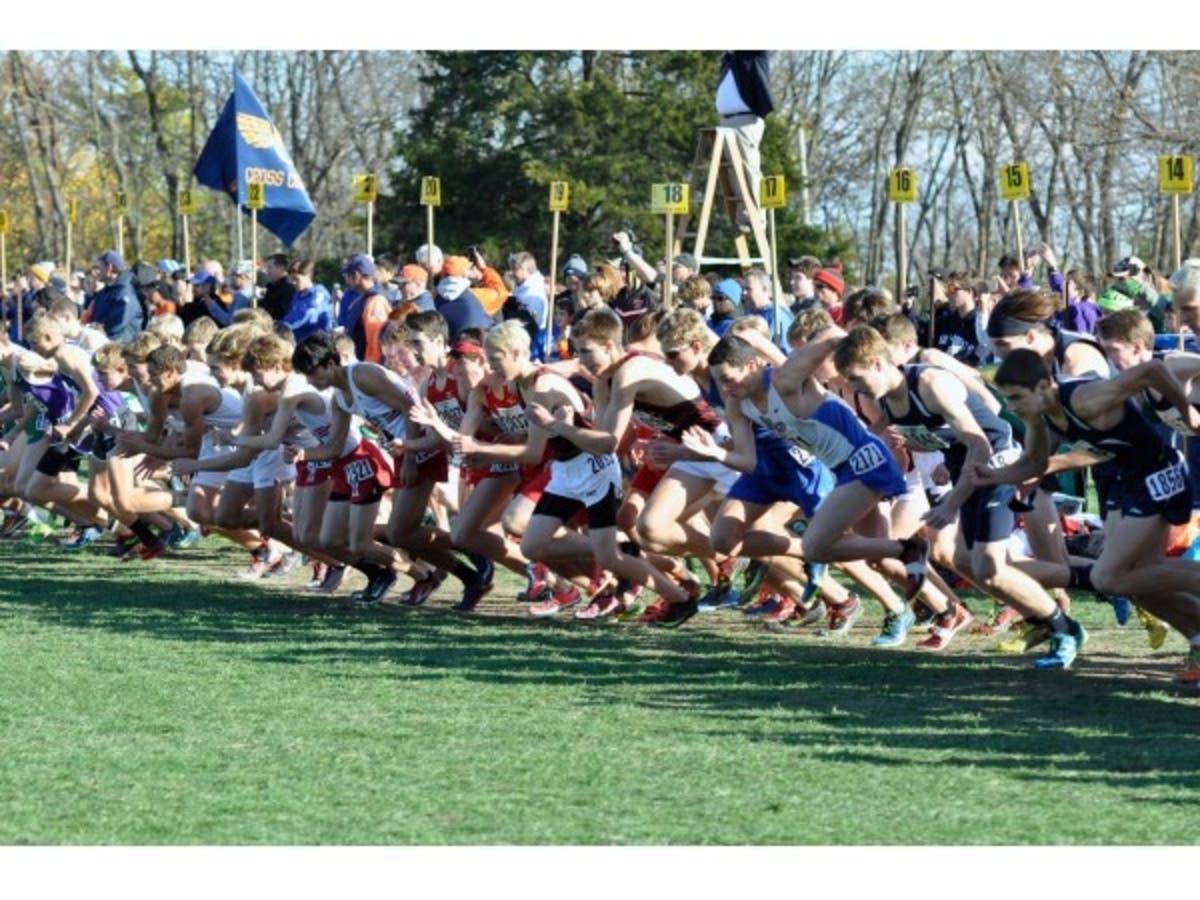
Top photo: IHSA cross country state meet | Courtesy Mimi Noonan
Get more local news delivered straight to your inbox. Sign up for free Patch newsletters and alerts.