Business & Tech
Hewn Begins 'Midwestern Bread Experiment'
Evanston bakery seeks to revive bread recipes from the early 20th Century.


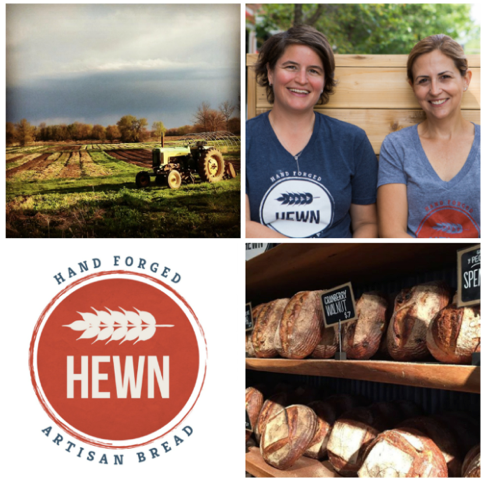
An Evanston bakery is taking on quite a project, reviving bread recipes that haven’t been common to America’s Heartland for a century.
Hewn, a recently opened artisanal bakery at 910 Dempster Street, is beginning what owner Ellen King calls the “Midwestern Bread Experiment” - a three-year project that seeks to “connect us back to our American roots” through heritage grains “long lost to the food industrial complex.”
Also on Evanston Patch: Maxwell Style Grill Could Open On Howard Street at Dairy Queen Location
Find out what's happening in Evanstonfor free with the latest updates from Patch.
King consulted expert grain scientist Stephen Jones of Washington State University and Andy Hazzard of Hazzard Free Farm, who turned to Seed Savers Exchange - a nonprofit committed to conserving rare plant seeds - to obtain the seeds, which were planted in April.
Going back into history with an ambitious three-year project, the project “aims to revive the unalloyed bread recipes common to America’s Heartland in the early 1900s by returning to the grains that have since been replaced by the genetically modified varieties most bread eaters settle for today,” King said.
Find out what's happening in Evanstonfor free with the latest updates from Patch.
“(It) is a collaboration between bakers, scientists, seed savers and farmers, all aiming to resurrect a bread recipe that connects us back to our American roots through heritage grains long lost to the food industrial complex.”
Also on Evanston Patch: Late Night Purple Line Express Train Not Happening
Hewn has partnered with Hazzard Free Farms to grow Marquis wheat. This is a heritage variety that was a blend between Hard Red Calcutta and Red Fife (two varieties with Ukrainian origins brought to the US in the late 1800s). Marquis was discovered in 1904 and its cultivation spread rapidly throughout Minnesota, the Dakotas and Iowa. According to journals it is said to make the type of excellent bread that families largely enjoyed until the 1940s, she explains. But it is hard to tell from a journal article how the wheat will really taste or hold up when baked today.
“When farmers began switching to a more efficient, homogenized variety of grain, the product of the early fertilizer- and pesticide-heavy farming practices, the Heritage and Marquis wheats all but disappeared.”
Also on Evanston Patch: Local Firm Doubles Its Size With Acquisition
Upon harvest in mid-August the revived wheat varieties are expected to yield 20 pounds of grain, enough to plant an acre. The yield will incrementally increase for the next couple of years until there’s enough to mill.
“It will probably be three years until we get a loaf that’s really good,” King said.
A Harvest Party in mid-August will celebrate the project’s first milestone, possibly yielding a loaf of bread no one has tasted in close to a century.
Get more local news delivered straight to your inbox. Sign up for free Patch newsletters and alerts.