Neighbor News
NextHaus Alliance Responds to Market for Resilient, Sustainable Homes
Team of experts efficiently delivers great design, latest technology and superior experience to homeowners

NextHaus Alliance (Evanston, IL) is the recent collaboration of the most experienced sustainable building resources available today. Founding member, Nathan Kipnis, FAIA, of Kipnis Architecture + Planning is a renown green architect based in Evanston and is joined by Barry Sylvester, Sylvester Construction of Chicago, a prominent general contractor and construction management firm based in Chicago; Scott Byron, Scott Byron & Co. , an award winning landscape architecture firm based in Lake Bluff, IL.; and Joe Barrett, Barrett’s Technology Solutions, a highly-respected technology solutions firm providing connected home-technology systems based in Naperville, IL. Designer alliance members include Janet McCann, McCann Associates, Inc., and Elizabeth Krueger, EKD, both based in downtown Chicago. Kipnis and the Alliance members have all designed, built and renovated a wide range of sustainable homes ranging from the attainable level to the very highest-end.
“Upper-bracket homes by their nature are going to be larger and consequently have a higher carbon footprint,” said Nathan Kipnis. “Despite these homes typically having a correspondingly large carbon footprint, they also have the ability for a correspondingly large reduction, all the way down to ‘net zero.” Kipnis assembled his esteemed colleagues to address the growing demand for sustainable housing using forward-thinking design while reducing a building’s carbon footprint.
“There is a misconception that sustainable homes have to be unattractive, uncomfortable and expensive,” added Kipnis. “Our tag line is High Design/Low Carbon™. We pride ourselves in making these homes architecturally significant, healthy and ultra-comfortable to live in.”
Find out what's happening in Evanstonfor free with the latest updates from Patch.
According to Kipnis, a common thread among NextHaus Alliance homeowners is that they tend to be younger, are passionate about living a green lifestyle, are extremely eager to become more knowledgeable about sustainability and have conducted thorough research before meeting with the team.
“They can afford an upper-bracket existing home but are concerned about the home being obsolete at resale time because it does not utilize sustainable building practices nor stands the longevity test of time.
Find out what's happening in Evanstonfor free with the latest updates from Patch.
“It seemed like nobody was taking a stab at this market and while our group members have been doing this for some time, collectively we have the ability to further streamline the process in terms of vetting the large number of professionals needed on the project since we all know and have worked with each other.”
NextHaus Alliance eliminates the arduous task of interviewing multiple professionals and the risk of those professionals not being able to work together effectively. All of this translates into an enjoyable experience for the homeowners because NextHaus Alliance is able to communicate better as a team, saving significant time, energy and expense. This communication advantage also increases the speed at which a project moves along.
Kipnis pointed out that the price of sustainable living technology has been falling, citing integrated solar panels and battery storage systems as an example and when combined with government incentives, the technology continues to become even more affordable.
NextHaus Alliance also incorporates an emerging concept into their projects what Kipnis explains as Resilient Design principles. Resilient Design is the ability for a home to withstand natural and manmade disasters by using stronger materials, technology and techniques to withstand high winds and heavy rain, provide independent energy sources and back-up power systems. The Alliance thoughtfully considers these “what-ifs” and presents integrated design and technological solutions to the homeowners.
“The climate is clearly changing - there are more frequent storms, heavy winds, hot and cold extreme weather and flooding. For example, using solar panels that have battery backup systems helps prepare for these emergencies,” explains Kipnis. “We want these homes to withstand a much higher range of impact so future weather forecast trends are considered when designing and building homes. The designs also incorporates site specific features such as available sunlight, varying terrain and prevalent wind patterns. Great sustainable homes can also be ‘resilient’, which provides a greater peace of mind for the homeowner.”
When asked why an already successful architect is taking on such an endeavor, Kipnis credits his inspiration and energy to his participation in the Goldman Sachs 10,000 Small Businesses program.
“So many experts and resources were made available to grow my business. This opportunity provided the time and resources to explore other projects and this was the one that I felt was the most important one to do, for clients and for the environment,” said Kipnis.
The idea was germinated and polished with the help of Wendy Cohen, PowerHouse Advisors, a consultant in the Luxury Design/Build and Real Estate Industry. Kipnis explains one of the first initiatives was to conduct cocktail party focus groups to tour a sustainable home and hear about the business concept. The focus groups were comprised of former clients, sustainable industry leaders and business executives who are knowledgeable and open to the new concepts. Some of these attendees will be servicing on an on-going advisory board, and are advocates as well as future NextHaus Alliance clients.
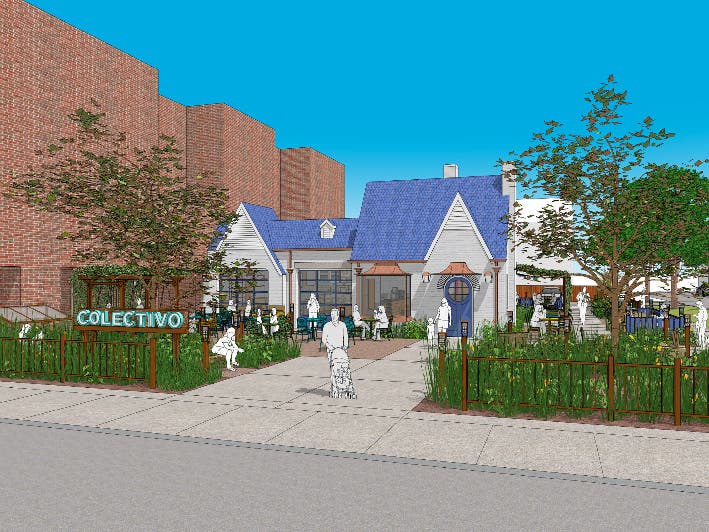
NextHaus Alliance also applies these principles to remodeling projects and historic renovations in addition to new construction. NextHaus Alliance homes are built for performance and all receive third-party certifications. The Alliance also uses a transparent open book construction pricing policy. Another unique aspect of the design process includes 3-D modeling using Building Information Modeling (BIM) software for homeowners to visualize their home prior to building. While NextHaus Alliance is focused on projects in the greater Chicago area, they have been contacted for client vacation homes and are available to consult all over the world.
It is not uncommon for Kipnis to receive emails from homeowners containing their recent utility bills. “I just visited one homeowner and they proudly shared their net-zero electric bill with me along with their appreciation of the thoughtful elements incorporated into their home.”
NextHaus Alliance homeowners also become members of the “NextHaus Community”- a group of NextHaus clients, advisors and educators who share their expertise and knowledge to help everyone live a greener life.
For further information about NextHaus Alliance please call (312) 586-2818 or visit nexthausalliance.com.