Schools
Petition Seeks To Keep 'Racist' Researcher From Northwestern
Dr. Satoshi Kanazawa, known for his controversial writings on race and intelligence, is a visiting scholar at Northwestern University.


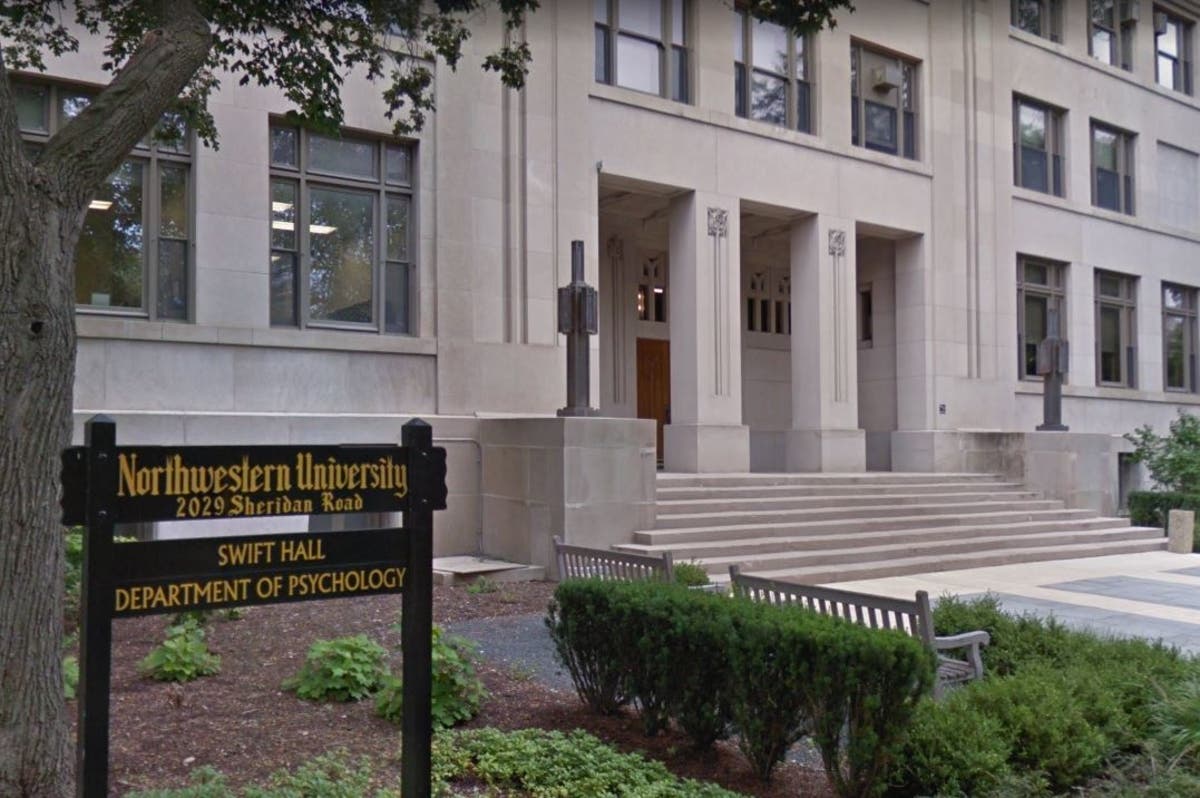
EVANSTON, IL — Northwestern University students and faculty are asking for a controversial evolutionary biologist to be blocked from spending a year as a visiting scholar due to criticism his research is racist, sexist and xenophobic. After his request to research in Evanston was granted without a detailed examination of his work, psychology department faculty have updated the screening process for the approval of such visits.
Satoshi Kanazawa received permission to conduct research in Evanston during his yearlong sabbatical from the London School of Economics and Political Science, where is is a reader in the department of management. He received a PhD from the University of Arizona in 1994 and has worked at the LSE since 2003. Since then, he has written several books and dozens of articles, many of which concern the relationship between race, gender and intelligence.
Kanazawa's most recent book is "The Intelligence Paradox: Why the Intelligent Choice Isn't Always the Smart One." Published in 2012, it purports to show "why liberals are more intelligent than conservatives, why atheists are more intelligent than the religious, why more intelligent men value monogamy, why night owls are more intelligent than morning larks and why homosexuals are more intelligent than heterosexuals."
Find out what's happening in Evanstonfor free with the latest updates from Patch.
Some of his other controversial work includes: "Are All Women Essentially Prostitutes?" "What's Wrong with Muslims?," “Happiness in Modern Society: Why Intelligence and Ethnic Composition Matter" and “The Myth of Racial Discrimination in Pay in the United States.” His most notorious article, which landed him with a one-year ban from teaching required courses, was the now-deleted PsychologyToday blog post titled "Why Are Black Women Less Physically Attractive Than Other Women?”
More than 3,500 people had signed a petition to ban Kanazawa from conducting research at Northwestern as of Thursday. Started by Deborah Shoola, the online petition said Kanazawa's "misogynoir nonsense should not be tolerated" at a university that prides itself on its support of a diverse and inclusive community.
Find out what's happening in Evanstonfor free with the latest updates from Patch.
"Kanazawa is just one in a growing number of academics using his intellectual identity to promote racism, sexism and xenophobia," the petition said. "Kanazawa's fraud research and studies reflects modern eugenics, and Northwestern should be ashamed of approving his application to conduct research in Evanston."
Kanazawa has not responded to a request for comment about the petition.
"I do science as if the truth mattered and your feelings about it didn't," he wrote on his LSE faculty website, alongside an admonition to "prepare to be offended" and a couple of unattributed quotations.
“If what I say is wrong (because it is illogical or lacks credible scientific evidence), then it is my problem," said one. "If what I say offends you, it is your problem."
Being wrong has indeed been Kanazawa's problem when it comes to "doing science," according to many scientists in his field.
For instance, a group of 35 leading evolutionary psychologist researchers submitted a commentary to American Psychologist rejecting his assumptions behind his ideas of research into evolutionary psychology and intelligence research.
Additionally, 68 evolutionary psychologists issued a joint letter assuring the public "Kanazawa's bad science does not represent evolutionary psychology." It points out his conclusions are often not supported by the data and that he has failed to issue corrections and generally violated the purpose of scientific discourse by failing to engage with his critics.
"Academics who publish work that may be unpopular with some sections of the media or general public should not be condemned on these grounds. However we are adamant that any work in science – politically sensitive or not – should at all times adhere to the principles of rigor and good scientific method," they wrote. "We believe that Kanazawa's work recurrently fails to meet these standards."
Following widespread criticism that his work was both racist and easily refuted, the London School of Economics went on to suspend him from publishing in non-peer reviewed journals for a year and PsychologyToday cut him loose as a contributor. As a result of an internal review, his employer determined Kanazawa's had brought the school into disrepute and damaged its reputation.
"[T]he hearing concluded that some of the assertions put forward in the blog post were flawed and would have benefited from more rigorous academic scrutiny. The view was that the author ignored the basic responsibility of a scientific communicator to qualify claims made in proportion to the certainty of the evidence," LSE said in a statement.
Kanazawa issued a letter of apology, saying he was "not at all motivated by a desire to seek or cause controversy." After publication of the blog post, he said, he "learned that some of my arguments may have been flawed and not supported by the available evidence" and promised to never again damage the school's reputation. At the time, the legislative body of the University of London voted unanimously for Kanazawa's dismissal.
"We support free speech and academic freedom, but Kanazawa's research fuels hate against ethnic and religious minorities promoted by neo-Nazi groups," said Amena Amer, students' union education officer of the London School of Economics. "Not only does he use the LSE's credentials to legitimize his 'research' but this jeopardizes the academic credibility of the LSE."
According to a piece in Scientific American by Khadija Britton, the founder of a science journalism nonprofit, Kanazawa has been responsible for "years of roundly criticized and heartily debunked pseudoscience-based shock-jockery," yet has managed to maintain his position teaching at a respected university.
Northwestern's psychology department updated its approval process in response to the acceptance of Kanazawa's request to visit, and faculty sent the dean a statement denouncing Kanazawa's integrity and scholarship. Psychology department chair Richard Zinbarg apologized for approving Kanazawa's request, explaining he was not familiar with the more controversial aspects of his research. The department unanimously voted on Oct. 28 to adopt a "more stringent vetting process," the Daily Northwestern reported.
In another unanimous vote three days later, the Daily reported, the faculty added a new statement titled, "Diversity Science at Northwestern" on the psychology department's website.
Major professional organizations such as the American Psychological Association have called upon all psychologists to work towards the elimination of these forms of bigotry in research, practice, training, and education, to speak out against intolerance wherever it occurs, and to promote new psychological research on the alleviation of discrimination and injustice (APA, 2001). These efforts include denouncing pseudoscientific research alleging to show evidence for White supremacy or purporting to demonstrate the inferiority of particular racial, ethnic, gender, sexual, or socioeconomic groups. Such arguments commonly include bogus claims regarding biogenetic group differences – claims that the American Society of Human Genetics has forcefully denounced (ASHG, 2018). Some have used psychological science in both intentional and unintentional ways to justify and normalize social inequalities and to underwrite the cultural and economic dominance of White people (Sanson et al., 1998). Psychologists are not immune from this behavior. Therefore, a special measure of vigilance and self-scrutiny is required to identify, question, resist, and refute unwarranted racist assumptions that can be inherent in psychological research.
Zinbarg told the Daily he would consider reversing the acceptance of Kanazawa's request to visit if he contributes to creating a hostile work environment. Provost Jonathan Holloway said the paper there would be occasions at a comprehensive research university "when people advance arguments that run afoul of well-established, peer-reviewed research findings," and in such cases the university must remind the community of its commitment to improve.
Get more local news delivered straight to your inbox. Sign up for free Patch newsletters and alerts.