Community Corner
5 Things to Know About the New Catholic Missal
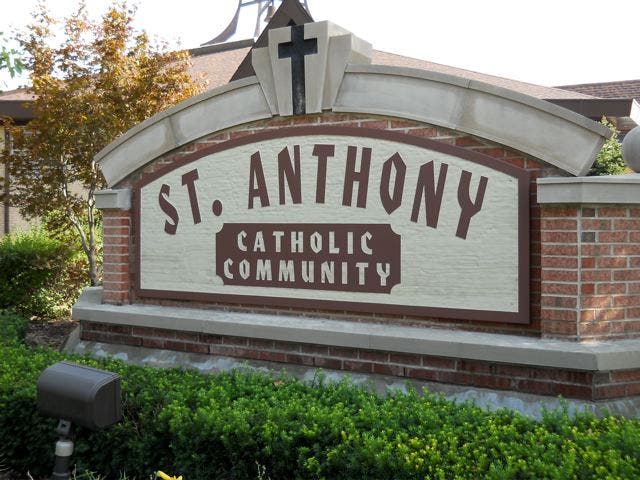
Later this month, Catholics will start using new missals at Mass. The Joliet Diocese and local parishes like St. Anthony's have been aiding everyone involved with the transition.


Got a few hours? That's what Sister Sharon Stola, director of divine worship in the Diocese of Joliet, says before explaining some of the changes to the new Roman Missal that will be used by Catholics later this month.
The Roman Missal is an assembly of prayers, chants and directions used to celebrate Mass. The missal, which was originally translated from Latin to English in the 1970s, has been updated. Catholic churches will begin using the new text later this month.
Instead of spending a couple hours, here's a brief explanation of some of the changes and why it's all happening. Here are five things you should know:
Find out what's happening in Frankfortfor free with the latest updates from Patch.
1. Why change the Roman Missal?
Pope John Paul II initiated the revisions to the Roman Missal in the year 2000. The well-traveled pontiff, who was fluent in many languages, offered Masses around the world and noticed the wording was different from country to country.
The new translation will use a more formal language and be closer to the original Latin version. "Periodically the church looks at their prayer life and they examine it," Stola said.
Find out what's happening in Frankfortfor free with the latest updates from Patch.
2. Who came up with the new Roman Missal translation?
The new translation was a worldwide undertaking that took more than 10 years to implement. At the crux of it all was the English translation.
The English version of the new Roman Missal was prepared by the International Commission on English in the Liturgy (ICEL) with representatives from 11 countries that use English as their principal language.
The translation process was complicated because word choices among English-speaking nations vary.
"It wasn't just one person changing it," Stola said. "It was the English-speaking conferences of all bishops across the world. They had to work through various word changes because of the translation from Latin, just saying different words."
3. What are examples of changes?
Examples of the new translation can be found in the Nicene Creed. Catholics will now say that Jesus is “consubstantial with the Father," vs. “one in being with the Father,” and that he was “incarnate of the Virgin Mary” rather than "born of the Virgin Mary."
"When the priest says, 'The Lord be with you,' we'll say, 'And with your spirit,'" Stola said. "That's probably the biggest one."
Stola said this is a more direct translation of the Latin and matches what many other language groups have been using for years.
The most sensitive of the changes is the translation of pro multis as “for many.” The narrative of the Last Supper, which currently reads, “which will be shed for you and for all so that sins may be forgiven,” will be changed to “which will be poured out for you and for many for the forgiveness of sins.”
Many see the new wording as some sort of narrowing of Jesus' scope of salvation. On its website, the United States Conference of Catholic Bishops provides an FAQ about the wording.
4. When does the translation begin?
The first Sunday in Advent (Nov. 27) is the date Catholics will begin the new wording, but many churches have already begun practicing the new words and music. When Advent starts, most churches will have pew cards to help parishioners with the new text.
5. What are parishes doing to help everyone make the transition?
The Diocese of Joliet offers lots of resources on its website, including videos, podcasts and links to other articles explaining the new translation.
Dating back to the start of 2011, the Joliet diocese has also given separate workshops to the various groups of people affected by the changes, including music directors, youth ministers and Catholic school teachers. In the summer, the diocese offered more workshops for parishioners.
But the training will continue with each parish, Stola said.
"Each parish is doing its own training based off the needs of the parish," she said. "Some have spoken at Mass, some have had workshops and continuing (education) programs for adults. Teachers going over it with their students. Each parish is different."
Deacon Tony Schlott, director of adult faith formation at , said he didn't expect to see much of an impact across the concregation.
"It's just a liturgical change," Schlott said. "We're a universal church, and as one church, we just follow along."
Judy Davids of contributed to this article.
Get more local news delivered straight to your inbox. Sign up for free Patch newsletters and alerts.