Health & Fitness
Be a Force of Nature in Northfield Township during National Severe Weather Preparedness Week
March 3-9, 2013 National Severe Weather Preparedness Week Know your risk. Take action. Be an example. 5 Steps to Developing a Family Emergency Plan
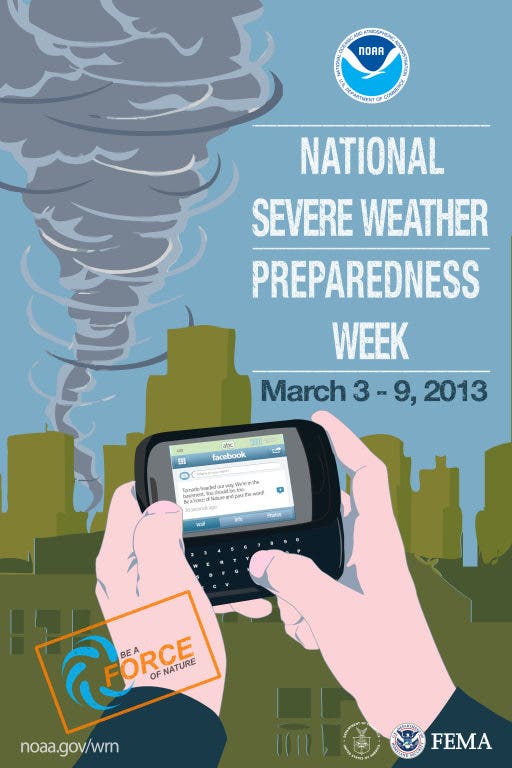
March 3rd-9th is National Severe Weather Preparedness Week. Know your severe weather risk and take action in order to be prepared. You can also Be a Force of Nature in Northfield Township during National Severe Weather Preparedness Week as well. Being a Force ofNature goes beyond taking appropriatepreparedness action. It’s about inspiring others to do the same.
Make sure your family has a plan in case of an emergency. Before an emergency happens, sit down together and decide how you will get in contact with each other, where you will go and whatyou will do in an emergency. Keep a copy of this plan in your emergency supplykit or another safe place where you can access it in the event of a disaster.
5 Steps to Developing a Family Emergency Plan
Find out what's happening in Glenviewfor free with the latest updates from Patch.
1.Find Out What Could Happen to You
Contact your local emergency management office before a disaster occurs—be prepared to take notes.
Find out what's happening in Glenviewfor free with the latest updates from Patch.
Ask what types of disasters are most likely to happen. Request information on how to prepare for each.
Learn about your community’s warning signals: what they sound like and what you should do when you hear them.
Ask about animal care after a disaster. Animals are not allowed inside emergency shelters because of health regulations.
Find out how to help elderly or disabled persons, if necessary.
Find out about the disaster plans at your workplace, your children’s school or day care center, and other places where your family spends time.
2. Create a Disaster Plan
Meet with your family and discuss why you need to prepare for disaster. Explain the dangers of fire, severe weather, to children. Plan to share responsibilities and work together as a team.
Discuss the types of disasters that are most likely to happen. Explain what to do in each case.
Pick two places to meet:
Right outside your home in case of a sudden emergency, like a fire.
Outside your neighborhood in case you cannot return home.
Everyone must know the address and phone number.
Ask an out-of-state relative or friend to be your “family contact.” After a disaster, it is often easier to call long distance than locally.
Family members should call this person after an event and tell them where
they are. Everyone must know your contact’s phone numbers.
Discuss what to do in an evacuation.
Plan how to take care of your pets.
3. Complete the Following Tasks
Post emergency telephone numbers by telephones (fire, police, ambulance, school, etc.).
Post the addresses and phone numbers for at least three nearby hospitals (one near home, one near work, one near your child’s school).
Teach children how and when to call 9–1–1 for emergency help.
Show each responsible family member how and when to turn off the utilities (water, gas, and electricity) at the main switches.
Check to see if you have adequate insurance coverage.
Get training from the fire department for each family member on how to use the
household fire extinguishers (ABC type) and show everyone where you keep them.
Install smoke detectors and carbon monoxide detectors on each level of your home, especially near bedrooms.
Stock emergency supplies and assemble a disaster supplies kit
Take an American Red Cross first aid and cardiopulmonary resuscitation (CPR)
class.
Determine the best escape routes from your home. Find two ways out of each
room.
Find the safe places in your home for each type of disaster.
4. Make Sure That You Have All Essential Personal Information for You and Each Member of Your Family
Blood types
Allergies
Types and dosages of medications
Past and current medical conditions (e.g., diabetes, high blood pressure)
Immunization history
Names and numbers for family physicians
(It may be helpful to put this information in a document, along with a photo ID. If
there are mass immunizations or medicine distributions in our community, you may need a photo ID for each member of your family.)
5.Practice and Maintain Your Plan
Quiz your children twice a year; during March for Severe Weather Preparedness Week, and in September during National Preparedness Month.
Conduct fire and emergency evacuations.
Replace stored water and stored food every 6 months.
Test and recharge your fire extinguisher(s) according to manufacturer’s instructions.
Test your smoke and carbon monoxide detectors monthly and change the batteries at least twice a year.
You can also Be a Force of Nature in NorthfieldTownship during National Severe Weather Preparedness Week as well. Being a Force of Nature goes beyond taking appropriate preparedness action. It’s about inspiring others to do the same.
I’m asking Northfield Township residents not only to be prepared, but to Be a Force of Nature and share your story with your family and friends. Encourage your socialnetwork to act by texting, tweeting, or posting a Facebook status update about how you developed and practiced your Family Emergency Plan, and the actions you took to become better prepared.