Politics & Government
Glenview Trustees Vote To Opt Out of Minimum Wage Increase
Glenview trustees voted 4-1 Thursday to exempt local employers from Cook County's wage and sick leave rules.


GLENVIEW, IL — The Glenview Board of Trustees voted Thursday to pass an ordinance to exempt its employers from having to raise the minimum wage next month. It was the second consideration of an amendment to the Glenview code to opt out of Cook County's paid sick leave mandate and requirement to raise the minimum wage to $10 per hour immediately and gradually to $13 per hour by the year 2020.
Since the first consideration last month, the neighboring villages of Northbrook and Niles have voted to exempt local employers from the county's new labor laws, which will take effect on July 1. The Des Plaines City Council voted 4-3 this week to follow the new ordinance and raise wages. Park Ridge took the first vote toward opting out with a final decision June 19. Morton Grove has postponed its decision until later this month. Evanston and Skokie, along with unincorporated areas and villages too small to have Home Rule authority, will raise wages and follow sick leave requirements starting next month.
Just as in the first vote May 2, the vote was 4-1 to overrule the county law. Only one trustee, Scott Britton, voted against keeping the minimum wage at $8.25 an hour.
Find out what's happening in Glenviewfor free with the latest updates from Patch.
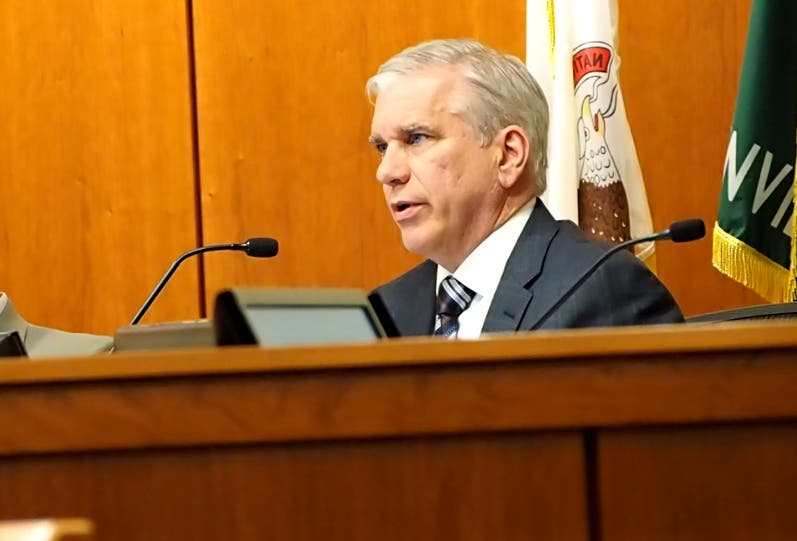
Britton recounted his memories of his hearing stories from his father about growing up poor with a single mother after his grandfather's death.
"Even at the end of my father's life, he would tell me stories about what it was like as a child for him, going to bed hungry," Britton said. "He would remember that on his deathbed, what that felt like."
Find out what's happening in Glenviewfor free with the latest updates from Patch.
"So I'd like to tell you today that there's not a single child in Glenview who goes to bed hungry, I pray God there isn't. But I can't guarantee that," he said. "But I guarantee you that tonight over a dinner table, there are people who make minimum wage who are making decisions like whether they're going to pay their rent or their medical expenses," and other choices of how to divide scarce resources.
In 2014, 61 percent of Glenview voters (with 55.7 percent turnout) supported a statewide minimum wage hike. In 2016, 67 percent of Glenview voters (with 76.7 percent turnout) supported county-wide sick time, according to the Cook County Clerk's office.
Karton said she voted in favor of the statewide minimum wage increase in those non-binding referendum. She also endorsed the current statewide minimum wage hike under consideration in Springfield and its lack of an ongoing cost of living increase, which the Cook County ordinance includes.
State lawmakers have passed bills through both houses to implement scheduled increases in Illinois minimum wage. Gov. Bruce Rauner has until July 30 to exercise his veto before it becomes law. Rauner has suggested he will do so, telling the Chicago Tribune the bill was "extreme."
"We now have a constituency of one," Karton said, placing responsibility with the governor and encouraging those present to call him and lobby for a higher statewide minimum.
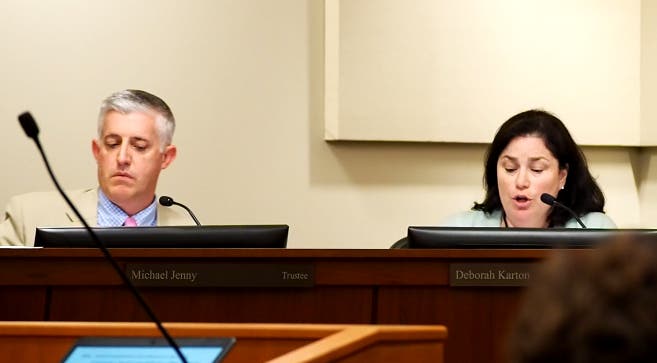
Karton, the owner of Northfield-based National Benefit Administrators, agreed with comments from the public about the exploitation of workers by large corporations.
"If I could create my own ordinance I would target big huge companies that make tons of money, where I think it is absolutely appropriate, again this is just my opinion — to increase those wages," Karton said. "But that's not in front of me right now."
Board President Patterson weighed in after the vote was taken, saying he wished to have his reasoning on the record.
"If really and truly the other communities, if our people and our residents and our job opportunities gravitate there, then the market will truly raise our wages," Patterson said, explaining his vote. "I also believe we have as much a risk of losing some of the jobs as a function of the wages going up and there being only so many dollars to pay toward a particular part of the business."
Trustees Jenny and Hinkamp said nothing at the meeting. Trustee Philip White was absent.
During public comment prior to the vote, nine of the 25 speakers supported the board's decision to opt-out.
Kevin Mullarkey of Joseph Mullarkey Distributors, John Weiss of Weiss Ace Hardware, owners of a local kennel, senior care and lawn care services supported opting out. Betsy Baer and Jim Martin of the Glenview Chamber of Commerce and Joe Bredemann of Bredemann Ford & Lexus reiterated their opposition to the Cook County regulations. Most business owners said they already paid more than minimum wage and offered excellent benefits but opposed increased regulation.
Bredemann said he would need to eliminate some of his 60 low-wage positions if the village did not opt out of the ordinance.
"We don't expect anybody for very long to be able to really support a family or something like that at that level, we're trying to move them up the pay scale ladder," he said. Minimum wage should be set on a statewide level, he argued, "Having a patchwork solution for this, some towns in some towns out, is not the answer."
Glenview residents read statements from Cook County Clerk David Orr, State Representative Laura Fine and Congresswoman Jan Schakowsky in support of abiding by the ordinances.
More than a dozen others spokes opposed rejecting the pay hikes and benefit requirements.
Sheri Latash, 32 year Glenview resident, highlighted income inequality as a national problem and contrasted Des Plaines and Glenview's handling of the county ordinance.
"Are our businesses different, special, or more fragile than the business of Des Plaines or in Skokie or in Evanston?" Latash asked, "If I'm a prospective employee, why would I want to come and work in Glenview when I can drive 10 minutes to Des Plaines, 10 minutes to Skokie or 10 minutes to Evanston?"
Angelo Nickele, 19, along with a group of other recent Glenbrook South graduates, recently formed the Committee to Protect the Workers of Glenview. He described current minimum wage as "unlivable," and said the country ordinances were "a minimal effort to address rising costs of living" and "not drastic."
"You must approve Cook County's legislation to show your support for the community and the businesses that are a part of it, because it is the workers that make this business possible large and small," Nickele said. "Stand with our community and take steps to make sure those employed in Glenview are given the dignity of a fair day's wage."
On Thursday, Glenview Trustees approved minutes from their May 16 board meeting. During that meeting, the following public comments were recorded:
- Mr. Jay Stewart said he works for the Cook County Bureau of Economic Development. He read into the record a letter from Cook County Board President, Toni Preckwinkle, which outlined her reasons for supporting both ordinances.
- Mr. Jim Martin, of Glenview, is the Glenview Chamber of Commerce president. He read his letter into the record requesting that the Village Trustees opt out of both Cook County ordinances because they are onerous to the members of the Chamber. The Chamber’s position reflects the response to the survey sent to its members.
- Mr. Michael Lucci, of Chicago, is a researcher at Illinois Policy Institute. He addressed the economic effects of minimum wage increases. Many statistics show that Illinois has the 2nd highest youth unemployment rate and highest black unemployment rate in the US. Those are the groups that will lose job opportunities if the minimum wage increases. Cook County passed a soda tax to gain revenue and reduce soda consumption. Increasing minimum wage could cause some employers to hire less skilled labor. Increasing minimum wage would raise the lowest skilled wage level by over 60%. Studies by the National Bureau of Economic Research (surveys minimum wage studies), Stanford, and Harvard Business School indicate the negative effects when the minimum wage increases. A question about home rule units opting out was an issue raised with the Cook County Board. This could be challenged in court at the county level.
- Ms. Harvna Izumi, of Glenview, was empathetic to those who are impacted by low wages and not having paid sick leave. People in bad health tend to go to work rather than lose needed income to feed and support their families. Workers who are sick should stay home to recover. Workers should have the right and opportunity to care for themselves. The lives of workers will positively change if they are given paid sick time and the minimum wage is increased. This will benefit the community.
- Ms. Leslie Simon, of Glenview, said after college she started a job in 2001 at a garden center for $8 per hour. She was promised a raise after six months. When this didn’t occur after three years she changed jobs. Working for such a low wage was humiliating. She felt anyone working part time or full time should get more than the current minimum wage. She was in favor of the Cook County ordinances.
- Ms. Terry Adams, of Glenview, said she is passionate about minimum wage and paid sick leave. Everyone deserves a living wage. At $8.25 an hour, it takes over a year to earn $17k. Glenview’s annual median income exceeds $93k. People making minimum wage may not live in Glenview but they work here and should be valued. As a human resource director she wants sick employees or those with a family member or child who is sick to stay home. The proposed paid sick leave promotes a basic human decency that is fair and adequate. She favors approval of the Cook County ordinances.
- Ms. Rosalie Amos, of Glenview, feels fortunate to live in Glenview, which is a privileged compassionate community. Residents of other communities may not be as fortunate. If the Village adopts the Cook County ordinances it will make life a little easier for the vulnerable members of Glenview.
- Ms. Karen Aldrich, of Glenview, said she represents the 66% of Glenview voters who support a higher minimum wage and the 47% who support paid sick leave. It is a moral issue. Glenview has 3,445 families living on less than $15k per year and 6,548 families earning less than $25k per year. Glenview’s median annual household income is $93,240. Glenview can afford to raise the minimum wage giving everyone an equal opportunity to support their families. Paid sick leave provides long term cost savings because it increases productivity and stability, and decreases coworkers from getting sick in the work place. As a registered nurse she has always advised people who are sick to stay home. If they don’t they could feel worse or may need to go to the emergency room. Having healthy workers at restaurants where food is served keeps the community healthier. She favored approval of the Cook County ordinances.
- Ms. Meredith Morgan, of Glenview, said approving the county ordinances will benefit the Glenview community. Scare tactics are not true. People won’t lose their jobs if the minimum wage is increased. Often times when the employment rate increases, unemployment decreases. Increasing minimum wage will reduce job turnover and build up our communities. Workers would have the ability to care for themselves and their children, and ultimately reduce dependence on public assistance programs. By not opting out Glenview would be a leader among other communities, and she would be proud.
- Ms. Katherine Hughes, of Glenview, corrected Ms. Aldrich’s comment saying that actually 74% of residents supported paid sick leave. Her job does not provide paid sick leave, so sometimes she goes to work sick. Illness often brings extra expenses for a family such as the cost of doctor visits. The Village of Glenview, Regular Board of Trustee Meeting, May 16, 2017 Page 9 of 12 U N A P P R O V E D Regarding minimum wage, by 2020 a 40 hour workweek at $13 per hour would pay $520 per week in gross income. This amount won’t go far in Glenview. When she hires workers as part of her job, she found that better wages created better attitudes in her workers and a better experience for everyone involved.
- Mr. Nick Philippas, of Glenview, operates four Glenview businesses; two are restaurants. 40% of the gross revenue is payroll. If the minimum wage is increased, by 2020 his payroll would be close to 60% of gross revenue. This is an unworkable situation. He pays workers above minimum wage but he would be affected by the proposed paid sick leave. Cook County pays the highest property taxes, it now has a soda tax and he just received a letter stating that the county wants to add an entertainment tax on cable television which is already being taxed. Businesses are always asked to make up for a shortfall. Complying with the Cook County ordinances may not be affordable for businesses. One of his businesses can be moved to Lake County. He understands the minimum wage issue to help people survive, but certain minimum wage jobs were not created for careers. The ordinances may result in customers paying more for products that cost less in other communities where labor is cheaper.
- Ms. Ann Yoshida, of Glenview,, is the co-president of the League of Women Voters in Glenview/Glencoe. The Village must weigh the interests of concerned business owners against the merits of an ordinance that would approve the earning power of our lowest paid workers. In 2014 and 2016, Glenview voters were in favor of sick leave accrual and increases in minimum wage, noting that the endorsement of minimum wage related to a statewide question. Minimum wage has not increased in 7 years. According to the Economic Policy Institute, after adjusting for inflation today’s minimum wage is at its lowest real value since 1952. The Village sought input from the Chamber of Commerce, which favors opting out. Almost 48% responded that the ordinances would have little or manageable impacts on their businesses. She hopes the Village seeks input from citizens who applaud the efforts of the Cook County Board related to minimum wage and accrual of sick leave. She asked the Board to consider all segments of the community when considering the issues at hand. Several suburbs have opted out. The League is hopeful that Glenview will make an independent and compassionate decision that is in the best interest of the community.
- Mr. Mike Rogers, of Evanston, is a Glenview business owner that has additional facilities in two other states. He supports increased minimum wage and already pays his employees above the current wage and he provides paid time off (more than just sick leave). His business competes locally and nationally. Wages are lower in the other two states where his company operates. He will be impacted if the costs continue to climb. His company will continue to grow but it may be necessary to move some of the work to the two other states and he would need to invest in capital expenditures to reduce labor pool costs. He believes Glenview can meet the needs of businesses and workers by developing an alternative plan.
- Ms. Betsy Baer, of Glenview, is executive director of the Glenview Chamber of Commerce. She corrected an earlier statistic, that is, actually 51% of survey respondents stated that the ordinances would negatively impact Glenview businesses, and almost 13% said it was manageable and almost 35% said there would be little or no impact on their businesses.
- Ms. Betsy Martin, of Glenview, asked the Board to comply with the Cook County ordinances. All workers should receive a wage that support basic living needs for them and their families, and have the ability to care for themselves and their loved ones when sick without foregoing groceries. She is included in the 66% of Glenview voters who favor increasing the minimum wage and 74% that were in favor of paid sick leave. She asked the Board to listen to the voters. She submitted a packet of statistics indicating the benefits to communities, workers, residents, and businesses when these types of ordinances are adopted.
- Mr. John Berquist, of Glenview, shared his experience with minimum wage increases. At the end of 2007, the minimum wage was $6.50 in Illinois and Wisconsin. By the end of 2008, Illinois increased the wage by $1. The higher minimum wage caused the company where hofe was a CFO to lose 10% of their customers including SE Johnson and reduce 100 jobs. Ultimately the business decreased each year with most jobs being lost to competitors in Wisconsin, or the customers moved to Wisconsin. Increasing minimum wage affects employment. He asked the Board to opt out of the County ordinances.
- Mr. Bart McGuinn, of Abt Electronics, 1200 N. Milwaukee Avenue, Glenview said Abt pays above minimum wage. Paid sick leave is unnecessary and unfair. Abt has won awards for being a best employer due to its existing rewards package. Many municipalities have already opted out. The Village of Glenview, Regular Board of Trustee
- Mr. Tom Amos, of Glenview, said these issues have been discussed in villages, cities and at the state and federal levels in the past but the arguments remain the same, that is, increasing minimum wage will hurt businesses and the economy and jobs will be lost. We know this has not occurred by looking at the various economies. The Board heard from business owners and associations related to business owners, but it also needs to hear from workers about their difficulties at living with an unfair wage. Most Glenview citizens have the ability to pay a little more for a hamburger or lawnmower. Some people think that those who will get paid sick leave may abuse it. He thought they won’t abuse it any more than any other group. Many Glenview citizens support minimum wage and paid sick leave. History shows that treating people fairly has never caused a catastrophe for others.
- Ms. Sara Landri, of Glenview, is against increasing the minimum wage. She works for Hackney’s which employs about 175 people. This is a labor-intensive industry. An entry level workforce is necessary for high school and college students to learn in a safe environment. It is a good place for those who lose their real jobs due to the economy or divorce and need a quick fix for their cash flow. Those in the $9 and $10 per hour wage range must also be bumped up. Those who work for tips at Hackney’s earn $15 to $20 per hour plus the $4.95 per hour wage. This is an unfair prohibition against tip sharing with kitchen employees. Hackney’s doesn’t support increasing tipped employees when they are already making $15 to $20 an hour in tips alone. The projected impact of $200k will be problematic for Hackneys because they don’t want to borrow money. People may not be willing to pay more for the price of a Hackney’s hamburger. Hackney's doesn't support an increase in minimum wage.
- Mr. Joe Bredemann, of Bredemann Ford & Lexus, Glenview said the company has 350 employees. 75 earn minimum wage. Not every company has workers that fit into this category, but a number of businesses do which may explain the disparity in the survey responses. He felt responses would be significantly different if only companies with minimum wage employees were surveyed. The expectation is that people who work for minimum wage will eventually progress to better paying jobs. Minimum wage jobs build character and experience. He wondered if the Cook County board and the city of Chicago should artificially raise rates, or if the market should determine rates. All retail businesses are under pressure because their margins are shrinking. The Cook County ordinances don’t take into account health insurance benefits paid by companies or the cost of matching 401k contributions or the costs of uniforms and paid vacations.
- Ms. Sara Beth Salzman, of Glenview, said she and her husband have sick leave days which is very important to her, especially since she has children. Her background is in social work and education. The Village can give individuals the opportunity to take control of their finances and help support themselves and their families. Ultimately this is what people want to do. She understands the financial argument given by business owners, but low income workers also have financial difficulties in buying groceries or renting a space to live. This is not where businesses should look to save money. She encourages business owners to look at other cities where minimum wage has increased. They will find that very small to no negative consequences have occurred. This is based on real numbers rather than projections. She noted that 80% of minimum wage workers are over 21. It is a growing experience that builds character but minimum wage is also insulting because bills need to be paid and workers need to support themselves and their families. She hopes the Village will adopt the Cook County ordinances.
- Ms. Marian Caporusso, of Northbrook, said she worked for 40 years divided between the city of Chicago and the state of Illinois. She is very happy to live in Glenview. She previously worked in rehab services. While in rehab services she was exposed to MRSA and the Norovirus. It is obscene for people in service industries to have to go to work sick. Service workers, such as those in health care and assisted living, need to have paid sick leave that accrues because they have been working. She saw a tremendous staff turnover in her mother’s assisted living facility which greatly impacts the delivery of services. This is caused by not building character with the CNAs and nursing assistants. They are earning a living and providing for their families. She hopes the Village does not opt out of the paid sick leave or minimum wage ordinances. It will help her when she goes to a restaurant and help knowing that her mother would get care from people who earn a living wage.
- Ms. Catherine Caporusso, of Northbrook, said doesn’t want daycare children exposed to sick caregivers and she doesn’t want to eat in restaurants where the workers come to work sick to save their jobs. She has a friend with children who earns at or near minimum wage and her husband had a heart attack and now is now out of disability benefits. It is one of many stories. The current minimum wage is not enough for a single parent to live on. The money from increasing minimum wage will go back into the The Village of Glenview, Regular Board of Trustee Meeting, May 16, 2017 Page 11 of 12 U N A P P R O V E D community because more will be spent on groceries and services. Her financial and moral argument was in favor of the minimum wage increase. She felt it was the right thing to do for many reasons.
- Ms. Charmaine Conaghan, of Glenview, spoke at the last meeting to ask the Board to opt out of the Cook County ordinances. Her business serves senior citizens. Rising labor costs will force her and her competitors to raise prices, which compromises the level of services, the seniors, employees, and associated businesses. Her caregivers are paid above the current minimum wage and they are greatly valued. Increasing the minimum wage will affect the most vulnerable seniors because they won’t be able to pay for live-in caregivers. The market should dictate labor practices, and the government should not involve itself in employee benefits such as sick leave. Minimum wage and paid sick leave should be addressed by the state not the county. Doing otherwise causes undue pressure on residents and creates an unfair atmosphere for small businesses in Cook County. Glenview may lose businesses to Lake County.
- Mr. Chuck Hartogh, of Niles, asked the Board to opt out of both ordinances. He is a member of the Glenview Chamber of Commerce and president of the Niles Chamber. He reviewed the survey results from the Glenview Chamber and Village of Glenview and talked with many businesses. The Cook County mandates for sick leave and minimum wage are unfair to businesses. Those who don’t like what is offered by the company they work have the opportunity to seek employment elsewhere. Those who work at the minimum wage for years should consider honing their skills to improve their job opportunities. People don’t change if things are simply handed to them. Cook County should not tell businesses what to provide their employees. People sometimes need a safety net, but they also need incentives.
- Dr. Richard Rossman, of Glenview, is a Glenview business owner. His employees are paid above the current minimum wage. But the Cook County ordinances will affect other businesses. He is concerned about the paid sick leave ordinance because he doesn’t have a computer program that can track the hours and it will be difficult for small businesses that don’t have a payroll department. Cook County has not made a concession for the extra accounting work needed to comply. The paid sick leave ordinance is a poorly conceived idea. He asked the Board to opt out.
Photos by Jonah Meadows
Get more local news delivered straight to your inbox. Sign up for free Patch newsletters and alerts.