Politics & Government
City Council Rejects 162-Unit Senior Housing Development
Despite a unanimous vote against the proposal, councilmembers remain interested in rezoning the long-vacant Greenberg Radiology site.


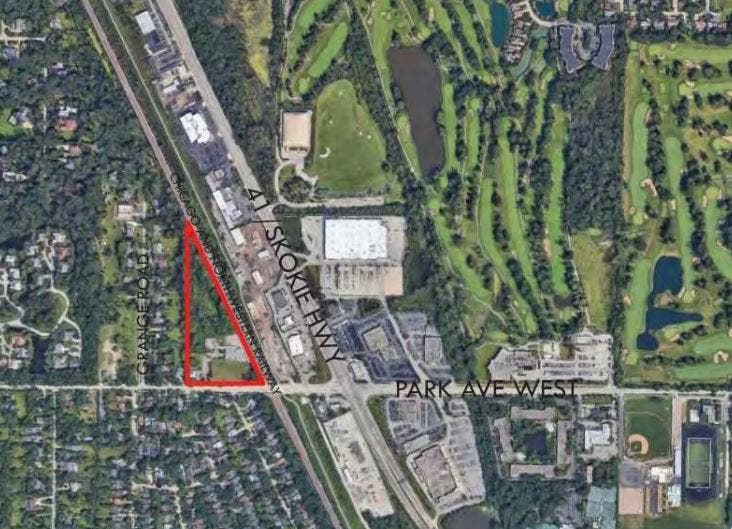
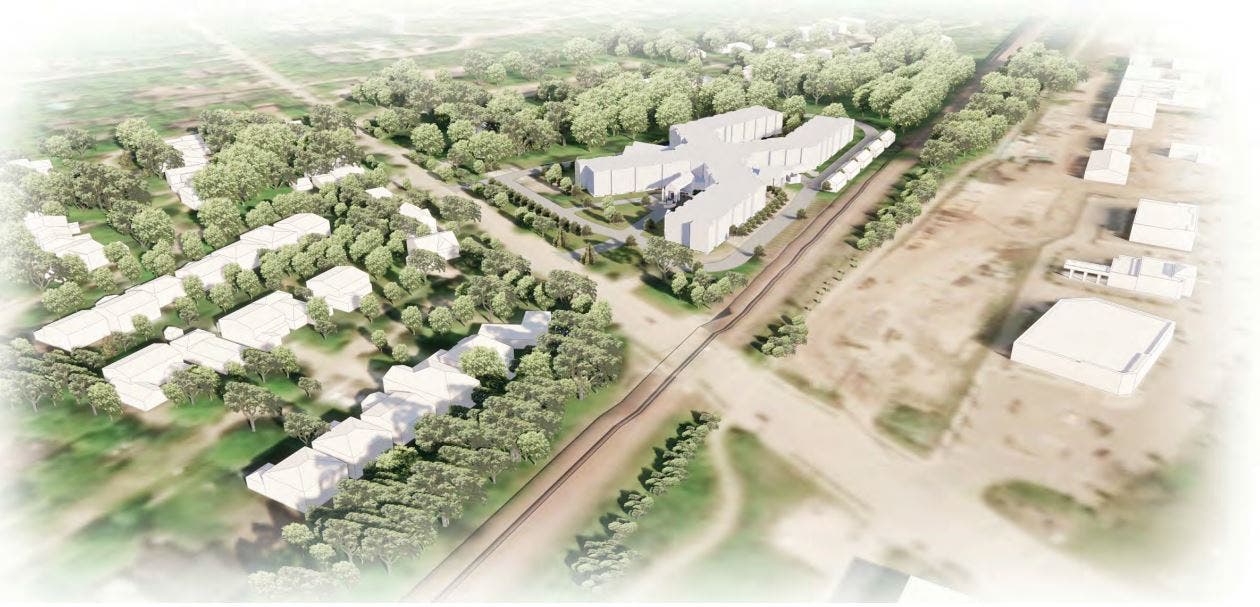
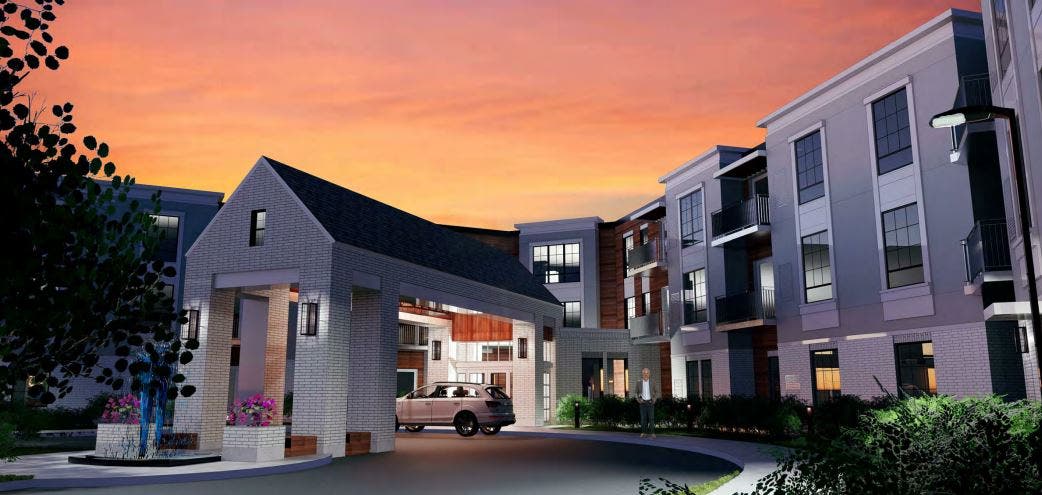
HIGHLAND PARK, IL — The City Council unanimously rejected a proposal for a 162-unit senior housing facility on a long-vacant piece of land west of Route 41 on Park Avenue West. Councilmembers nonetheless expressed interest in rezoning the property to allow a future development, likely with a less dense and intense use.
Known as the Greenberg Radiology site, the 7.5-acre triangular parcel has been vacant since 2007, when the Sam and Sonia Greenberg Radiation Center closed after operating there since 1984. Before that, the site was a factory that produced light fixtures, according to city staff.
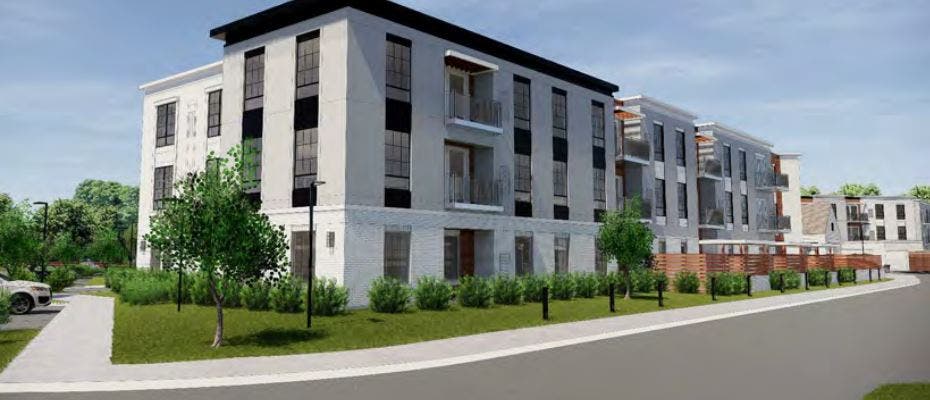
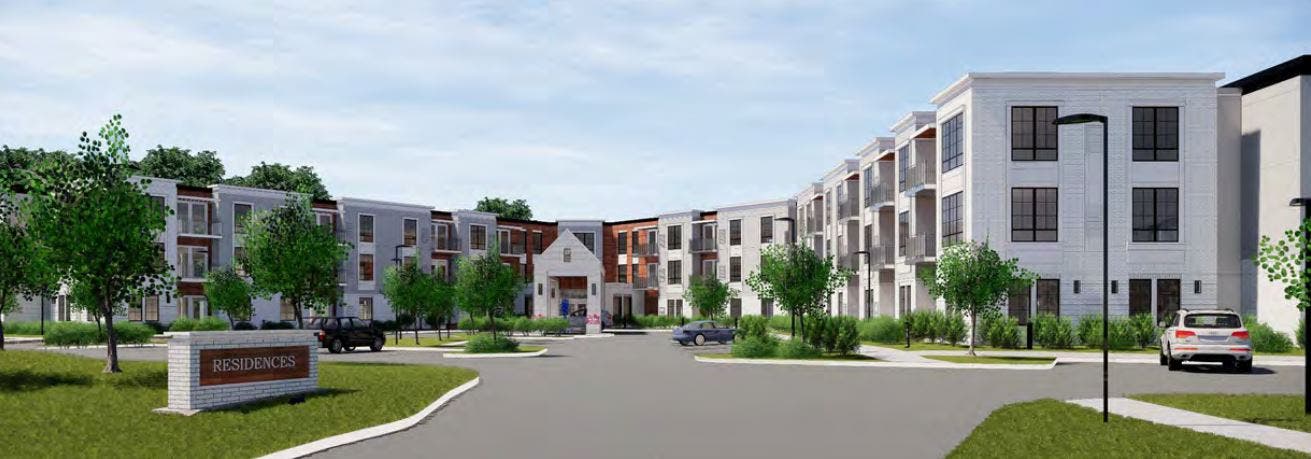
Dallas-based developer Trammel Crow requested a special use permit, planned use development and for the site to be rezoned from light industrial to medium or high density residential to build a three-story senior living facility with 87 independent living units, 55 assisted living units and 20 memory care units. The proposal included eight of the 15 required affordable units on site and an offer of a $875,000 instead of having the rest. The facility would have been managed by Allegro Management Company.
Find out what's happening in Highland Parkfor free with the latest updates from Patch.
The plan commission recommended a denial of the request at its June 4 meeting, voting 3-2 against the development plan and issuing a special use permit for a nursing home and 4-1 against the site's design and rezoning the parcel. Commissioners Adam Glazer and Ben Kutscheid were the lone members to vote in favor of the project.
At the City Council's Aug. 26 meeting, Councilman Adam Stolberg cited the 45 on-site employees of the proposed assisted living facility as evidence of the high-intensity commercial nature of the use. Though, he noted, the property's current zoning allowed for numerous uses that neighbors — who petitioned against the Trammal Crow project — might object to even more than an assisted living facility. The code has tables of permitted uses, which do not require a public hearing process or special use permit.
Find out what's happening in Highland Parkfor free with the latest updates from Patch.
"Just to give everyone an idea of what could go in this neighborhood tomorrow — without a public process, two feet from the street, 40 feet in height: a barber shop, a coin-operated laundry, a department store, a garden supply store, a hardware supply store, a liquor store, a tobacco shop, a commercial greenhouse, a kennel, a mail order fulfillment house, a bus terminal, a freight or parcel terminal, a motor vehicle showroom and repair shop or a ready-mix concrete yard," he said, reading from the code.
Stolberg suggested neighbors should be more concerned with the site having an industrial use than a medium or high density residential one, and said he would be more inclined to support a townhome development than a senior housing facility with a higher intensity and use of city resources.
"I don't want to say, 'Be careful what you wish for' to the neighbors, but those uses that I read for an 'I—Light Industrial use,' in my mind, are worse than any potential 112-unit townhome or condominium property," he said.
Councilwoman Kim Stone said she was in full agreement with Stolberg.
Councilman Dan Kaufman said the community's input was invaluable and a credit to the neighborhood.
"It does seem like there's a need, at least a perceived need, for some more housing of this kind in our community," Kaufman said. "That's something I think we need to think about as a community."
Kaufman said he would defer to the plan commission and its findings. He said he shared Stolberg's concerns about the developer's proposal for limited affordable units and suggested the City Council begin a process for considering rezoning the site.
Councilman Tony Blumberg said he had concerns about the payments in lieu of affordable housing units. He reiterated his interpretation of the city's inclusionary housing ordinance that requires so-called "in lieu of" payments to provide for equal or greater off-site affordable units, a point he also emphasized ahead of the previous meeting's vote on the Albion Highland Park, which had earlier received final approval at Monday's meeting. Nonetheless, Blumberg said, he would fully support some form of residential development on the site even if the neighbors might oppose it.
"Our job, in my opinion, is to balance the preferences of the neighborhood against the needs of the city as a whole," he said. "This is an undeveloped site that has been laying fallow. It is not open lands. It is fallow, unused, un-tax-producing land. It needs to be developed. I'm going to vote in favor of some sort of zoning that will reasonably develop it."
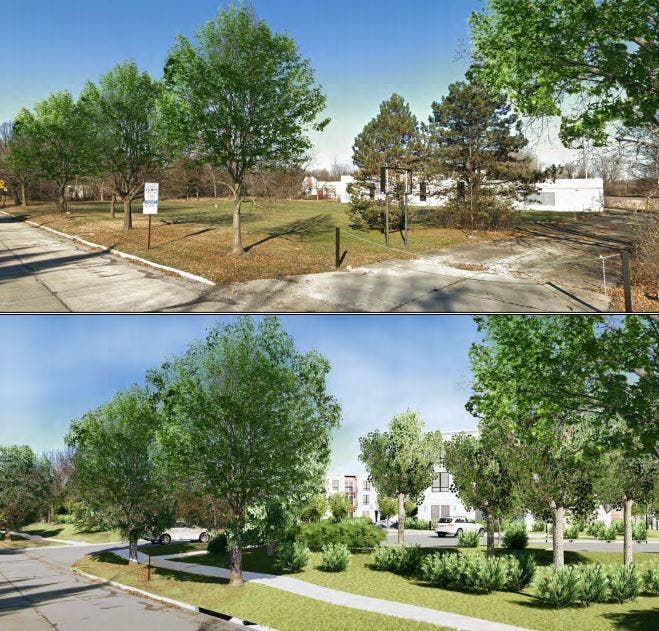
The vacant site generates less than $46,000 a year in property taxes. According to an analysis from consultants Teska Associates, the proposed development would have provided the city $12,286 in additional tax revenue every year after factoring in the additional costs. It projected it would not have cost local school districts anything, and thus would have added nearly $234,000 a year to North Shore District 112 and just over $179,000 to Township High School District 113.
Councilwoman Michelle Holleman agreed with Stolberg that the site has potential for industrial-use developments that no neighbors want to see. She said there was a need for more senior housing in the community and noted the housing commission was unanimously in favor of the proposal because it would have offered affordable access to expensive senior care for community members.
"I think the stumbling block for many of us, what I'm hearing is, the overall intensity on that site. I think we definitely need to rezone this, because the neighbors need a different zoning. I don't think you want an industrial zoning there. I'd like to see it RM1 [– medium to high density residential]," she said. "I'm actually OK with this development in some form but maybe not as intense as the one that we're seeing."
Mayor Nancy Rotering thanked the public and the developer for the time and energy spent discussing development. She agreed it was appropriate to re-evaluate whether the site's zoning.
"I support the suggestion that we do sit down and thoughtfully look at does I [– Light Industrial zoning] meet the compatibility with this neighborhood, or do we want to re-jigger the master plan and say this is what is more appropriate," Rotering said.
Get more local news delivered straight to your inbox. Sign up for free Patch newsletters and alerts.