Schools
District 112 Officials Defend Reconfiguration Plan in Response to Former Mayors
North Shore School District 112 officials provide detailed response highlighting benefits of reconfiguration plan.


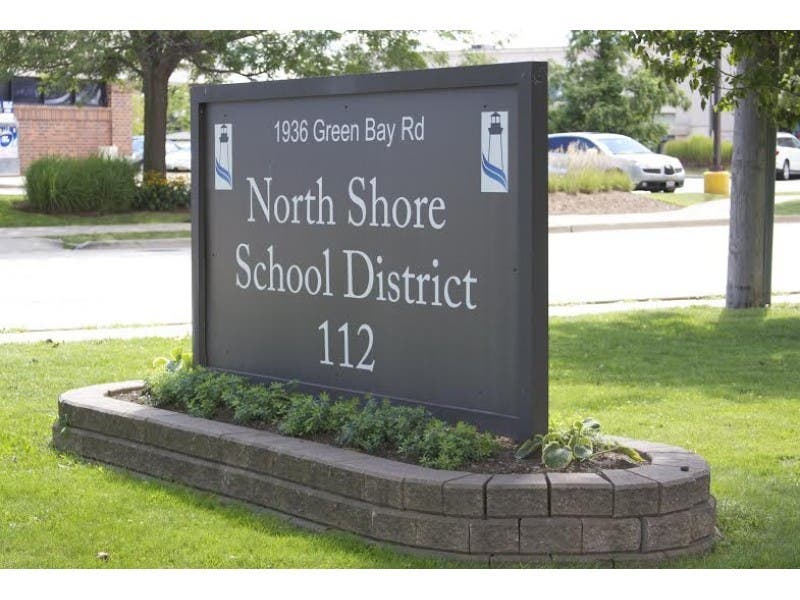
North Shore School District 112 officials have compiled a detailed response to a pair of letters published in local media outlets critical of their plan for reconfiguration. Here is the District’s letter in its entirety.
Dear North Shore School District 112 Community Members:
We are writing to respond to recent letters published in local media outlets from former Highland Park Mayor Michael Belsky and former City Councilman Michael Brenner about the reconfiguration plan being considered by North Shore School District 112. Both contained inaccuracies, and we are writing to set the record straight.
Find out what's happening in Highland Parkfor free with the latest updates from Patch.
- Neighborhood schools: Our district has a long, proud history of providing its students with exceptional education. While our school buildings have served us well, the fact is that we can no longer afford to operate 12 schools and provide the same level of outstanding educational programs and services. We have a choice: We can carry out a thoughtful, proactive plan that will put us on firm footing for decades, or place ourselves in a reactive position. The latter would require us to make painful decisions that would include but not be limited to cutting programs and services, increasing class sizes, closing schools and redrawing boundaries. We believe that District 112 students benefit most from the passion and expertise of our educators, our strong partnerships with families and the community, and our ability to provide adequate financial resources to support robust educational programming and extracurricular offerings. None of these are dependent on the location of a school building. While fewer children may live within walking distance of their elementary school in a reconfigured model, one has to consider the flipside. If we maintain our current model, we will still have to close some schools, and remaining schools will diminish in quality.
- Community Values: Our proposed reconfiguration plan directly aligns with the mission, values and beliefs spelled out in the district’s Strategic Plan, a document that more than 200 representative community members participated in crafting. After a thorough and comprehensive analysis involving more than 50 possible reconfiguration options, our Board of Education determined that the middle school campus plan best meets the district’s educational, facility and financial goals as outlined in our Strategic Plan. Specifically, it meets these criteria:
- Ensures that educators will be able to provide effective instructional strategies and interventions to inspire creativity and intellectual curiosity for each student to grow to academic excellence
- Ensures the sustainability of the district’s financial and human resources, and their equitable distribution
- Ensures that the district has the facilities and technology infrastructure needed to achieve the district’s mission and objectives
- Class Sizes: Current Board of Education class size guidelines are reasonable, and will not increase in our proposed reconfiguration plan. These guidelines will remain at a maximum of 23 students in grades K-3, 25 students in grades 4-5, and 28 students in grades 6-8. However, our current reality is that as a result of operating 12 relatively small schools, district class sizes now range from 10-23 in grades K-3, 12-25 in grades 4-5, and 10-29 in grades 6-8. This is educationally ineffective and financially unsustainable. Under our proposed plan, class sizes would become more balanced, while generally remaining below and never exceeding current Board guidelines.
- Benefits of reconfiguration: Our proposed reconfiguration plan has clear and compelling benefits for all District 112 students, from preschool through middle school. It is rooted in academic research and is based on best practices recognized by the Association for Middle Level Education, the leading international organization advancing the education of all students ages 10 to 15. Some of the benefits include:
- A teaming structure at the middle school level, in which groups of 150 students will be assigned to a core group of six teachers. This approach creates the feeling of a small school, while offering the resources and opportunities of a large one. It helps build strong learning communities characterized by a sense of connectedness. Students and teachers on the same team become like a family unit and form close bonds. Students feel safe, respected, and supported, and are encouraged to explore new interests and take intellectual risks.
- Expanded educational programming Under the reconfiguration plan, full-day kindergarten will be implemented at all elementary schools. Fifth-graders at the middle school will be offered STEM (Science, Technology, Engineering and Math) and CMA (Communication Media Arts) classes, and French or Spanish. They will also be able to elect to take band, orchestra and chorus during the school day.
- More classrooms at each grade level at elementary schools. This allows for more flexible grouping of students, and helps ensure that all students are appropriately grouped with peers and teachers who can best help meet their learning needs. Having more students per grade level offers increased opportunities for students to find friends they can relate to and connect with. This increases the feeling of belonging for students.
- Elimination of “singleton sections” (i.e., a single dual language section in each grade at Red Oak and Sherwood, single French and Spanish sections at middle schools). This provides better opportunities to meet student needs through increased teacher collaboration and more flexible grouping of students.
- Broader and more diverse variety of extracurricular opportunities. Currently, our middle schools are limited in their ability to meet student extracurricular needs and interests. Concentrating staff and students in one location allows for a much broader array of clubs, intramural and competitive athletic opportunities, and fine arts opportunities.
- Increased teacher collaboration time, and increased opportunities for professional development. This leads to richer, deeper and more robust instruction for students.
- Construction Costs: The total cost of the project is $198 million, inclusive of all components: building renovation and construction, site improvements, and non-construction costs, including professional service fees and furniture, fixtures and equipment, and $41 million in contingencies for design, escalation and construction. Funding would require voter approval of a $150 million bond issue, payable over a 30-year-period. An additional $48 million would come through other district resources. However, over a 30-year period, $190 million in savings will be achieved through more effective staffing levels, allowing the district to sustain a high level of educational programming and services. This compares with the need for a $150 million investment just to maintain our current schools at the most basic level— no air conditioning, no security enhancements, no ADA accessibility. Because no staffing savings would be generated in this scenario, it would require an additional referendum in the future to sustain our current level of educational programming.
- Tax impact: The tax rate of North Shore School District 112 is lower than most neighboring elementary school districts, including Deerfield 109, Glencoe 35, Kenilworth 38, Wilmette 39 and Winnetka 36. If a $150 million referendum took effect today, the owner of a home valued at $600,000 would experience a property tax increase in the first year of approximately $600, adjusted annually to reflect inflation and new property growth; the owner of a home valued at $500,000 would experience a property increase of approximately $500 and so on. These amounts would rise an estimated 2% annually.
The District recently finished paying off bonds for the construction of Oak Terrace School, which resulted in a decline in the District 112 tax rate. The tax rates associated with a $150 million bond referendum would be comparable to rates associated with the recently retired bond issue. In 2011, the owner of a $600,000 home contributed $452 to help repay the district’s recently retired bonds. This amount is no longer part of the tax bill. Should a referendum pass in 2016, the owner of a $600,000 home would contribute $597 to help repay the $150 million bond referendum, a net difference of $145 over the 2011 tax bill.
Reconfiguration is complex but necessary. We urge all community members to learn the facts. To make it as easy as possible, we are hosting a series of community conversations across the district. Each will feature a brief introductory presentation, followed by a question-and-answer discussion with a team comprised of district administrators, educators, Board members and consulting architects and/or construction managers. Click here for a complete schedule.
Find out what's happening in Highland Parkfor free with the latest updates from Patch.
Additionally, community members are invited to host a community conversation in their home, place of business, or community location. We will provide a team to come to you and speak about the overall project or a specific aspect of it. If you’re interested, please contact Director of School-Community Relations Andi Rosen at arosen@nssd112.org to schedule a session.
Sincerely,
Dr. Michael Bregy, Superintendent
Mohsin Dada, Chief Financial Officer
Jennifer Ferrari, Assistant Superintendent for Teaching and Learning
John Fuhrer, Director of Operations and Facilities
Luann Grish, Executive Assistant to the Superintendent
John Petzke, Chief Technology Officer
Andi Rosen, Director of School-Community Relations
Dr. Monica Schroeder, Assistant Superintendent for Personnel Services
Dr, Kristin S. Swanson, Assistant Superintendent for Student Services
Get more local news delivered straight to your inbox. Sign up for free Patch newsletters and alerts.