Schools
Marijuana Use Up At Deerfield, Highland Park High Schools: Survey
Alcohol use is on the rise at DHS but decreasing at HPHS, according to the 2018 results from the Illinois Youth Survey.


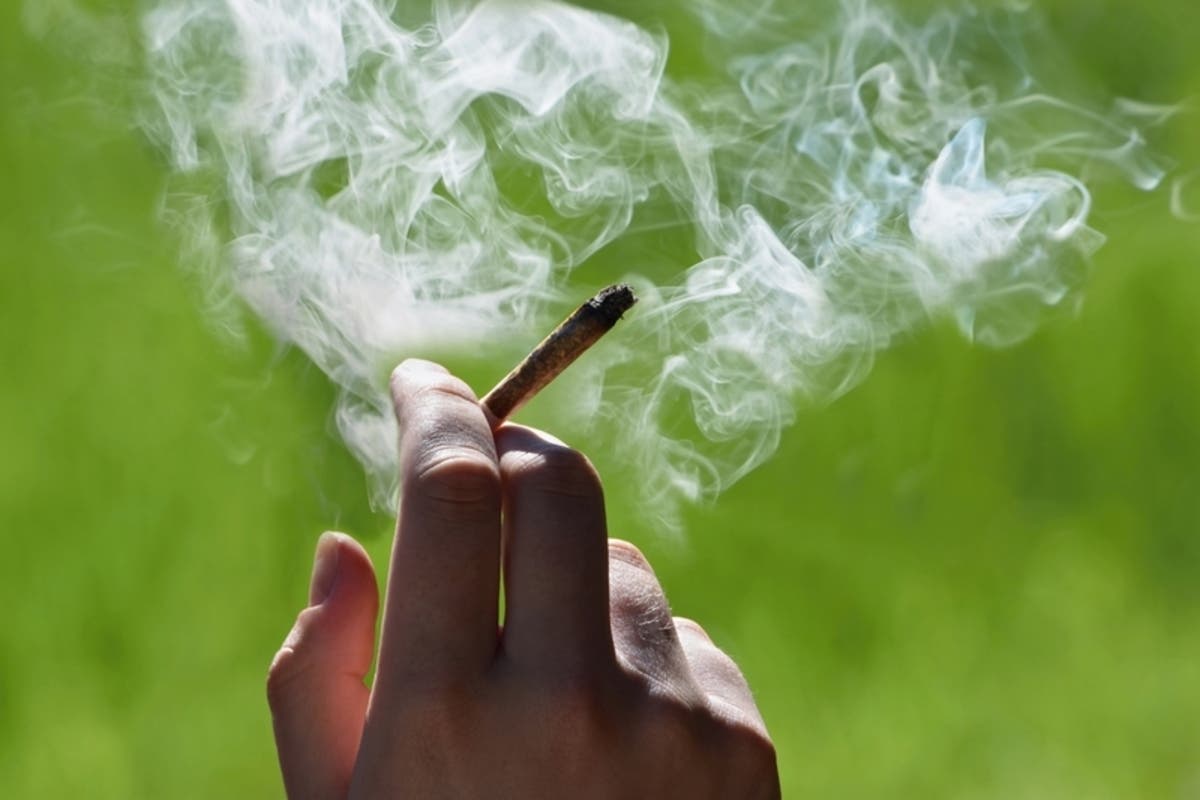
HIGHLAND PARK, IL — The number of students at Deerfield and Highland Park high schools who say they have used marijuana with the past month has increased over the past six years, the Township High School District 113 board was told Tuesday. Seniors at both schools last spring said they consumed cannabis well above the Lake County average, with 48 percent of 12th graders at DHS and 43 percent at HPHS reporting they used marijuana at least once during the past month, compared to 26 percent countywide, according to biannual survey data presented at a board meeting.
Meanwhile, alcohol use has increased in Deerfield but declined in Highland Park. About 60 percent of students across both schools reported drinking at least once in the last month, and 30 percent said they binge drank, defined as five or more drinks in a sitting, during the past two weeks. About 18 percent fewer HPHS seniors reported binge drinking compared to four years ago. But 20 percent more students said they consumed alcohol at least once a month and 9 percent more reported binge drinking in the DHS class of 2018 compared to 2016.
Rachel Mintle, a community health specialist with the Lake County Health Department, presented a summary of survey results of the 2018 Illinois Youth Survey to the board. The self-reported survey has been conducted every two years since 1993 by the University of Illinois with funding from the Illinois Department of Human Services. Data from individual districts is treated as confidential, but the university has released a countywide report.
Find out what's happening in Highland Parkfor free with the latest updates from Patch.
Mintle said the biggest concerns from the 2018 data were a decrease in students perception of how much their parents disapprove of the use of alcohol and marijuana, the increase in cannabis use across the district and the increase in drinking at Deerfield High School. She pointed out more than half students at both schools think they would seem cooler if they drank regularly.
"We are all actively working together as a community to try to address these concerns," Mintle said. "Something to remember is behavior change takes a lot of time."
Find out what's happening in Highland Parkfor free with the latest updates from Patch.
For just the second time, the 2018 edition of the survey asked students about their use of e-cigarette or "vape pen" devices. Mintle said the question did not differentiate between tobacco and cannabis products, but it would be fair to assume that relatively few students are vaporizing substances containing nicotine.
With more than than a third saying they have vaped at least once in the past 30 days, District 113 seniors are using e-cigarettes at higher rates than the county average. However, they perceive "moderate to great risk" for those using vaping products at a higher rate than the rest of Lake County. Among 10th graders in the district, the percentage of students who said they have used e-cigarettes has more than doubled, increasing from 10 percent to 21 percent at DHS and from 6 percent to 22 percent at HPHS.
"This is not uncommon, this is being seen at school is Lake County and across the nation," Mintle said. "It's a rising trend."
Research consultant Greg Barker, director of testing services at Northern Illinois University, co-presented the survey results and vouched for their reliability. He said they were statistically sound and consistent with national trends.
"Nationally, alcohol use has been declining for years, and this is according to the youth risk behavior survey from the CDC, marijuana use has been increasing over the last few years, and so is vaping," Barker said. "And tobacco use in terms of cigarette smoking and such has been declining over the last several years as well."
Barker noted significant convergent evidence to show troubling trends in the district, including decreases in the percentage of students who said their friends perceived drinking alcohol and consuming marijuana were bad. Levels of perceived parental disapproval – students that said their parents would think smoking marijuana was wrong or very wrong fell from 86 percent to 74 percent at DHS and remained steady around 76 percent at HPHS.
"We assume that perception drives behavior, so if perceptions are high then behavior is high, and the perceptions are almost always incorrect," Barker told the board. "They assume everybody is drinking, but not everybody is drinking...the hypothesis is that if we reduce perception then we will reduce behavior."
Among seniors, 42 percent at DHS and 39 percent at HPHS thought their community disapproves of underage drinking. The survey also asked about using a fake ID. At Highland Park High School, 24 percent of seniors had a fake ID but only 13 percent had ever used it to purchase alcohol. At Deerfield High School, 19 percent said they had false identification, and 7 percent admitted using it to buy booze.
Mintle and Barker appeared at the Sept. 11 board meeting to present the data on behalf of the local substance abuse prevention coalition Community – the Anti-Drug, a grant-funded group of more than 30 organizations. She said each school has its own unique identity and would require a closer look to see what's driving the recent numbers at Deerfield High School.
"We need to dig into that culture and figure out what's going on," she said. "It could have been a high-risk class that senior year."
Barker said he was not surprised to see more Highland Park and Deerfield high school students reported use drugs and alcohol than the county average.
"More affluent communities typically have higher use rates," Barker said, citing his two decades of research in the field. "I think there are more opportunities and more parent acceptance and even expectation to experiment."
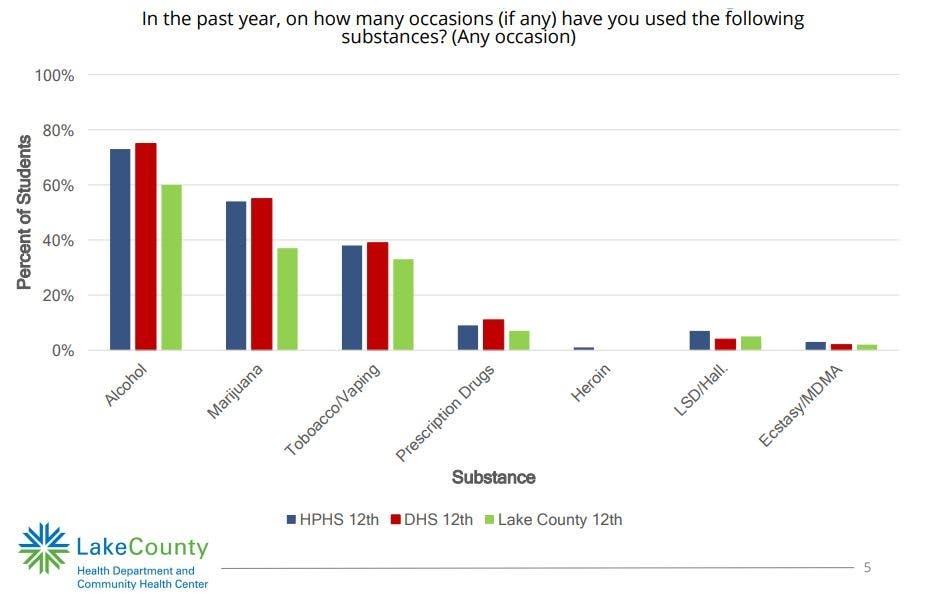
The Community – the Anti-Drug presentation focused on alcohol and marijuana almost exclusively, but the data also showed a notable number of students abusing prescription drugs. Neither presenter discussed it during the meeting and no board members asked about it. Last year in Lake County, 80 people died from drug overdoses in 2017, up from 46 the year before and driven by increases in deaths from synthetic opioids. In response to the epidemic, local law enforcement and public health officials have formed the Lake County Opioid Initiative to combat the "rapidly increasing opiate problem" in the county.
Full presentation of District 113 results from the 2018 Illinois Youth Survey
Get more local news delivered straight to your inbox. Sign up for free Patch newsletters and alerts.