Politics & Government
Central And South 'Very Similar': Lawyer
District's law firm defends district from arguments that South students are shorted.


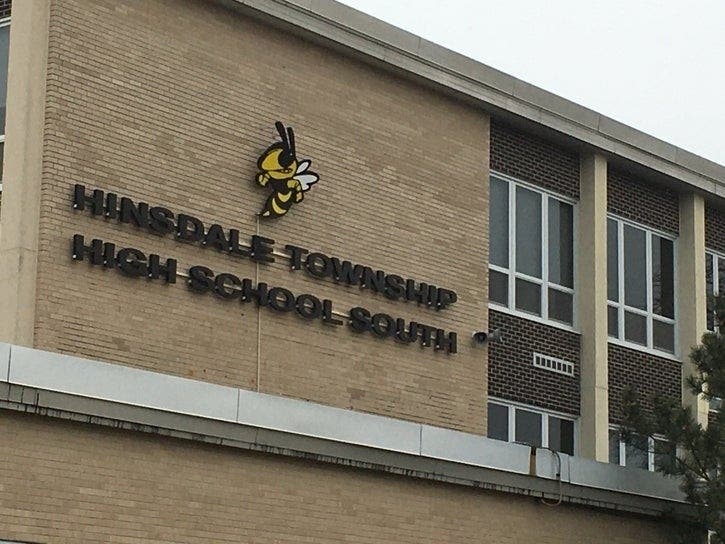
HINSDALE, IL — The differences between Hinsdale Central and Hinsdale South high schools are minimal and the outcomes for students similar, so the school district is in compliance with equity rules, the district's law firm says. Its attorneys gave a presentation to the school board late last month.
Some South parents contend that their students get fewer opportunities because the school is considerably smaller.
However, the lawyers, Pam Simaga and Stan Eisenhammer of Arlington Heights-based Hodges, Loizzi, Eisenhammer, Rodick & Kohn LLP, told the board that plaintiffs have high hurdles in federal courts for proving inequities between schools. An appeals court, they said, found students have a right to literacy because of their right to vote and participate in democracy.
Find out what's happening in Hinsdale-Clarendon Hillsfor free with the latest updates from Patch.
In inequity cases, race is a major factor considered by federal courts, the lawyers said. At South, a third of students are either black or Hispanic, while less than 10 percent of Central's students are.
To prove inequity in court, Simaga said, plaintiffs must show students were "totally deprived" in their education. She said no evidence exists that the board for Hinsdale High School District 86 has drawn boundaries for the two schools based on race. That includes the buffer zone between the two schools, where students could choose to attend either school, she said. An overwhelming percentage have picked Central; the zone is being phased out.
Find out what's happening in Hinsdale-Clarendon Hillsfor free with the latest updates from Patch.
Years ago, the Supreme Court ruled against policies aiming to fix racial imbalances by using race when placing students in over-enrolled schools, Simaga said. But the court's decision did not give schools other options for promoting diversity, she said.
When the lawyers were speaking about the issue of fixing racial imbalances, school board President Kevin Camden said he wanted to clarify that the board never discussed racial balancing or using race as a factor in regard to the buffer zone or other issues.
"I don't want to spend any more time explaining that," he said. "I don't want people hearing your presentation and then assuming somehow race is going to be a driving factor for anything that might happen."
The lawyers said any differences between the schools would pass courts' muster as long as they have a "rational basis."
"There is no inherent discrimination for a school to be bigger or smaller," Eisenhammer said.
Hinsdale South, Simaga said, has smaller class sizes and students have greater chances of making a cut in a sport or activity.
"The differences between Central and South are minimal," she said. "The schools are very similar."
She pointed to a few statistics from the Illinois Report Card that she said demonstrated the schools' similarities. At South, 88 percent of students go on to post-secondary institutions within a year of their graduations, compared with 90 percent at Central, according to 2019 numbers. As for teacher retention, 93 percent of Central teachers stay with the school from year to year, compared with 90 percent at South.
The school board had no questions for the attorneys. Before the presentation, Patch emailed the board's president, Camden, asking what the law firm was asked to do with its presentation, including whether it was expected to defend the district's actions. He did not answer the question, referring the inquiry to a school district spokesman, who referred to the concerns of South's parents.
Patch later filed a public records request with the district for any documentation of the board's request to the law firm. The district replied that no such records existed.
The school district is a regular client of the law firm, which has billed the district nearly $200,000 for a variety of legal services over the last five months.
In a recent email to Patch, Zach Mottl, a Burr Ridge trustee who has been vocal on District 86 issues, said Hinsdale Central students who organized a Black Lives Matter protest should focus on inequities between Central and South.
"I find it very hollow that they want to take action now, to stand up for the right thing now, but when they had the chance to speak up to address the systemic racism and unequal treatment in their own backyards, in their own school district, they don’t," Mottl said in the email. "In fact, they fight tooth and nail to maintain the status quo of separate and unequal in D86. Why don’t these kids stand up for the black, brown and poor kids in their own school district? Why haven’t they called for fairness and equality in District 86?"
Get more local news delivered straight to your inbox. Sign up for free Patch newsletters and alerts.