Schools
D181 Community Responds to Gifted Program Evaluation
Eleven public comments were made during discussion of Dr. Tonya Moon's external evaluation of the District 181 gifted program.


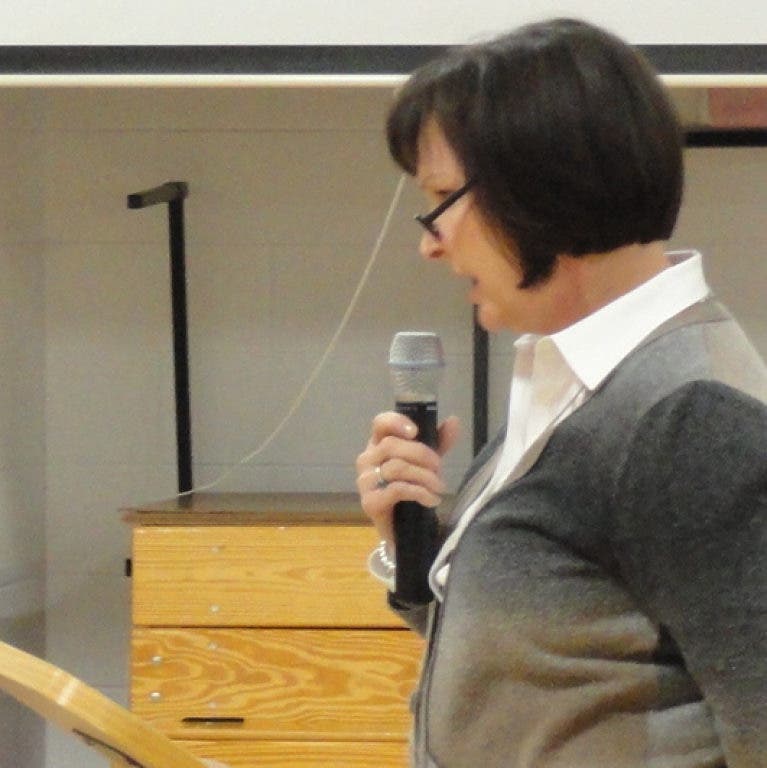
Former board member Ann Mueller said hearing the preliminary findings of Dr. Tonya Moon’s evaluation of the District 181 gifted program Monday night at felt like déjà vu.
“This is the fourth gifted report that I have read and reviewed for District 181 over the 25 years I have lived in the district,” Mueller said to the current board during the business meeting’s public comment. “My request to you is get it right this time.”
Mueller was one of 11 community members that took to the microphone Monday to sound an opinion on the District 181 program that Moon’s team labeled “indefensible” based on its curriculum and student-identification processes.
Find out what's happening in Hinsdale-Clarendon Hillsfor free with the latest updates from Patch.
“To have our program indicated as indefensible, it’s shocking,” Mueller said.
Moon’s team , recommending among other things that the Affective and Cognitive Enrichment (ACE) program, which takes gifted students away from their home schools one day per week for specialized instruction, be discontinued; that the district establish task force to develop a more clear philosophy and direction for the gifted program and how gifted students are identified; and that the district eventually hire an administrator whose sole responsibility would be to oversee the gifted program.
Find out what's happening in Hinsdale-Clarendon Hillsfor free with the latest updates from Patch.
The team’s report also indicated that though differentiation within all classrooms for students of differing achievement levels was discussed on the district’s website, there was no evidence of it during the team’s two-day visit.
General themes from Moon's team was that the general education program needed to be made more challenging for all students and that labels of "gifted" and "not gifted" needed to be downplayed.
Board President Michael Nelson disputed Moon's conclusion that differentiation does not occur in District 181.
Some speakers Monday directly addressed the current District 181 gifted program. There were those who spoke in support of the program, and others who did not.
What does Rebecca Wear Robinson want the district to do?
“Eliminate the program immediately and start focusing on all the students in our district,” the Walker School parent said. “Bring all of the student in our district up to the highest possible level of math and language arts.”
Kristy Brindley, a parent of three District 181 students, said the district’s testing system for gifted-program placement is “reckless.” She said 70 percent of current students have been disadvantaged by the testing and selection process.
Several other speakers, however, stepped up in support of the current gifted program. While they didn’t necessarily discount the findings of Moon’s team and infer that nothing should change, they reminded people not to forget about the good that the ACE program and other gifted programs do for selected students.
Susan Portland, who has two kids that have gone through the gifted program, was among those who spoke favorably of it.
“Every kid should get the chance to learn new things every day,” Portland said. “If you are trying to give everyone all the same opportunities, then sometimes the kids that are more advanced are not going to get a chance to thrive and be challenged.”
Portland also said the ACE program can be beneficial for gifted students who struggle to make friends in their home-school class.
But perhaps a more common theme Monday than the merits of the current gifted program was the lack of differentiation in District 181 classrooms found by Moon’s team.
“It was shocking to see that that’s not happening in the general classroom, not to mention some of the other tiered programs,” Brindley said. “That is something that is vital to every student in this district.”
Like Brindley, Matt Bousquette is the father of three District 181 children—but his are triplets. The three 8-year-olds, Bousquette said, need differentiation in the classroom.
“They are so different, and their skills are so different, and their needs are so different,” he said. “If I as a parent treated them all equally, it would be a terrible shame to each one of them and their skill sets.”
At least five of the 11 public comments directly addressed the need for increased differentiation in general education classrooms.
Moon and her team will likely present their final report during the Feb. 13 Committee of the Whole meeting at .
Get more local news delivered straight to your inbox. Sign up for free Patch newsletters and alerts.