Schools
Madison School Teacher Transforms Classroom, and Student Learning, with Flexible Furniture
Madison School 5th grade teacher Nancy Gadzala is seeing an exciting and positive change among her students this year.


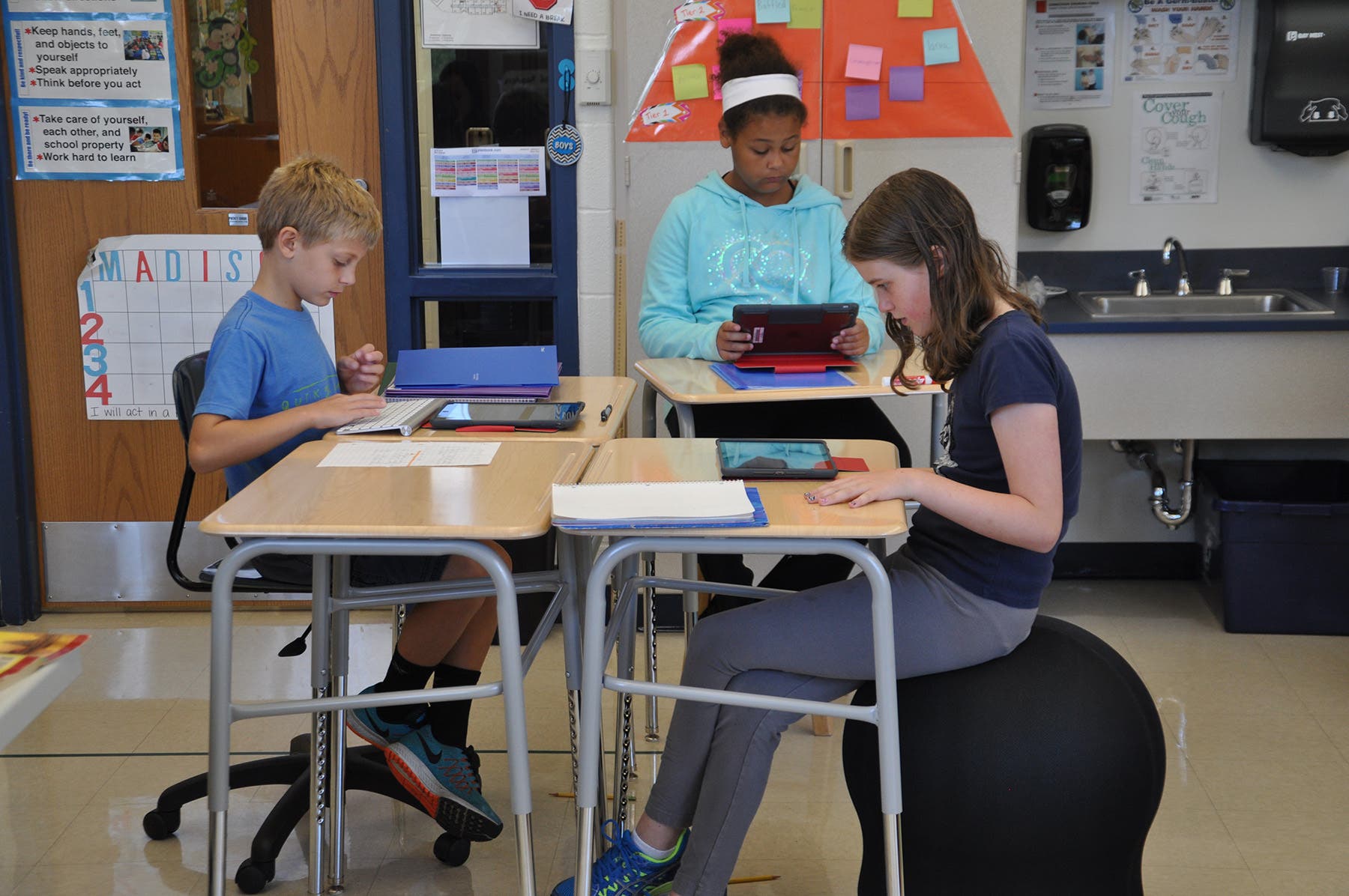


Madison School 5th grade teacher Nancy Gadzala is seeing an exciting and positive change among her students this year, and it’s due to a shift in her classroom design. Gadzala committed herself to creating a new fun, flexible, and comfortable learning environment for her class, and it’s paying off in a big way.
“I realized my classroom just wasn’t set up with my students in mind, or with the way I wanted to teach in mind,” she notes. “In past years, every time we wanted to make more space for a project, or change the desks around to work in larger groups, we had to use a lot of muscle because the desks were heavy and filled with materials. It was loud, took time away from learning, and was inconvenient. I also saw that students were sometimes distracted in trying to get comfortable in the standard, traditional plastic chairs. After researching the benefits of a more flexible room, I was determined to take on the challenge of creating a different kind of learning environment for my students.”
Gadzala got to work over the summer in finding furniture from a variety of sources, starting with the unwanted furniture from her Madison School colleagues. “We share and collaborate to create spaces that work for us and for our students. By removing the legs of a table that a teacher down the hall didn’t need, for example, I created a work space for students who prefer to sit on the floor.” Gadzala also had success in seeking support through the website DonorsChoose.org. “I created a project on the site, and within two weeks, the $1,300 request was fully funded. I was shocked! I really couldn’t believe my concept was completely funded and so quickly.” That contribution allowed for the purchase of four adjustable, lightweight desks, a lightweight rectangular table, and four Runtz chairs that use a built-in anti-burst exercise ball to allow students to lightly bounce. Gadzala purchased the last additions to the room, including kneepads, body pillows, chair cushions, and contact paper to create colorful surfaces.
Adding the flexible furniture in place of traditional desks and chairs was far from the end of her design and planning work, Gadzala notes. “I knew it would be important to keep order in a classroom of 22 ten year-olds when they are given complete control of where they want to sit at any given time of day. At the start of the year, I shared my expectations for the space we were about to call our classroom community. I explained my vision and our roles. I asked the students what they wanted to accomplish this year, and then we came up with guidelines to follow.” Some of the student-made guidelines included “making good choices on where to sit”, focusing on our tasks”, and “being responsible for our materials.” Gadzala created a rotation for use of the special Runtz chairs and bean bag chairs, but students otherwise choose their preferred seats on a regular basis.
“I said and repeat often, ‘You are the only one who knows the right choice for you. Choose wisely so you can accomplish all that you want this year.’ And I do see my students making great choices. I have never had a more focused, engaged, and quiet class. I have four students who chose in the beginning of the year to house their things in a desk and on most days sit at the desk. That is how they learn best. Other students have a bin to house their materials and can choose to sit on the floor, counter, a stool, swivel seat, in a group, all alone, by the window, or in the corner. They enjoy the freedom to decide what works best, and they take the responsibility seriously.”
Students and parents alike have commented on the benefits of the flexible room, noting that the colorful, cozy design is engaging and makes for a fun learning environment that creates ongoing excitement.
Fifth grader Francesca Gick remarks, “You can move around to a comfortable spot where you can concentrate. If you want to sit by yourself and think, you can go to the corner with no questions asked and gather your thoughts. If someone next to you is talking and you are trying to work, you can move to a different spot in the room so you don’t have to hear them. Or you can move if you want a better place to see your teacher.”
Find out what's happening in Hinsdale-Clarendon Hillsfor free with the latest updates from Patch.
Gadzala remarks that she is eager to continue building on the classroom design. Through Twitter and blog posts, she has already made connections with individuals and groups complimentary of the work and interested in contributing. In fact, an architect recently reached out to Gadzala after reading her students’ blog posts about their new classroom setup. They will be talking with an architectural team via Skype to share their feedback on two school designs.
“I knew taking a risk to create a flexible classroom for my students was the right thing to do,” Gadzala remarks. “I didn’t know the flexible space would have this much of a positive impact on my students and their learning. I couldn’t be happier with the turn out or more proud of my students for making such great choices each and every day.”