Neighbor News
Poor Grades Explained by Vision Problems: Hope For Parents of Struggling Learners
Our eyes play an important role in how we read and understand information. Vision problems can lead to a significant handicap in learning.


By Dr. Monika Spokas, Developmental Optometrist
Have you ever considered the question, “What role does vision play in a child’s learning?” You might be surprised. Vision is our dominant sense, especially when it comes to learning. It is estimated that as much as 80% of all learning takes place through our visual system. When vision works well, it guides; when it does not, it interferes.
The National Parent Teacher Association (PTA) estimates that there are 10 million children under 10 years of age in the U.S. alone that have vision problems. (1) As many as 1 out of 4 children have an undiagnosed vision problem significant enough to impact their academic performance.
Find out what's happening in Hinsdale-Clarendon Hillsfor free with the latest updates from Patch.
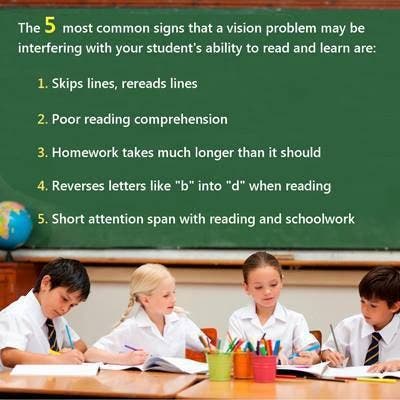
So, what does a vision problem look like? How can you tell if a child might have a vision problem? There are several observable signs a child may experience when vision is interfering with learning:
- 20 minutes of homework takes hours to complete
- Looses place while reading
- Omits small words while reading
- Uses a finger or marker to guide reading or to read
- Poor reading comprehension
- Headaches or fatigue, especially with near work
- Rubs or closes an eye
- Blurred vision
- Letters move or double vision
- Difficulty copying from the board
- Difficulty with writing (sizing, spacing, copying)
- Difficulty with spelling (often spells more phonetically)
- Poor gross and/or fine motor coordination
- Avoids school work or near work
Since vision is our dominant sense and 80% of all learning comes through the visual system, any interference in these pathways can cause difficulty with learning. While most children are born with healthy eyes, vision itself is a learned process. There are more than 17 visual skills a person must have to read and learn easily and effortlessly. These include visual motor skills (focusing, tracking, teaming) which we use to see and gather information. Accurate eye movement skills are necessary for following an object as well as being able to fixate correctly and quickly when reading, copying, or playing ball sports. If eye movements are uncoordinated, this could cause the child to lose his or her place, skip words, or miss the ball. Accuracy of clear, single vision depends on the precision of pointing and focusing the two eyes together. Eye teaming and focus problems create fatigue, discomfort, and blurriness, which may result in inconsistency of performance or avoidance of task.
Find out what's happening in Hinsdale-Clarendon Hillsfor free with the latest updates from Patch.
Once the information reaches the brain, we then use our visual perceptual skills (visual discrimination, visual memory, imagery) in order to understand what is being seen. Difficulties in this area may cause slow and hesitant reading. A child may show symptoms such as misread words, have poor reading comprehension, reversals and poor directional skills. In addition, there are the eye-hand coordination skills which are essential to the accurate production of written language as well as efficient and successful sports performance. Vision affects our understanding of space as vision leads us and without good vision symptoms such as clumsiness, poor coordination, and poor sports performance may result.
With most school systems offering visual screenings, parents frequently get a false sense of security that their child’s vision is good when they pass the screening. The truth is these screenings are frequently inadequate. The screening usually consists of the Snellen 20/20 chart, which is given at 20 feet. Today, only a small percentage of classroom learning happens at 20 feet. The majority of a child’s learning happens at an arm length or closer. A child could actually see double when reading and still pass this screening! A tremendous amount of learning happens visually, so proper vision care is crucial to helping students reach their full potential.
If your child’s school performance is inconsistent, your child performs below their potential, or you are simply puzzled with their performance in school, consider having their vision evaluated by a Developmental Optometrist. A developmental vision assessment will reveal any necessity for glasses for compensation, prevention, or stress relief. In addition, if deemed necessary, optometric vision therapy options would be discussed. The majority of vision disorders are very treatable. Studies have shown that the correction of vision problems with vision therapy leads to significant reduction in visual symptoms and improvements in reading performance. (2,3) To find a qualified developmental optometrist, use the find a doctor function at the College of Optometry in Vision Development website at www.COVD.org.
When making an appointment, in order to insure an adequate visual evaluation is done, the parent should ask the following questions:
1) Do you give a full series of near point visual tests?
2) Do you give academically related visual perception tests?
3) Do you provide one-on-one optometric vision therapy in your office?
4) Will you send a written report that all adults concerned can understand and apply to assist this child?
About Dr. Monika Spokas
Dr. Spokas is the clinical director at Clarendon Vision Development Center. She is a Developmental Optometrists who diagnoses and treats vision problems that interfere with a child’s ability to read, to learn, to comprehend and even to pay attention. Dr. Spokas earned her Doctorate of Optometry degree as a cum laude graduate of the prestigious Illinois College of Optometry, has completed hundreds of hours of post doctorate study and is an expert in the area of vision development, optometric vision therapy and visual rehabilitation.
References and for more information
1. National Parent Teacher Association
2. Optometry and Vision Science
3. Optometry: Journal of the American Optometric Association