Health & Fitness
1st Case Of Omicron Variant Confirmed In Cook County Suburbs
Public health officials said the person, who is asymptomatic and vaccinated, was tested after having close contact with a confirmed case.


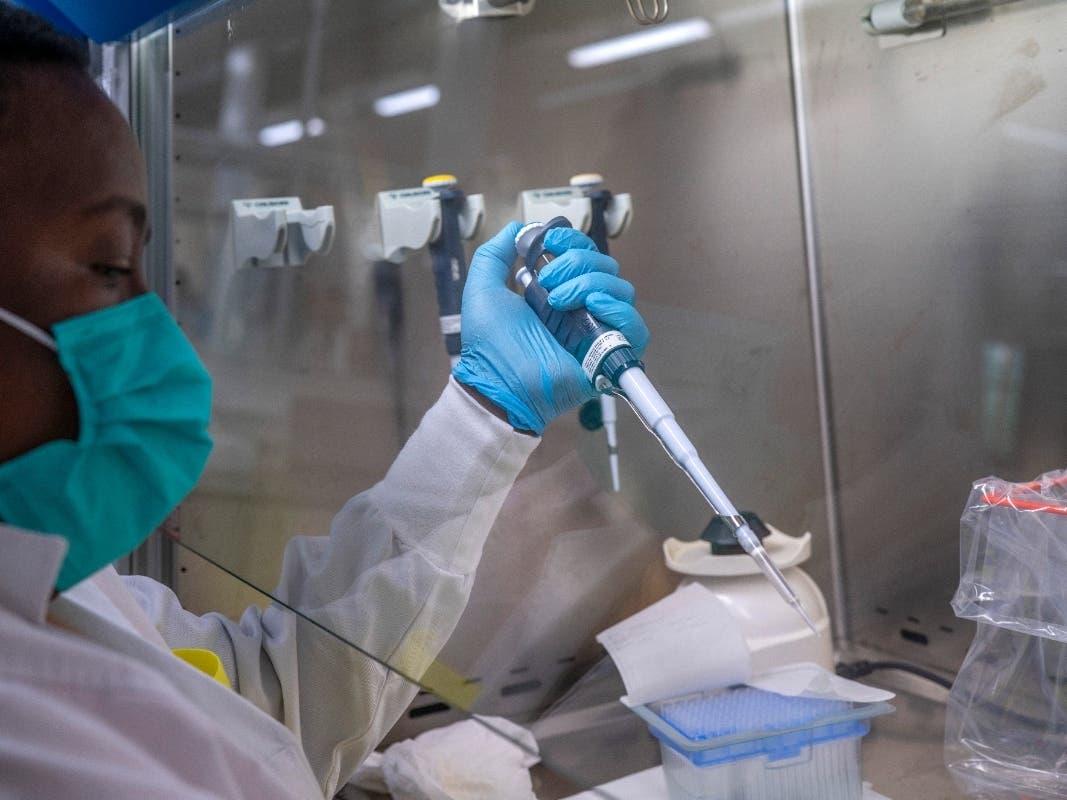
COOK COUNTY, IL — Public health officials announced the first confirmed case of the omicron coronavirus variant has been detected in suburban Cook County.
Dr. Rachel Rubin, senior medical officer of the Cook County Department of Public Health, said the case was detected Tuesday through testing the close contacts of another confirmed omicron case.
The infected person has no symptoms, Rubin said Wednesday, explaining that the person has been fully vaccinated for several months, but public health officials are uncertain if they have received a booster.
Find out what's happening in Hinsdale-Clarendon Hillsfor free with the latest updates from Patch.
"Preliminary data does indicate that omicron causes a milder form of COVID, which is good news, obviously, because that would decrease the number of deaths that we would see and potentially decrease the number of hospitalizations as well," Rubin said.
"But one thing that we are certainly concerned about is hospitals and health care facilities being overwhelmed with positive omicron cases," she added. "People might still require some level of medical support, either in a clinic or a hospital setting."
Find out what's happening in Hinsdale-Clarendon Hillsfor free with the latest updates from Patch.
Citing privacy concerns, Rubin declined to specify the municipality or township where the case was detected, the city or state of origin of the person's close contact, or the number of other cases currently undergoing testing for omicron.
"There's a handful that we're genotyping," Rubin told reporters. "I can't reveal the number."
Rubin, co-lead of the suburban public health department, said studies are showing that people who have received a vaccine booster have as much as 75 percent protection against getting severe COVID from the variant.
"So if you're not vaccinated, it means you're more likely to get a more severe case of COVID, even with the omicron," she said.
While omicron will likely become the dominant strain eventually — European Union health officials anticipate it taking over the continent next month — Rubin said time will tell how long that will take. In the meantime, the current surge of infections with the delta variant is a greater concern.
There are more than 1,000 new cases of the delta variant a day in the Cook County suburbs, the highest rate since mid-January. Hospitalizations in Illinois are also at their highest level since the first month of the year.
The first confirmed case of the omicron variant in Illinois was detected last week in a fully vaccinated Chicago man who came into contact with someone with another confirmed case during a visit. The man had symptoms but did not need to go to a hospital.
According to the U.S. Centers for Disease Control and Prevention, the new variant, first discovered last month by scientists in Botswana, could already constitute about 2 percent of all cases of COVID-19 in the Great Lakes region.
Tedros Adhanom Ghebreyesus, director-general of the World Health Organization, warned against dismissing omicron as milder than previous variants of the SARS-CoV-2 virus.
"Surely, we have learned by now that we underestimate this virus at our peril," Tedros said Tuesday. "Even if omicron does cause less severe disease, the sheer number of cases could once again overwhelm unprepared health systems."
Related: Omicron Variant Makes Up 2% Of Illinois, Great Lakes COVID-19 Cases
Labs conducting COVID-19 PCR tests in Illinois are required by the state to send about 10 to 20 percent of specimens to a state lab or another lab that conducts genotyping to determine how widespread a variant is. In addition to the random tests, public health officials can also flag specific samples for testing.
"If we have a specific suspicion of omicron based on a travel history or contact tracing and finding that they are potentially exposed to someone with omicron, then we will make a specific point of asking the lab that had done the PCR to send that specimen on," Rubin said.
As holiday gatherings kick into high gear during the final two weeks of the year, Rubin recommended residents take precautions, including COVID-19 testing two or three days before an event and again within 24 hours. Unvaccinated people, she said, should not celebrate with people outside their immediate household.
"Basically don't congregate in public spaces, or even in private spaces, with people that are not part of your own household," Rubin said. "We are also recommending that everybody remain masked indoors, not only in public spaces, which is mandated by the state and by our own order of Cook County, but also, even if it's in private homes, we highly suggest that you remain masked if you're with people who are not from your immediate household."
Get more local news delivered straight to your inbox. Sign up for free Patch newsletters and alerts.