Neighbor News
Local Black History Exhibit Travels to Joliet Area Historical Museum
See "38 Miles North and South of Chicago: A Comparative Look at African American History in Joliet and Lake Forest" while it's in the area!
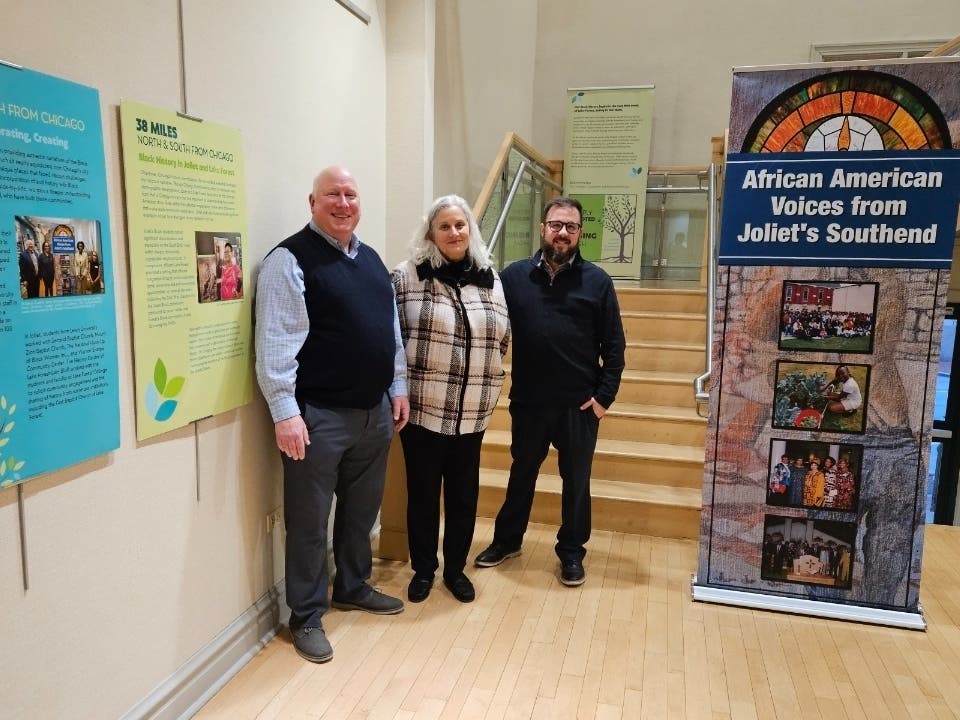

The History Center of Lake Forest-Lake Bluff (HCLFLB) and the Lewis University History Center are pleased to announce that "38 Miles North and South of Chicago: A Comparative Look at African American History in Joliet and Lake Forest, IL" will be on display at the Joliet Area Historical Museum from January 12 through the duration of Black History Month. This fascinating exhibition showcases two distinct community experiences in African American communities that are equidistant from Chicago's center: Joliet to the south and Lake Forest to the north. Both communities began in the mid-1800s and were served by strong, self-supporting organizations, led from within the Black community.
The Lewis University History Center partnered with Second Baptist Church, Mount Zion Baptist Church, The National Hook-up of Black Women Joliet Inc., and Warren-Sharpe Community Center on this project to help bring their stories to life, with funding from the Gaylord and Dorothy Donnelley Foundation. The History Center of Lake Forest Lake Bluff, through generous grants from the Illinois Humanities, the Grainger Foundation, the American Historical Association, and the National Endowment of the Humanities, developed their ongoing exhibition entitled “Deeply Rooted and Rising High: African American Experiences in Lake Forest.” These exhibition materials were built in part with student researchers from Lewis University and Lake Forest College, where students had the opportunity to conduct oral interviews, compile documents and write narratives for the exhibition. 38 Miles North and South from Chicago brings these stories together for a six-week showcase at the Joliet Area Historical Museum.
African Americans called the Joliet region home before its incorporation in 1852. They built up the community, found jobs, and enjoyed life in the Des Plaines River Valley. In Lake Forest, the first families arrived from the south in the late 1860s. By 1900, the second police officer on the Lake Forest force was African American and numerous Black-owned businesses were thriving. Both cities saw the rise of strong Black community organizations, churches, and cultural centers that supported their residents and provided a foundation for the growing communities. In spite of this long history, Black communities have often been on the periphery of the local historical narratives. The museums and their partners have curated a collection of documents and materials, including organizational and family histories, papers, and images, that helped to inform the exhibition.
Find out what's happening in Jolietfor free with the latest updates from Patch.
HCLFLB executive director Carol Summerfield explained, “For the History Center of Lake Forest Lake Bluff and the Lewis University History Center, the collaborative process brought together numerous members of the Black communities to tell their own stories and document their history through art and artifacts. The exhibition helps our audiences more deeply understand the breadth and depth of our local communities.”
In observance of Martin Luther King Day, January 15, 2024, admission will be free. For museum hours and more information visit https://www.jolietmuseum.org/