Community Corner
Is Molly Zelko's Body Buried Across From Stryker Ave. High Rise?
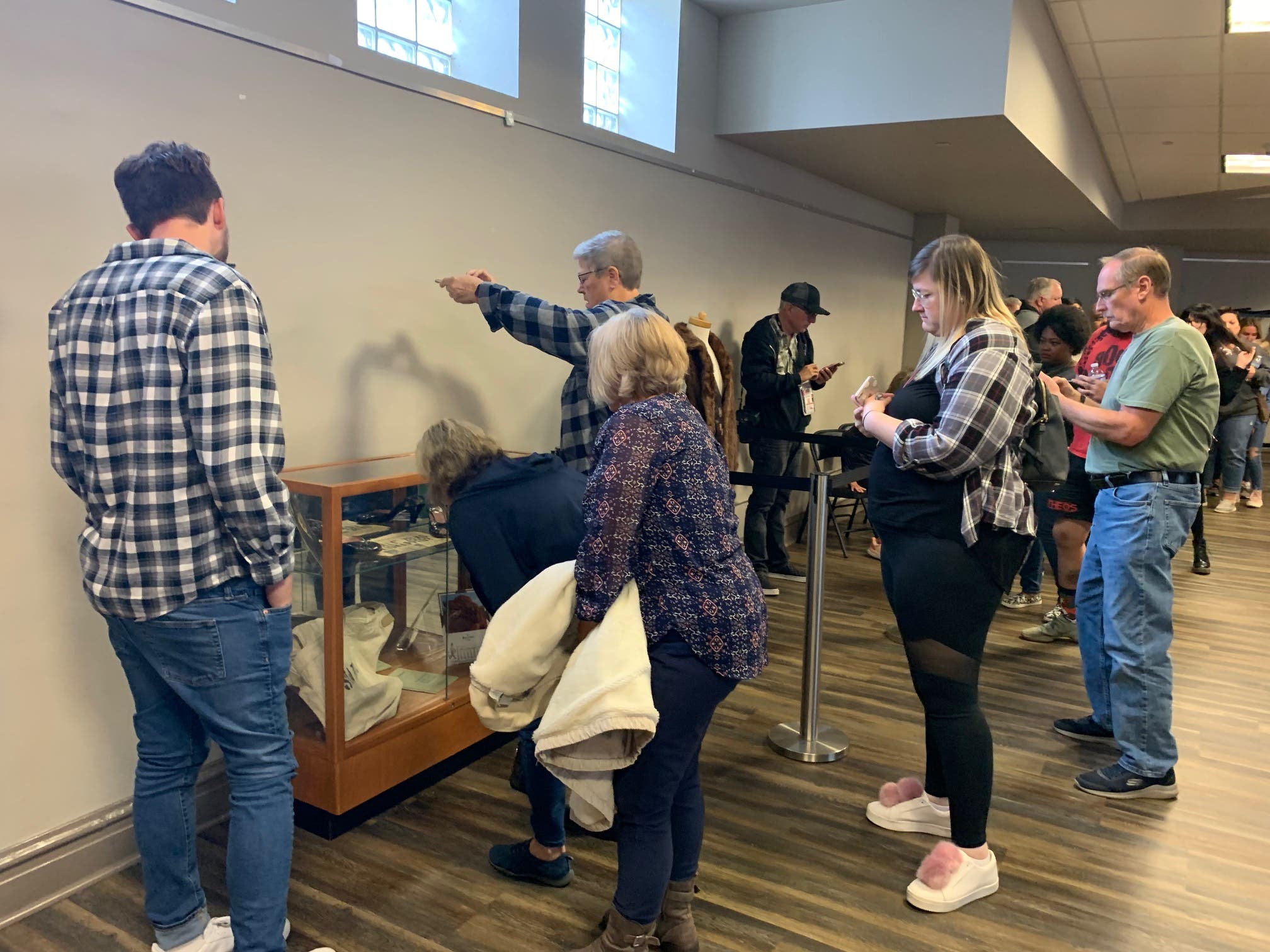
Nearly 200 packed into the museum auditorium for Lonny Cain's presentation examining where the newspaper editor's body may remain.


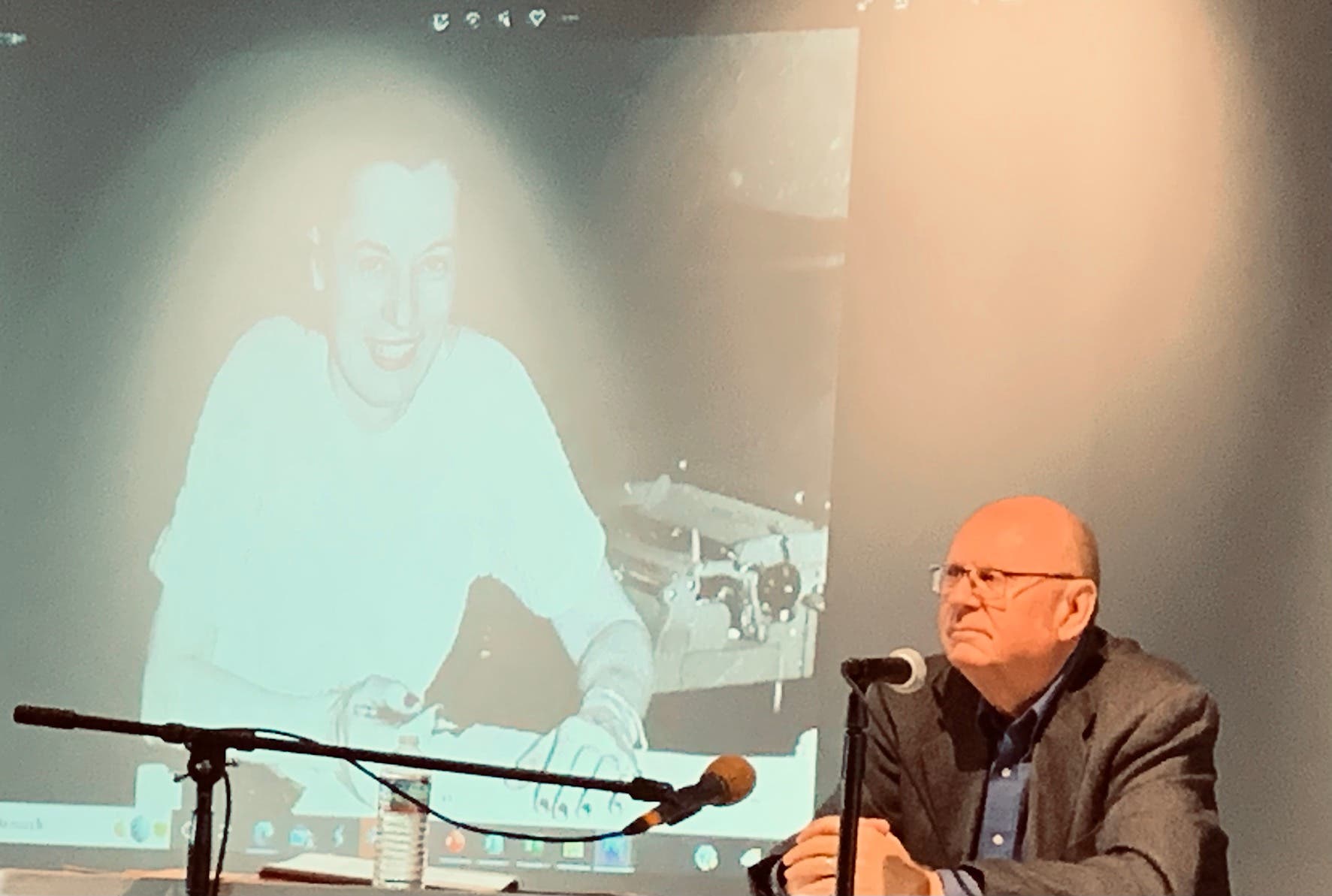
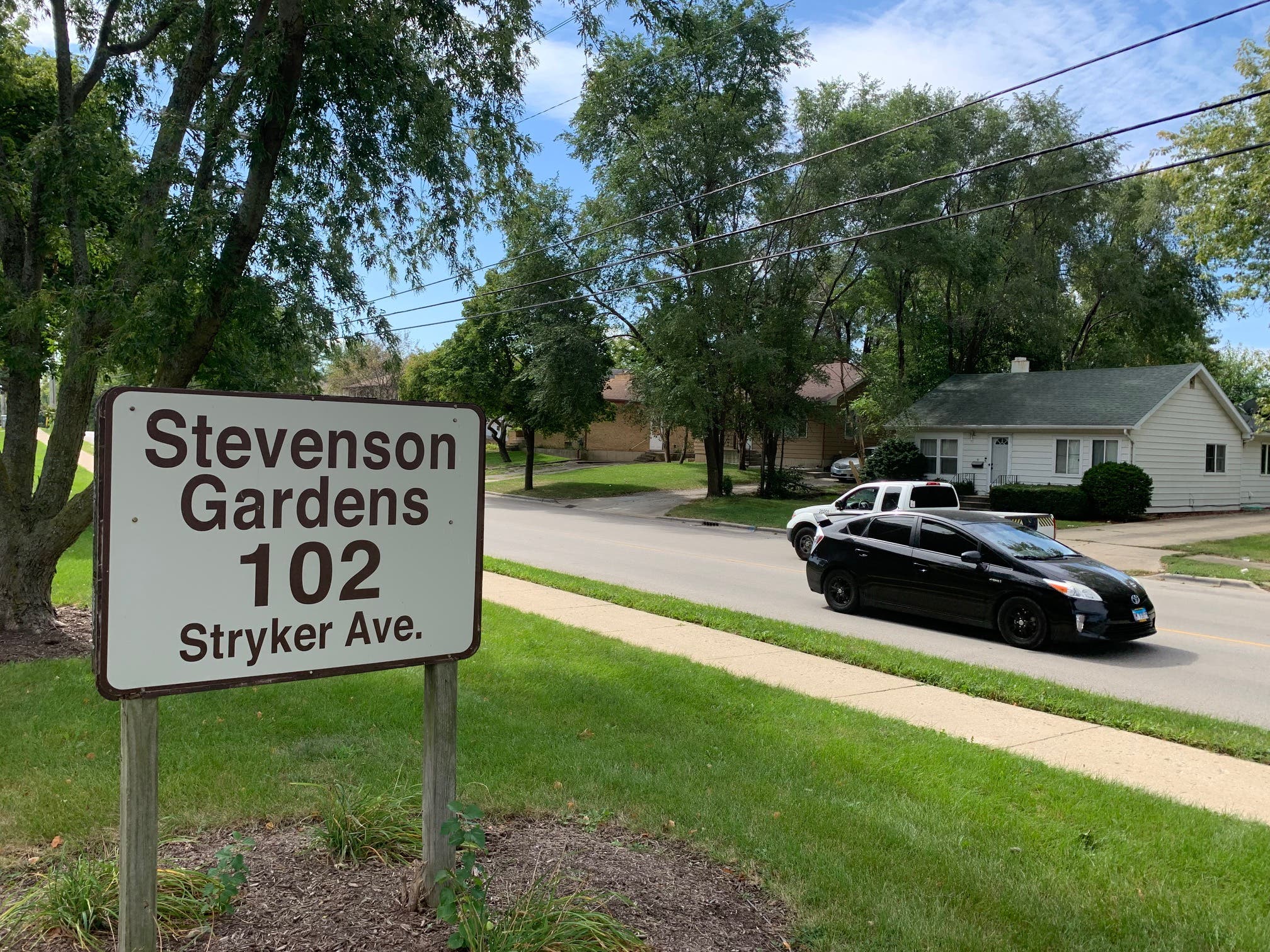
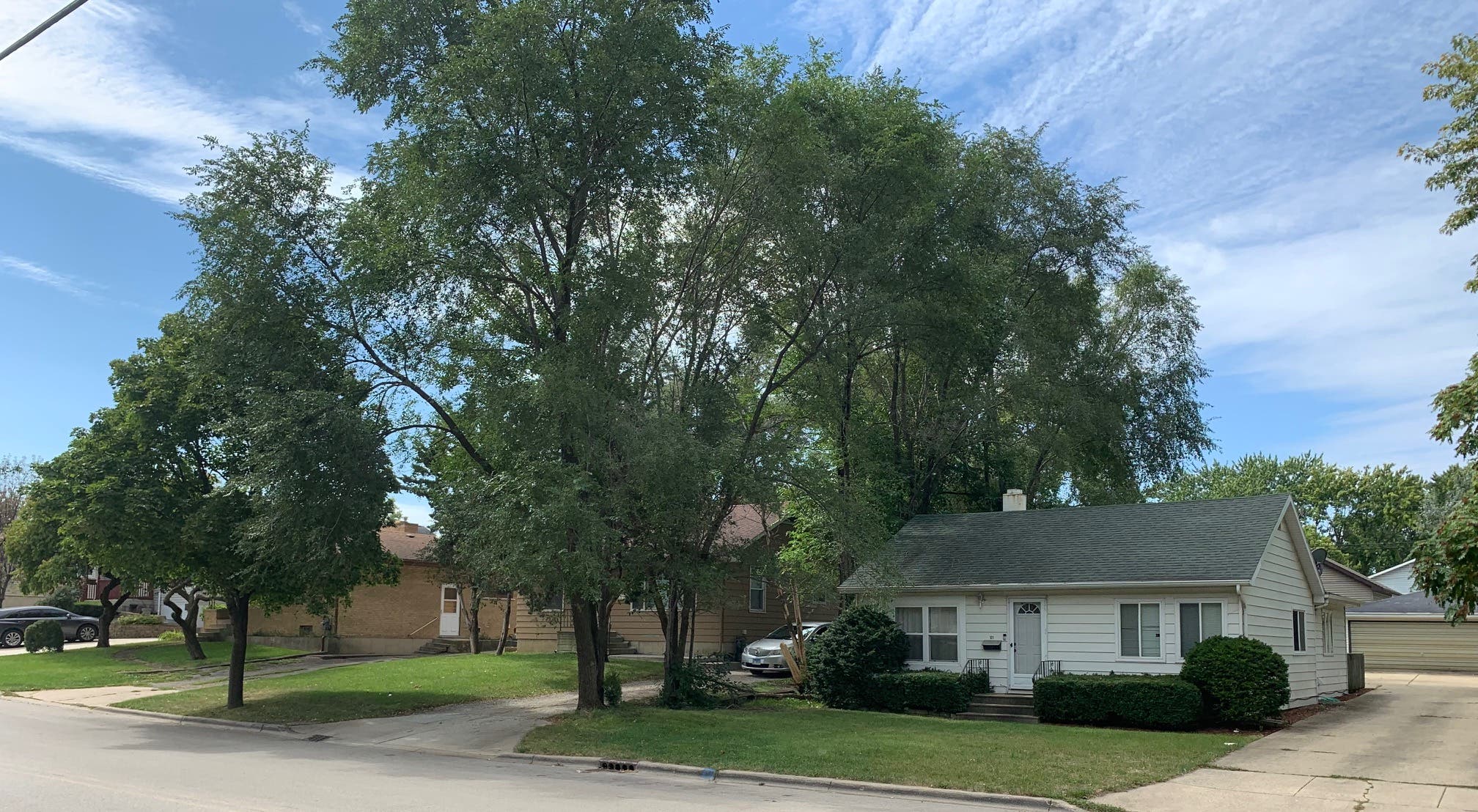
JOLIET, IL — On Saturday morning, retired Joliet area newspaper editor Lonny Cain gave a riveting presentation in the Joliet Area Historical Museum about the Molly Zelko mystery. Cain revealed the crusading newspaper editor from the 1950s may be buried in a sanitary sewer across from the Stevenson Gardens high rise on Stryker Avenue.
By early afternoon, Joliet Patch went to the property to take photographs and examine the street; during that time, at least a dozen or more motorists who attended Cain's talk drove to the 100 block of Stryker Avenue to check out the property for themselves.
Cain's presentation coincided with this weekend's 65th anniversary of the 47-year-old Joliet newspaper editor's disappearance and presumed murder by Joliet's mob.
Find out what's happening in Jolietfor free with the latest updates from Patch.
A full house of 200 people attended the two-hour talk.

The crowd was captivated as Cain revealed new details about the Molly murder investigation that were never made public until Saturday's talk.
Find out what's happening in Jolietfor free with the latest updates from Patch.
Cain named the two eyewitnesses who saw a large black car with four men park in front of their house at 103 Stryker Ave. and open the trunk. They saw a woman's body wrapped in something resembling a rug or a tarp.
"She made a point to say that the woman did not have shoes on," Cain said of Pace.
After the body was dropped face-first into the ditch, the men threw some dirt over the hole to cover the body so it wasn't visible.
Then, the black car drove off. The time of the incident was between 1 a.m. and 1:30 a.m.
"In 1957, Stryker Avenue was a cow path," Cain said. "It was a small road on the edge of town, not many houses there."

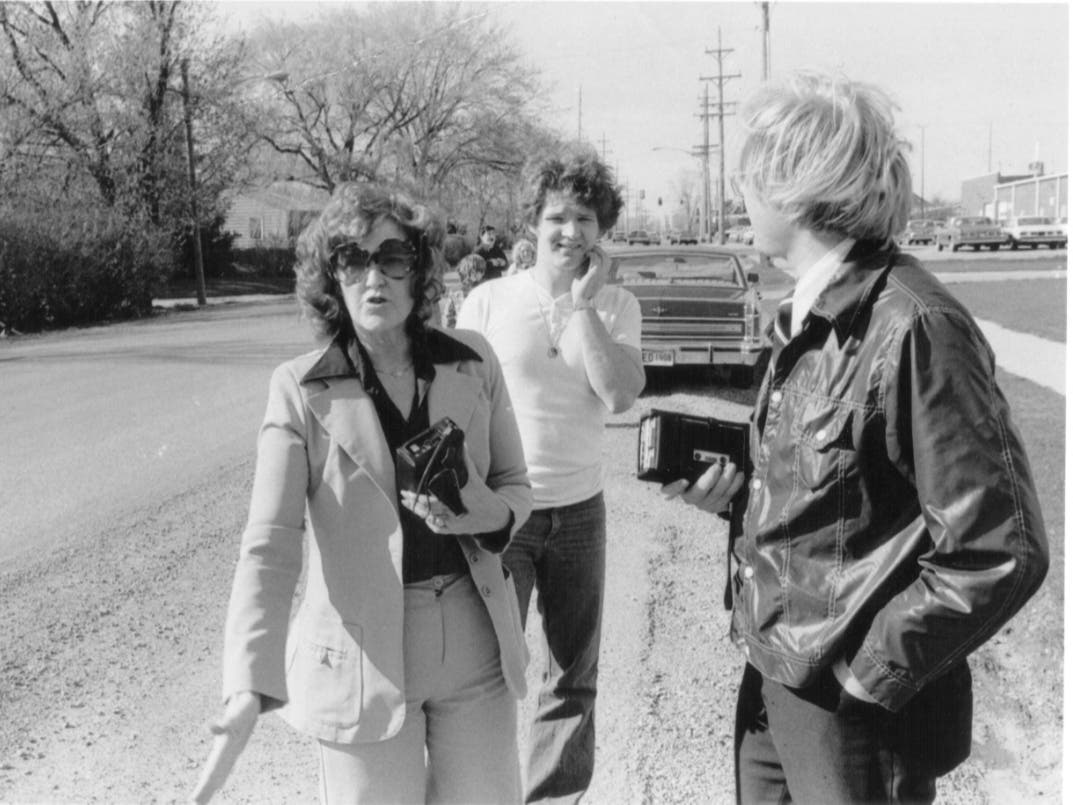
For the first time, Cain revealed the identity of the woman he and late Joliet Herald News columnist John Whiteside made a focal point of their reporting efforts to solve the Molly mystery, starting in the late 1970s after the 20-year anniversary.
The woman's name was Jeannine (Lake) Pace. She was also a well-known area psychic who had helped law enforcement from time to time on various investigations.
She died on Oct. 21, 2003 at the age of 73.
Back in 1957, Pace was in a turbulent marriage and raising three young children at the time, two girls and a boy. Her husband often did not come at night. In fact, he was away on the night she peered out her bedroom window and saw the large black car park along Stryker Avenue near the front of her family's house.
This happened between 1 a.m. and 1:30 a.m. on Sept. 26, 1957, which was a Thursday.
Pace was so terrified at what she saw that urinated on herself that night, Cain revealed Saturday.
"She lived with what she saw and hid that night," Cain told his audience.
In the late 1970s, Dr. George Honiotes of Joliet put Jeannine Pace under hypnosis as part of Cain and Whiteside's newspaper investigation into Molly's mystery, and a portion of her tape-recorded hypnotic sessions were played for Saturday's audience.
"This woman was terrified all over again," Cain told everyone.
During a portion of the audio tapes played Saturday, Pace became hysterical under hypnosis, screaming "it's a body!"
"She didn't say it calmly," Cain explained. "She was reliving it."
Then, the next day, came on the knock on her door.
It was a man from the Stryker Avenue construction crew installing the sanitary sewer lines.
"How'd ya sleep?" the construction worker asked her.
"Fine," she replied.
According to Cain, "They knew that she saw what happened. That's how she felt."
Based on Cain's interviews with Pace, Molly's body was dumped into an open ditch, about 7 to 8 feet below the ground, on the west side of Stryker, "right at the edge of the side area of her house."
Pace and her children lived at 103 Stryker Ave.
At the time of Molly's disappearance, Pace had an unpaid bill from a Joliet supermarket. Then one day out of nowhere, she learned her bill got paid off, according to Cain.
Then came a "$500 donation" given to her "for being a needy family," Cain said.
As for Dec. 25, 1957, "that Christmas was the best Christmas the kids ever had," Cain explained.
Cain said Pace's entire living room was filled with toys and gifts for her and her three small children. Even the tree Pace had used was replaced with a different Christmas tree that December, Cain explained.
In November 2018, 15 years after Jeannine Pace's death, Cain traveled to Tennessee to interview her daughter, Bonnie, who was 7 years old when Molly vanished in 1957.
Bonnie remembered that her family moved away from Stryker Avenue roughly within a year.
And there were a couple of things her mother shared with her over the years and that stuck with her: "Never, ever, ever tell anyone that you lived on Stryker Avenue and avoid telling them your last name," Bonnie told Cain during his 2018 interview in Tennessee.
When Cain and Whiteside interviewed Pace extensively in 1978, she claimed she was peering out her bedroom window with her anxious dog, Queenie, whimpering nearby.
She claimed to be telling the dog to stay quiet.
Cain now believes that Pace's 7-year-old daughter Bonnie was also in the presence of her mother as the body disposal took place outside.
"I believe that because that's what she said," Cain said. "She said, 'I was in the room with Mom.'"
Tragically, Bonnie died about a year after Cain's interview in Tennessee.
"She fell in the shower, it was a freak accident," Cain told everyone.
During that 2018 interview, Cain asked the Tennessee woman if she remembered anything about her 1957 Christmas on Stryker Avenue.
Bonnie remembered the whole living room covered with presents, but never knew where all the gifts actually came from. Her mom told her that someone must have given the family's name to a Joliet church, according to Cain.

In addition to revealing the names of the mother and daughter who insisted they saw a body put into Stryker Avenue's sanitary sewer project, Cain revealed a third name who had an enormous connection to corroborating their story — construction worker Gino Ullian.
Ullian mailed John Whiteside a letter in September 1986 — some 29 years after Molly's disappearance and presumed murder. Ullian then mailed Whiteside a second letter in 2002, after Whiteside produced another in-depth series on Molly's disappearance.
Ullian revealed in his letters how he had been working on Stryker Avenue's sanitary sewer project in 1957, and was told to leave the ditch open at the end of his work day, which was unusual.
When he got to work the next morning, he was startled to find the ditch was backfilled.
.jpg)
He also revealed to Cain and Whiteside that he spoke with Pace at her house the very next day.
"I told her that something strange happened last night and in our short conversation she said she seen some men throw something in the ditch but did not say anything else," Ullian wrote in his 2002 letter to Whiteside.
Cain said he and Whiteside never revealed the name of the construction contractor handling Joliet's Stryker Avenue project during any of their investigative stories.
Then on Saturday, Cain told the audience that Armand D'Andrea Construction was responsible for the sanitary sewer project.
Ullian informed Whiteside in one of his letters that he recalled asking a foreman, "who backfilled it?" because that could negatively impact his own pay.
"We were told to forget it and everything was OK," Ullian told Whiteside.
Ullian's letter went on to state, "Being a family man, and needing the work, I shut up."
Ullian's letters to Whiteside notified the famed Joliet newspaper columnist that Ullian was not looking for a story or any glory.
"I want this off my chest," he wrote Whiteside, adding how he greatly admired Molly Zelko and The Spectator and "she told it like it was no matter what the big shots said," Cain told Saturday's audience.
Joliet Patch asked Greg Peerbolte, Joliet Area Historical Museum director, for his reaction to Saturday's presentation and tremendous turnout.
"Journalism is a hallmark of our democratic republic," Peerbolte said. "As Molly was only one of three Illinois reporters in the state's history to presumably have been killed in the line of duty, and the only woman, her story takes on continued importance.
"Today's enthusiastic crowd of nearly 200 tell us that Molly's story still matters to Joliet, and we as a community should continue to search for answers."
Cain told everyone he had meetings with Will County State's Attorney Jim Glasgow and some of his top criminal investigators at the end of last year.
Cain wants to determine, once and for all, whether Molly's body remains buried on Stryker Avenue, 65 years after her middle of the night disappearance from her apartment, 413 Buell Ave.
Last Dec. 14, Glasgow showed up along with fellow members of his office, in the 100 block of Stryker Avenue, where a ground radar scan was conducted on a small section of the street.
The man performing the ground radar scan, Shaun Ashley, Midwest area manager for GPRS Inc., told Cain this was a "shot in the dark" because of soil conditions and the limitations of what his company's equipment could show, Cain explained.
"The one thing he did say is that his equipment could not go more than 3 or 4 feet," Cain said. "That was the maximum. And the sanitary sewer line is 7 to 8 feet down."
According to GPRS's analysis across the street from the high-rise apartments, "the equipment and methods used did not detect reactions from potential burials."
Cain told Joliet Patch he asked whether the scan would detect a skeleton and Ashley told him the answer was no.
After the scan, Cain said he was told the Will County State's Attorney's Office could not do anything further, and he should consider talking to city of Joliet officials about digging up Stryker Avenue.

Get more local news delivered straight to your inbox. Sign up for free Patch newsletters and alerts.