Politics & Government
Shot By JPD's Adam Stapleton, Pacheco Wins Appeals Verdict
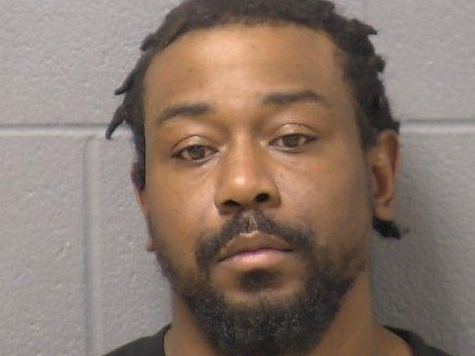
James Pacheco was found guilty in 2015 of aggravated assault, aggravated fleeing a peace officer and DUI.


JOLIET, IL — In what may be a major legal setback for the city of Joliet, the Third District Appellate Court of Illinois issued a 2-1 ruling last week overturning the 2015 Will County jury trial convictions of James Pacheco. The Lockport man was shot several times by Joliet Police Officer Adam Stapleton on July 30, 2012, during a traffic stop near a railroad crossing in Joliet.
"We reverse defendant's convictions for aggravated assault, aggravated fleeing or attempting to elude a peace officer and DUI. We remand the matter for a new trial on these charges. Because defendant pled guilty to criminal damage to property prior to trial, the trial issues raised in this appeal do not affect that conviction. Reversed and remanded," the appeals court ruled.
According to the evidence, Stapleton fired six bullets through Pacheco's windshield and one bullet into the hood of his car. Pacheco was shot in the arm, shoulder and upper lip.
Find out what's happening in Jolietfor free with the latest updates from Patch.
Justice Mary McDade delivered the written opinion and had agreement from Justice Vicki Wright. Justice Daniel Schmidt was the lone dissent. (Incidentally, Pacheco has already served out his sentence of four years of prison time.) The Will County jury found Pacheco not guilty of the offense of attempted aggravated battery.
Pacheco's criminal trial occurred in the courtroom of Will County Circuit Judge Carla Alessio Policandriotes. On appeal, the lawyers for Pacheco argued the judge erred by replaying video and audio recordings in her courtroom in the presence of everyone rather than in the jury room during the jury deliberations, and the judge violated Pacheco's right to confrontation of his accusers by limiting his cross-examination of a police officer. The judge was also accused of abusing her discretion in granting the prosecution's motion to bar the defense from questioning Stapleton and his patrol partner Eric Zettergren about their failure to write police reports, and the state was accused of engaging in prosecutorial misconduct during its closing arguments.
Find out what's happening in Jolietfor free with the latest updates from Patch.
The court ruling in People V. Pacheco was 38 pages.
Here are some of the highlights noted by the Third District justices who sided with Pacheco:
- "The State's case for aggravated assault was based primarily on Stapleton's testimony that defendant accelerated his vehicle toward Stapleton, which caused him to fear for his life and discharge his firearm. However, Stapleton's testimony was contradicted by (witness Jamie) Kirk's testimony that defendant's vehicle remained stationary until after the shooting. Also, as we previously discussed, Stapleton's testimony that defendant accelerated his vehicle toward Stapleton prior to the shooting was not directly corroborated by other evidence at trial."
- "Stapleton testified that he did not write a police report in connection with the instant case. Stapleton stated, 'It was explained to me the only thing I was to do with anything with the case was to give a statement, a video and audiotaped statement, after the incident.' Stapleton said that was customary for officers to write police reports unless there was an officer-involved shooting, which occurred in this case. Defense counsel asked Stapleton why that situation was different. Stapleton replied: 'Because of the protection by our union, legal protection, things of that nature.'"
- "Officer Eric Zettergren also testified that he did not write a police report. Zettergren explained: 'I believe it is the department's policy that if you're involved in an incident like this you just give a statement.' Defense counsel asked Zettergren if he was ordered by his supervisor not to write a report. Zettergren replied: 'I don't know if I'm specifically ordered not to, but that's just the way it has been done.'"
- "At trial Ralph Gallup, his son Jonathan Gallup and their neighbor Reginald Phillips testified that they heard the sound of glass breaking at approximately 2:20 a.m. on July 30, 2012. They observed a black car in the alley behind their residences and saw that (the) defendant was driving the car. Jonathan saw that the windows of Ralph's truck were broken. Jonathan or Ralph called the police. Defendant drove his car to the end of the alley, which was a dead end ... Defendant stopped his vehicle after Stapleton activated his overhead lights. The officers exited their squad car and defendant drove away. The officers then began pursuing defendant."
- "The State introduced an audio recording of the encounter captured by surveillance equipment at the Filtration Group into evidence and played it for the jury. A voice could be heard yelling, 'I didn't do anything.' Another voice repeated, 'Stop the car' several times. Seven gunshots could be heard. The gunshots began approximately one second after the voice said 'Stop the car' for the last time."
(Article continues below this photo.)

- "During cross-examination, defense counsel asked Stapleton: 'Now, what caused you to fire is there was a sudden turn in the vehicle towards you and it accelerated at a high rate of speed. It was at that point in time you feared for your safety and fired your firearm, is that correct? Stapleton replied, 'I didn't say a high rate of speed. I said the vehicle had accelerated towards me .... I was firing the rounds to stop the threat that was coming at me.'"
- "Stapleton testified that he and Zettergren pursued defendant after the shooting. Initially, there were two other squad cars in front of them, but Stapleton passed them so that he would lead the pursuit ... At one point, Stapleton was driving 80 miles per hour in pursuit of the defendant. Eventually, defendant struck a traffic signal pole and stopped. Stapleton exited his squad car ... Stapleton broke the window of defendant's vehicle and opened the door. Stapleton twice told defendant to exit the vehicle, but he refused. Stapleton twice tried to pull defendant out of the vehicle but defendant resisted. Defendant was bleeding and said he had been shot. Stapleton deployed his taser and the officers were able to remove defendant from the vehicle ... Stapleton activated his taser second time. Other officers then gave defendant medical attention."
- "(Jamie) Kirk testified he was 19 years old ... Kirk was sleeping on the top bunk of (his father) Michael McAbee's semitruck. He heard McAbee exclaim and he woke up. He saw a black car in front of the semitruck and a squad car to the left of the truck. A train was blocking the road ... 'If I'm not mistaken, I heard (Pacheco) say to the cop to get out his way, F-word.' Kirk testified that he saw the officer point his gun at the black car. The black car remained stationary and did not move until after the officer fired his gun. Kirk stated that it was possible that the black car was moving so slowly that he could not tell if it was moving. Kirk believed the officer fired six shots. The black car then drove away slowly."
- "We find that the court's order barring defense counsel from cross-examining Stapleton regarding the potential consequences to his employment if the shooting were determined to be unjustified was not harmless beyond a reasonable doubt. Stapleton's testimony that defendant accelerated his vehicle toward Stapleton prior to the shooting was crucial to the prosecution's case for aggravated assault and was not cumulative. This testimony was not directly corroborated by other evidence at trial."
- "Also, the cross-examination otherwise permitted by the court did not sufficiently allow defendant to present his theory that Stapleton had motivation to testify falsely in order to protect his employment. The court did not allow defense counsel to question Stapleton and Zettergren about their failure to write police reports in this case, which would have supported this theory ... the defense was not able to present any motivation Stapleton may have had to testify falsely ... Viewing all the factors in totality, the court's improper limitation of defense counsel's cross-examination of Stapleton was not harmless beyond a reasonable doubt."
In 2013, Pacheco hired Joliet attorney Jeff Tomczak of The Tomczak Law Group to pursue a civil rights violation lawsuit against the city of Joliet and Officer Adam Stapleton accusing Stapleton of excessive force. The federal lawsuit has been in the pretrial stages for years now, but last week's appeals court ruling will likely be advantageous for Pacheco, not for the city of Joliet.
There is a 2013 article posted on the downtown Joliet law firm's website that includes comments from their client saying, "I had no idea why their guns were drawn or why they were pulling me over,” Pacheco said. "I don’t believe no matter what I did that night, I’m being accused of something that was minor, busting a window, I don’t think anybody deserves to be shot."
Stapleton, Joliet Patch readers may recall, is the same Joliet Police officer who has been accused of assaulting Konnika Morrow earlier this month at a prayer vigil for her missing relative on the city's southeast side.
Moments after arriving in his squad car, Stapleton tackled Morrow to the ground, injuring her, and the incident was posted on YouTube.
Morrow told Patch that Stapleton's conduct left her with the impression he is a poorly trained Joliet Police officer "who doesn't know how to deal with people."

Get more local news delivered straight to your inbox. Sign up for free Patch newsletters and alerts.