Neighbor News
Why Joliet’s Next Mayor Must Understand the History Behind Our Deepest Divide
A century old divide won't disappear through campaign promises. Joliet needs a mayor with a realistic plan to rebuild the East Side.
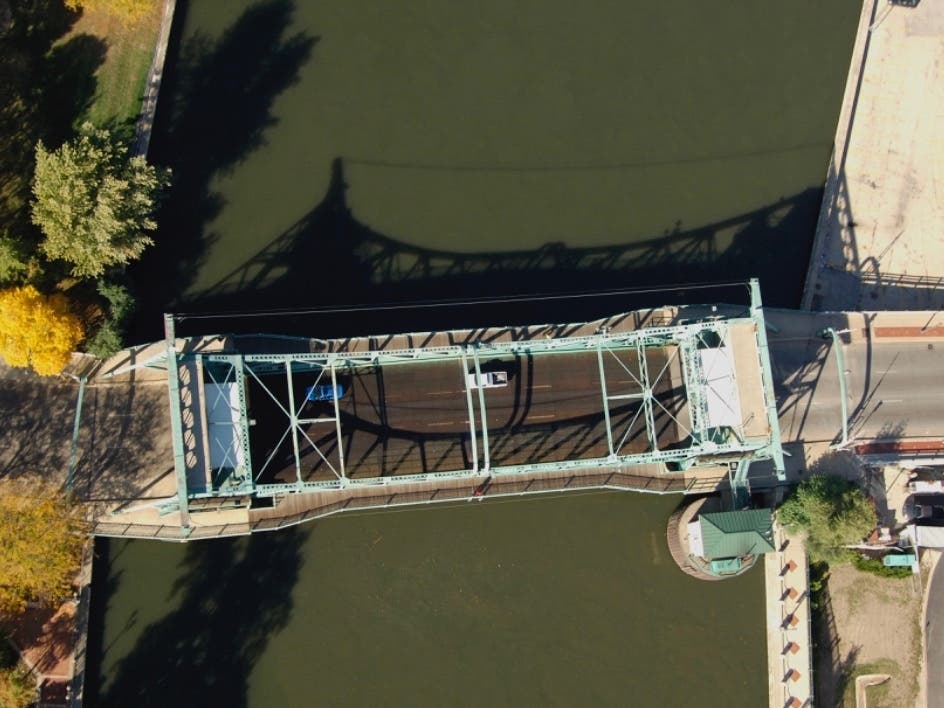
As a resident born and raised on the East Side of Joliet, I fully understand the deep seated pain and frustration that comes with living here. For nearly 23 years, I have watched our city expand and claim its title as one of Illinois’ most populous suburban hubs. Yet, anyone who regularly travels across the Des Plaines River knows an uncomfortable, undeniable truth, the physical and economic divide between the East Side and the West Side is as stark as ever. When you look at our immediate neighbors like Shorewood or New Lenox, you see a level of seamless infrastructure and commercial equity that Joliet has continually failed to replicate.
Living on the East Side means watching a rotating door of mayors come and go while our roads crumble, our bridges stall, crime persists, and our educational resources lag behind. It is infuriating. But as I took a retrospective, archival look into Joliet’s history to understand why our side of town continues to face these problems, I realized something critical, the systemic disadvantages plaguing the East Side today are not accidental. They were engineered.
Because of this, the ultimate test of a mayoral candidate isn't a flashy slogan or a sleek social media campaign; it’s whether they have actually done their research on this history. If a leader doesn’t understand the root causes of our division, they cannot possibly build a plan to fix it. Furthermore, if we as residents do not show up to vote, log off social media, and step into town hall meetings, we allow these broken systems to continue.
Find out what's happening in Jolietfor free with the latest updates from Patch.
The structural disadvantages of the East Side were locked in nearly a century ago. In the 1930s, the federal Home Owners’ Loan Corporation (HOLC) drew literal red lines around East Joliet, choking off institutional investment and labeling these minority neighborhoods as "hazardous." But while economic exclusion laid the groundwork, it was compounded by a massive, artificial topographical trap. Back in the 19th and early 20th centuries, engineering crews dredged the Des Plaines River to create the Chicago Sanitary and Ship Canal. To handle massive commercial ships, they built towering concrete retaining walls that permanently raised the river's navigation pool relative to the surrounding land.
Because of this, historic East Joliet (from Ruby Street south to the Brandon Road Lock and Dam) physically sits below the level of the river. Downtown, the river is sustained at about 6 feet above ground level. Further south near McDonough Street, those retaining walls tower an astonishing 20 feet above the ground.
Find out what's happening in Jolietfor free with the latest updates from Patch.
This engineering marvel for commercial shipping became a structural nightmare for the East Side, turning it into a severe, high risk flood zone. This single environmental factor is the primary reason large businesses historically refused to buy land or build corporate infrastructure on the East Side. It is not an unfixable problem current efforts like the U.S. Army Corps of Engineers' Section 205 Levee Project aim to install thousands of feet of new sheet pile floodwalls to keep the river out but it requires a leader who understands that infrastructure here is a matter of literal survival.
This brings us to candidates like Stanley "Stan" Keen, whose populist campaign relies heavily on disruptive, anti establishment promises. Keen has repeatedly targeted the city's current budget, promising to drastically reduce the tax burden on families and small businesses.
On paper, tax cuts sound beautiful. But public policy is bound by a variation of Newton’s third law: for every action, there is an equal and opposite reaction.
Keen simultaneously promises to increase the police presence to speed up emergency response times, while also funding robust youth programs like after-school sports, art, and community activities. Here is where the mathematical cracks begin to show. When you lower municipal taxes, you slash the government's general fund. If the city's revenue shrinks, the police department cannot magically expand its staff or improve response times; in fact, the opposite occurs. Even worse, history shows us that when local governments face severe budget deficits, non-essential organizations like youth and after-school programming are the very first things to get defunded and shut down. Furthermore, upgrading the East Side's ancient water mains, repairing our crumbling roads, and matching the federal funding needed for the Army Corps levee project costs millions of dollars. A candidate cannot promise an ambitious city overhaul while simultaneously draining the financial reservoir needed to pay for it.
We see a similar misunderstanding of urban economics in Keen's heavy criticism of our new downtown plaza and park space. He has repeatedly labeled the project a "waste of taxpayer money", even suggesting he would tear it down if elected. While any massive municipal project will have its lovers and haters, erasing the park entirely exposes a massive blind spot regarding Joliet’s unique economy. Many residents don't realize the massive volume of tourism Joliet actually receives. Travelers from all over make stops here because of our rich history and our iconic placement along Route 66.
Before the park, that space was an unappealing, concrete parking lot. By transforming it into a scenic, welcoming green space in close proximity to the historic Rialto Square Theatre and Slammers Stadium, the city created a vital economic anchor. It gives tourists a welcoming feeling and a reason to step out of their cars, explore the downtown strip, and spend money at local small businesses, which is exactly what Keen claims he wants to achieve. To spend millions of taxpayer dollars to build an asset, only to spend millions more to demolish it out of political spite, is the literal definition of wasting taxpayer money.
Perhaps the most crucial issue for the East Side is how we choose to build for the future. The East Side is a beautifully rich, vibrant community anchored deeply in Black and Hispanic culture. The local economy there is largely driven by independent, family-owned Hispanic stores. In his (Keen) campaign posts, Keen has shared slick, AI-generated concept videos showcasing his vision for Joliet, a skyline dominated by towering skyscrapers and high-rises, aiming to make Joliet a flashy, futuristic metropolis. While this looks glamorous on a screen, it presents an immediate gentrification threat to the East Side.
When a city brings in top down, aggressive corporate development without strict protections, commercial property values and rents skyrocket. If we build infrastructure simply to attract massive corporate chains, we will inevitably wipe out the local business owners who kept the East Side alive when major developers abandoned it. We must ask our candidates: "how do you plan to protect our Hispanic and Black business owners from being overtaken by corporate chains or forced out by skyrocketing rents?" We need infrastructure that builds upon our cultural roots, not erases them.
But my biggest criticism isn't just for the candidates, it is for us, the residents of Joliet. Too often, we don't speak up when it matters most. I see it constantly among adults ages 20 to 50, and especially among our younger generations. We complain bitterly about the lack of funding, the crumbling infrastructure, the terrible roads, and the endless bridge problems. Yet, when the time comes to attend town hall meetings or cast a ballot, voter turnout is heartbreakingly low.
Instead of showing up to the actual rooms where decisions are made, people choose to express their anger online, burying their frustrations in comment sections on Facebook and TikTok. Digital venting does not change city ordinances, and algorithms do not pave roads. If we want the mayors of Joliet to be completely transparent with us, we have to demand it with our presence.
This disconnect highlights a deeper crisis, a desperate need to teach political literacy to our youth. Working in the science and medical fields, and operating as a part-time journalist covering current news, I routinely observe how easily people get tripped up by political language. It wasn’t until I went to university and entered graduate school that I truly learned to deconstruct what politicians mean when they speak. Average citizens easily fall for the bait of campaign commercials and flyers, doing minimal research because they hear alluring buzzwords like "reduced taxes" or "more affordable housing." They accept these phrases at face value without questioning what they actually mean for a city's bottom line. When a politician promises "reduced taxes," they rarely mention what public services will be cut to balance the books. When they promise "affordable housing," they rarely explain who builds it and who gets displaced in the process.
As the 2027 election approaches, we cannot afford to be blinded by flashy promises or slick AI animations. The incumbent path under Mayor Terry D'Arcy offers a slow, highly bureaucratic focus on multi year water projects and federal partnerships. It is stable, but for East Side residents who have waited decades for equity, it can feel frustratingly stagnant. However, the alternative offered by populists like Keen presents a dangerous financial paradox where the math simply does not add up.
We must encourage and demand that future generations become politically literate. We need a community that questions its political leaders and conducts extensive research rather than falling for marketing tricks. We cannot sit on the sidelines and expect the East Side's century old divide to heal itself.
Log off TikTok, skip the Facebook rants, and show up to the town halls. We need a mayor who understands the soil of the East Side and, more importantly, Joliet as a whole.