Crime & Safety
Felony Review in Cook County - How it works
Over the years, it's mutated into a political maneuver which most law enforcement officers now refer to as "Felony Rejection."

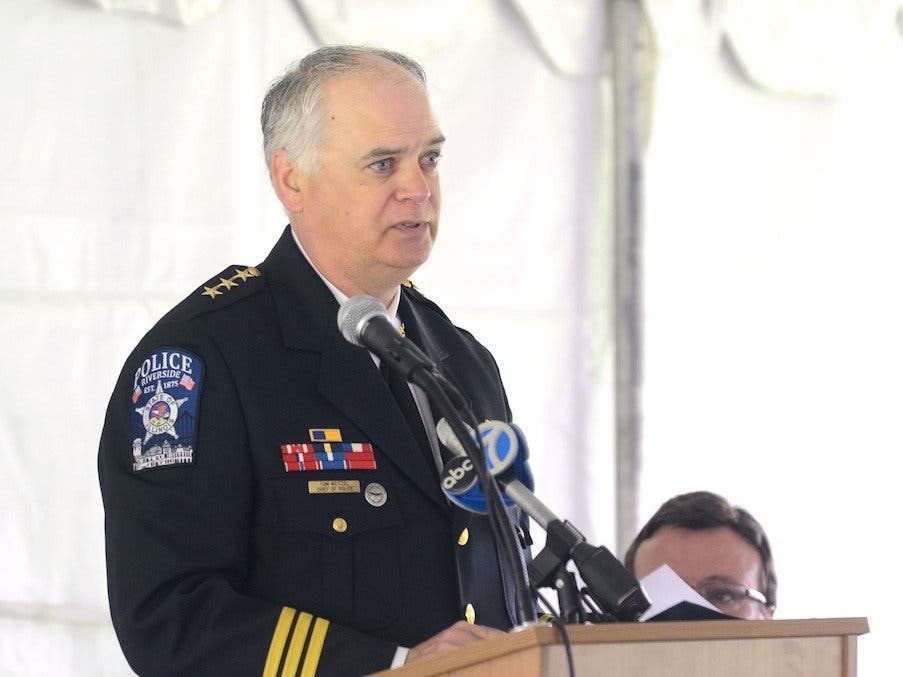

-How Felony Review really works in Cook County-
Over the last few months, there's been considerable discussion in the media about the Cook County State's Attorney's Felony Review process (Law Enforcement Worst Enemy).
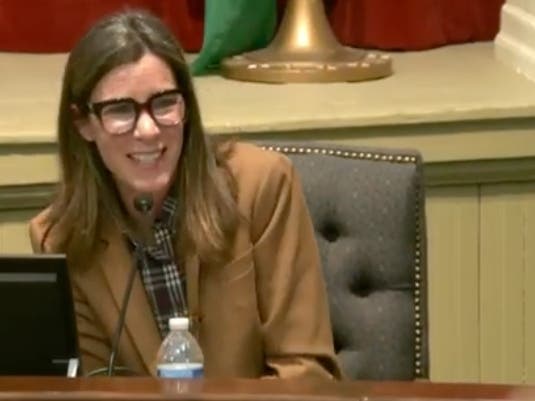
There’s been a lot of discussion even by the Cook County State's Attorney's Office themselves, State's Attorney Kim Foxx, and police officials, including Chicago and suburban police officials.
Find out what's happening in La Grangefor free with the latest updates from Patch.
I am going to lay out for you how Felony Review works in Cook County.
You may find this surprising because Felony Review is not what you see written or “advertised" by the Cook County State's Attorney's Office.
Find out what's happening in La Grangefor free with the latest updates from Patch.
First, the Felony Review process was established provisionally so that prosecutors and police could be on the same page when it came to serious felony prosecutions. However, over the years, it's mutated into a political maneuver which most law enforcement officers now refer to as "Felony Rejection."
Felony Review is not treated the same way by all police departments or the State's Attorney's office. Felony review is not a law, its policy decision by the States Attorney. Chicago police have felony override authority, suburban police departments do not. Suburban chiefs tried to get Felony Review override like Chicago, but the State's Attorney's office has consistently rejected this idea, so there have been many heated exchanges between the State's Attorney's Office and police officials through the years.
What crimes are available for Felony Review? Basically, any felony except for drug possession cases and certain traffic cases; an example would be a felony driving with revoked or suspended license (frequently DUI related). Almost all other cases must be reviewed by the state's attorney's office.
THE PROCESS
A typical Felony Review process would transpire like this: an officer makes an arrest for a felony violation; either a self-initiated, on-view arrest, or officer completes an investigation after responding to a call. The offender is taken into custody, transported to the police station where his rights are read and he is interviewed - if the defendant chooses to speak. Arresting officers/detectives typically gather other witness statements, collect video, audio, any physical evidence that may be associated with the crime, and complete a thorough investigation. Once the officer/detective believes he has enough evidence to call Felony Review for approval, they call the Cook County State's Attorney's Felony Review number (stationed out of the Chicago office). Many times, the State's Attorney is tied up on other Felony Review calls. It is not at all uncommon for police officers to wait hours, if not an entire day, for a call back from a Felony Review Assistant State's Attorney - depending on the crime.
Keep in mind that police agencies have only 72 hours by law to hold prisoners, and more commonly, departments hold prisoners up to 48 hours before they have to appear at Bond Court. This puts extreme stress investigators to get the case approved by the State's Attorney's Office.
When the State's Attorney's Office calls back, they then decide to do the Felony Review by phone or come in person to the police station.
For most crimes against a person, meaning there’s a victim who had physical harm done to them, the State's Attorney will come to the police station. They come in person on most armed robberies, sexual assault cases, and homicides. There are several other classes of felonies handled by phone.
The officer presents the case information to the State's Attorney and she reviews it and either approves or rejects Felony Review, or does a third option of a Continuing Investigation, commonly known as a CI. In a CI, police often have to let the defendant walk out the door. Then, police continue to collect evidence so that charges may be brought in the future. However, this is very problematic as most defendants disappear and nearly impossible for officers to find the offender again.
You see, the Cook County State's Attorney's Office is extremely reluctant to give out felony warrants.
Typically, the state's attorneys may want to re-interview defendants and witnesses themselves. So, the detectives must gather all the witnesses for a second time and get them to the station so the state's attorney can interview them. This is common and really just a verification process.
If charges are approved, the defendant will be brought down to the next available Bond Court. If charges are rejected, the defendant can be charged with misdemeanors or he walks out the door free. Also, as I said earlier, if the State's Attorney does a Continuing Investigation, detectives are supposed to continue to follow up with their case in the weeks and months that pass. This typically is not done because they have all the evidence that they needed in the first place, but the State's Attorney's Office rejected the approval.
The Felony Review process has become an extremely adversarial situation, not conducive to public safety or criminal justice. State's attorneys routinely forget they are prosecutors and act like defendants' attorneys.
They use the justification that they're the "devil's advocate" so that they can make sure that the case holds up in court.
That is not their job. (Invoking Felony Review-not the police officers Job).
Their job is to prosecute cases brought to them by law enforcement. They are not defense attorneys.
Many times, the state's attorneys who want to run the investigation, they are not investigators, the police department and its officers and detectives do the investigation, and prosecutors prosecute.
If it sounds that I don't like the process, I don't. I cannot tell you the number of times (when I was chief in Riverside) that victims or their families would come into the police station and want an update on the individual we were holding on felony charges; the individual who had burglarized their home, assaulted someone, or in some way or another had violated them. I typically had to tell them, from time to time, that charges were rejected and the defendant was released. They would be extremely angry and then wanted to file a complaint against the police department for inadequate investigation.
I always told the family members to go to the State's Attorney's Office as we presented the evidence and they had rejected the charges. Obviously, the Cook County State's Attorney didn't like this and would call me and tell me not to send family members to the Cook County State's Attorney's Office. I disregarded that instruction and sent them there anyway, because that is exactly where the responsibility lies when a case is rejected.
You may have read recently about a fatal hit and run that occurred in Leyden Township and the family is suing. I can tell you in that lawsuit and what that family is going through is dead on. The Cook County Sheriff's Department did everything possible and developed a suspect in that fatal hit and run. However, the State's Attorney's Office rejected the fatal hit and run charges. This directly falls on the doorstep of State's Attorney Kim Foxx. I do not fault individual prosecutors, because they are simply following the policy of the Cook County State's Attorney, Kim Foxx (Chief Weitzel-Support Law Enforcement).
If you don’t think it's time for a change in Cook County, I hope it doesn't take you, or yours, to be a victim and have to go through this reprehensible process of Felony Review, for you to understand just exactly how dysfunctional this process is due to political policy decisions and definitely not public safety.
Chief Thomas Weitzel (retired)
Riverside, Illinois Police Department
Follow Chief Weitzel on Twitter @chiefweitzel
About Tom Weitzel-Tom Weitzel retired from the Riverside, Illinois Police Department on May 20, 2021 after 37 years in law enforcement, 13 years as Chief of Police. Opinions are my own. All views expressed are my own and do not represent the opinions of any entity whatsoever with which I have been, am now, or will be affiliated. Chief Weitzel can be reached at tqweitzel@outlook.com