Politics & Government
Horror Show: A Credit Downgrade, Rich Get Richer, Starving Children
We can beat this back, surgically…
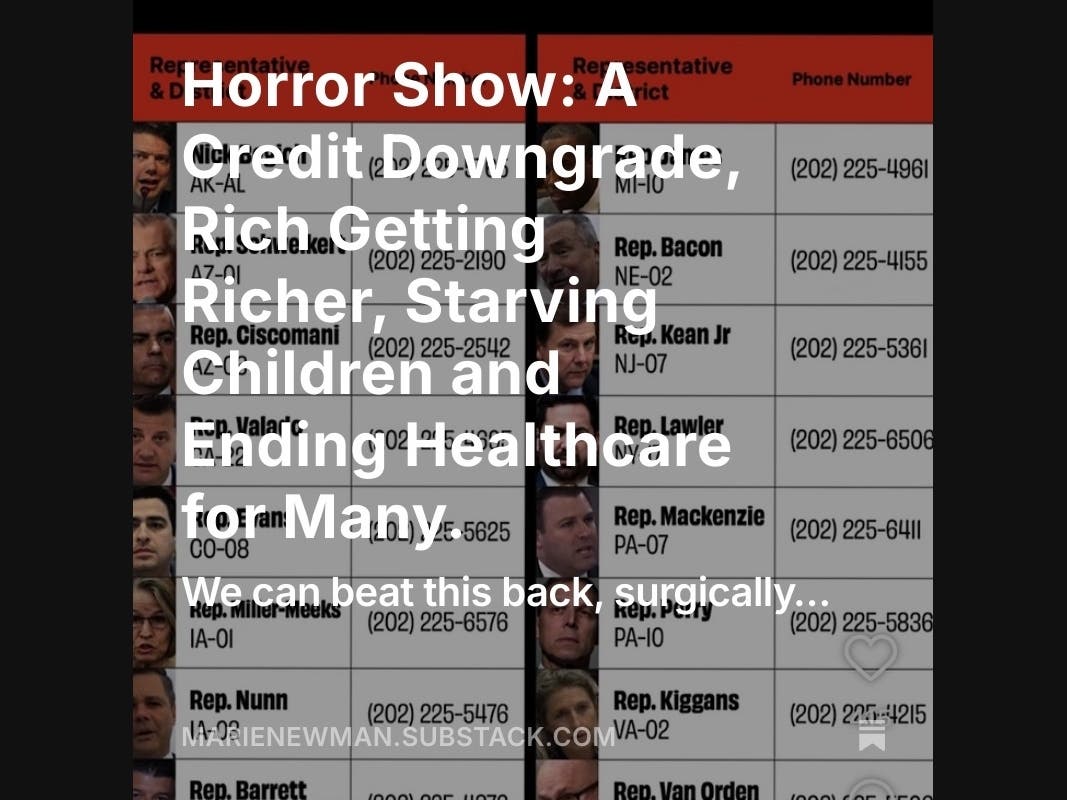
This Republican budget bill. Yikes! I hardly know where to start. The list of egregious aspects is lengthy. Whether it is the sheer cruelty to lower income folks, the bragging about making billionaires richer, leaving working families without healthcare, taking food away from kids, the downgrading of our economy, or the interminable debt it will create.
It’s a lot.
Before we get started, these are the Republicans in purple districts you need to call today to tell them to vote “no” on this debt-ridden and cruel bill (they will be vulnerable in the 2026 midterms and will likely listen):
Find out what's happening in La Grangefor free with the latest updates from Patch.
Diving into the darkness…
Where does the budget bill stand as of 5/20?
Find out what's happening in La Grangefor free with the latest updates from Patch.
To date, the House Budget Committee had just held a second markup of the reconciliation package. The bill advanced by a vote of 17 to 16. Up next: The House Rules Committee is expected to consider the bill at a markup on May 21, according to Thomson Reuters tax and accounting. The Committee for a Responsible Federal Budget estimates that the reconciliation package could add $3.3 trillion to the debt over a decade, or $5.2 trillion if temporary provisions are made permanent. Once it passes the Rules Committee, it goes to the House floor for a full vote.
What is in this version of the bill that just passed committee?
Overall, this reconciliation package favors tax cuts for the wealthy at the expense of middle-class families and working people. Concerns also include potential cuts to essential services like Social Security, the FAA, healthcare and nutritional assistance. There is also a focus on awarding contracts to favored individuals and companies, potentially undermining transparency and fair competition.
What is in this package?
Increased Debt:
The budget bill includes provisions that could lead to a substantial increase in the national debt, surpassing previous borrowing levels.
Cuts to Social Safety Net:
Concerns exist about potential cuts to essential programs like Medicaid, food assistance, and housing subsidies, which could negatively impact low-income individuals and families.
Tax Cuts for the Wealthy and Tax Increases for Working Families and The Middle Class:
Critics argue that the bill prioritizes tax cuts for the wealthy, potentially widening the income gap and further burdening middle-class and working-class taxpayers.
Impact on Essential Services:
The budget could result in cuts or delays for essential services like Social Security, FAA, and Army Corps of Engineers projects, potentially disrupting services and harming public infrastructure.
Lack of Transparency and Fair Competition:
Some argue that the bill enables favored individuals and companies to receive contracts without transparency or competition, potentially leading to corruption and unfair business practices.
How Does This Impact Everyday Americans?
· Medicaid Cuts: The budget bill would likely lead to millions of Americans losing access to Medicaid healthcare – nearly 14 million. · Rent Subsidies: The budget bill could cut rent subsidies for low-income and working Americans, potentially displacing veterans, survivors of domestic violence, seniors, and families with disabilities. · Social Security: The budget could allow for the firing of thousands of Social Security employees, potentially leading to closures of offices and increased backlogs. · FAA: The budget could allow for the redirection of funding to favored companies, while also cutting funding for crucial FAA projects.
What does this all mean specifically for everyday Americans?
Taxes: Will go up for lower income folks and be cut for millionaires and billionaires (per New York Times, 5/19)
--For folks making $17k-$51K: decreases income by $700/year
--For folks making $4.3 million or more: increases income by nearly $400,000/year
Healthcare: Medicaid cuts will result in the loss of healthcare for nearly 14 million Americans. Further, anticipated cuts have already provoked hospital layoffs and will likely include closure of hospitals in rural areas. To provide greater context, about 42% of children in the US rely on Medicaid.
Food Assistance: Huge reductions in SNAP (Supplemental Nutritional Assistance Program) will result in 11 million kids/families not receiving desperately needed food. Right now, 38% of children rely on SNAP.
Social Security: By firing thousands of Social Security employees and closing offices, up to half of seniors and folks with disabilities could see loss of benefits, huge wait times or missed benefits
What do we do to stop this Un-American, debt-ridden bill?
First, call your friends in these districts and tell them to call these congresspeopole in vulnerable purple districts and tell them to vote “no” on this bill:
Next, call your senator and tell them to reject this bill once it gets to the senate.
Lastly, call your friends in red states and tell them to call their senators to demand they vote no.
Yes, this is tedious and annoying - all the calling – ugh! However, when done surgically and strategically, very successful results will be forthcoming. It has worked many times before.
Keep doing, keep going!
Have a great week.