Schools
LTHS May Have Violated Open Meetings Law
The board did not alert the public that it was talking about the sale of real estate behind closed doors.


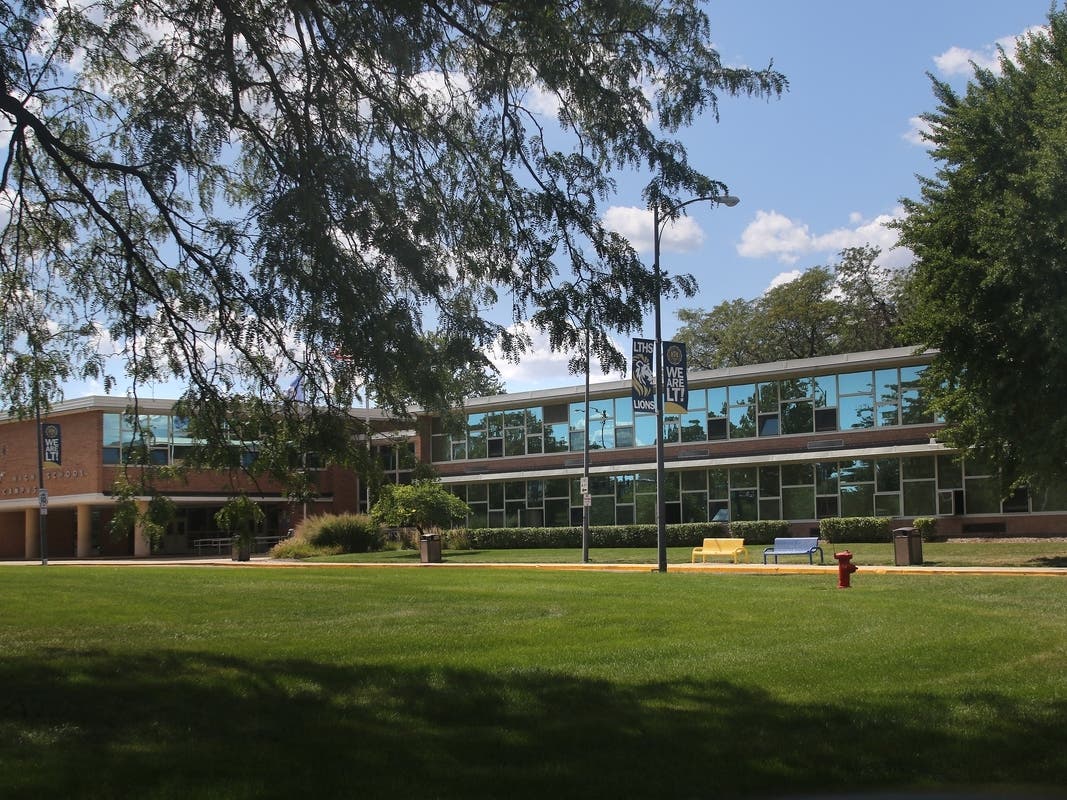
LA GRANGE, IL – The Lyons Township High School board contends it discussed selling the school's Willow Springs land before revealing its plan to the public.
It said it did so in both open and closed sessions. Yet Patch has found no evidence that is the case.
In one way, the board apparently violated the state's open meetings law.
Find out what's happening in La Grangefor free with the latest updates from Patch.
The board's agendas from March to November 2022 include no agenda items listing the property as an item of discussion, although it could have been mentioned in passing.
The eight-month period is what the school is referring to as the "due diligence" phase. This was before the Nov. 30 announcement that the school was interested in selling the land, sparking controversy in Willow Springs, Burr Ridge and elsewhere.
Find out what's happening in La Grangefor free with the latest updates from Patch.
In the eight months, the school board did not indicate it was discussing the lease or sale of real estate as among the reasons for its closed sessions.
In Illinois, public bodies assert specific exceptions under the state's open meetings law as reasons for going into closed sessions.
The board did not list real estate as among the exceptions until its meeting in early December, after the announcement was made.
Asked about this, the school's spokeswoman, Mary Lin Muscolino, said the 71-acre property has been a periodic topic of conversation for decades and had become a more frequent one in the last year.
Historically, she said, the school board used the same general template to outline potential reasons for closed-session discussions.
"Beginning in December 2022, based on current best practices as recommended by our legal counsel, we modified our process to include more specificity, and we now list each specific exemption for the closed session discussion," Muscolino said in an email.
Under the Open Meetings Act, a public body must cite specific exemptions and publicly disclose them before closing its doors. If it is true that the board discussed selling the land in closed sessions before Nov. 30, it apparently violated the open meetings law.
Under the same law, every member of a government board must undergo training in open meetings law.
In December, the school board set a minimum bid price for its land with industrial developers in mind, even though Willow Springs has barred such uses for the area in question.
The board's effort has prompted a wave of opposition. Last week, it rejected the two bids, which were from industrial developers. But the board promised to continue to negotiate.
Here's the section of the state's Open Meetings Act that the Lyons Township High School board apparently violated:
Sec. 2a. A public body may hold a meeting closed to the public, or close a portion of a meeting to the public, upon a majority vote of a quorum present, taken at a meeting open to the public for which notice has been given as required by this Act. A single vote may be taken with respect to a series of meetings, a portion or portions of which are proposed to be closed to the public, provided each meeting in such series involves the same particular matters and is scheduled to be held within no more than 3 months of the vote. The vote of each member on the question of holding a meeting closed to the public and a citation to the specific exception contained in Section 2 of this Act which authorizes the closing of the meeting to the public shall be publicly disclosed at the time of the vote and shall be recorded and entered into the minutes of the meeting. Nothing in this Section or this Act shall be construed to require that any meeting be closed to the public. At any open meeting of a public body for which proper notice under this Act has been given, the body may, without additional notice under Section 2.02, hold a closed meeting in accordance with this Act. Only topics specified in the vote to close under this Section may be considered during the closed meeting.(Source: P.A. 88-621, eff. 1-1-95; 89-86, eff. 6-30-95.)
Get more local news delivered straight to your inbox. Sign up for free Patch newsletters and alerts.