Neighbor News
Are your tires worn out? What is the standard for our streets?
Are your tires worn out? What is the standard for our IL streets? How can you tell on your car,truck or SUV?

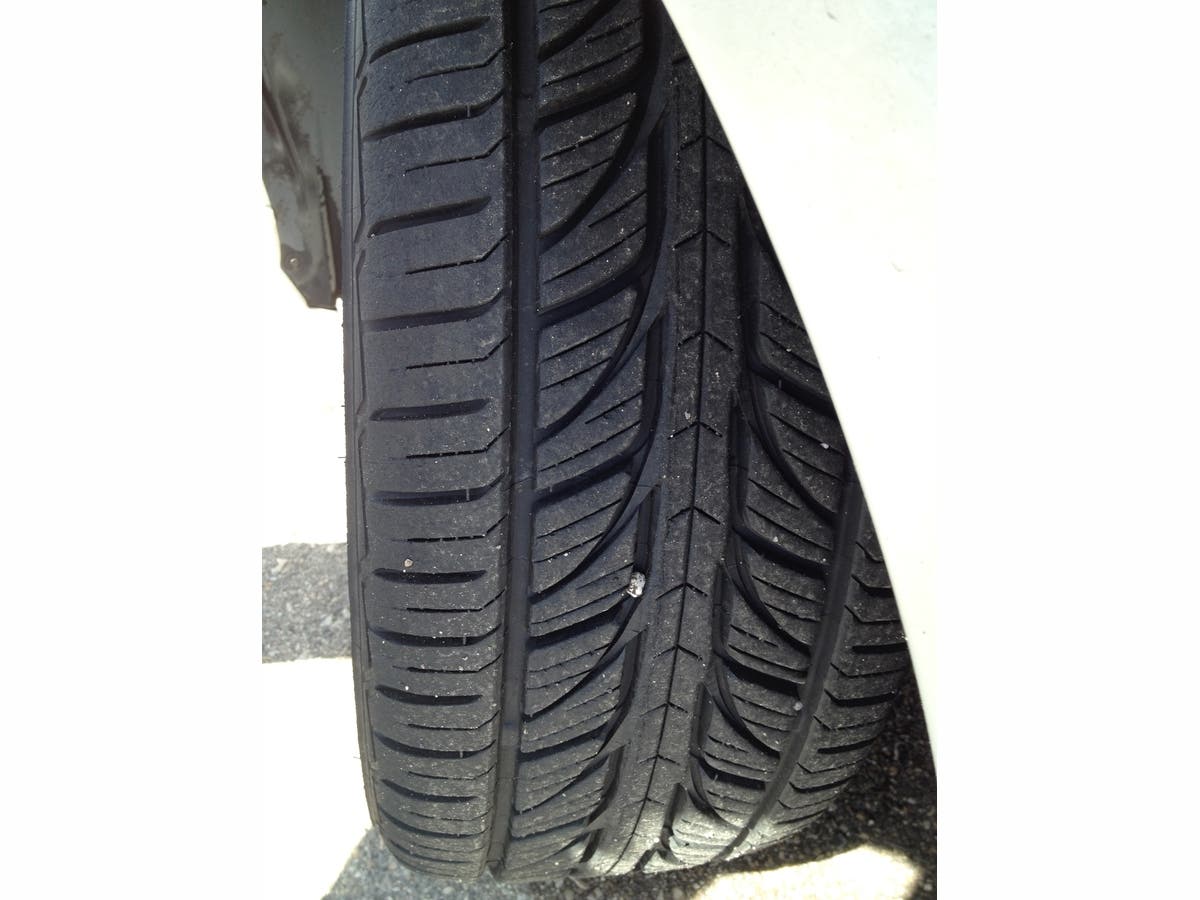
Are your tires worn out? What is the standard for our IL
streets? How can you tell on your SUV, Truck & Van?
While there may be legal
Find out what's happening in Lake Zurichfor free with the latest updates from Patch.
requirements for our area, there are safety concerns that go beyond meeting
minimum replacement mandates.
Find out what's happening in Lake Zurichfor free with the latest updates from Patch.
2/32 is the depth of the tire tread wear indicator bars that US law
has required to be molded across all tires since August 1, 1968. When tires are
worn so that this bar is visible, there’s just 2/32 of an inch – 1.6
millimeters – of tread left. It’s that level of wear that’s been called into
question recently.
We’re referring to the Consumer Reports call to consider
replacing tires when tread reaches 4/32 of an inch, or 3.2 millimeters. And the
recommendation is backed by some very compelling studies.
The issue is braking on wet surfaces
in and around town. Most of us think of our brakes doing most of the work, but
if you don’t have enough tread on your tires, the brakes can’t do their job.
When it’s wet or snowy, the tread of the tire is even more critical to stopping
power.
Picture this: you’re driving over a water covered stretch of road in town. Your tires must be in contact with the road in order to stop. That means that the tire has to move the water away from the tire so that the tire is actually contacting the road and not floating on a thin film of water.
Floating on the surface of water is
called hydroplaning. So if there’s not enough tread depth on a tire, it can’t move the water out of the way and you start to hydroplane.
In the study a section of a test track was flooded with a thin layer of water. If you laid a dime on the track, the water would be deep enough to surround the coin, but not enough to cover it.
A car and a full-sized pick-up were
brought up to 70 miles per hour, or 112 kilometers an hour and then made a hard
stop in the wet test area. Stopping distance and time were measured for three
different tire depths:
New tire tread depth
4/32 of an inch
2/32 of an inch
So what happened with the 2/32 tires
on the car? Get this – when the car had traveled the distance required to stop
with new tires, it was still going 55 miles an hour. Stopping distance was
nearly doubled to 379 feet and it took 5.9 seconds.
Wow! That means if you barely have
room to stop with new tires, you would hit the car in front of you at 55 miles
an hour with the worn tires.
Now, with the partially worn tires –
at 4/32 of an inch – the car was still going at 45 miles an hour at the point
where new tires brought the car to a halt. It took nearly 100 feet more room to
stop and 1.2 seconds longer. That’s a big improvement. We can see why Consumer Reports and others are calling for a new standard.
Of course, stopping distances were
greater for the heavier pick-up truck.
How do you know when your tires are
at 4/32 of an inch? Easy; just insert a quarter into the tread. Put it in
upside down. If the tread doesn’t cover George Washington’s hairline, it’s time
to replace your tires. With a Canadian quarter, the tread should cover the
numbers in the year stamp.
You may remember doing that with
pennies. A penny gives you 2/32 to Abraham Lincoln’s head. The quarter is
the new recommendation – 4/32.
How do people feel about replacing
their tires earlier? Well, tires are a big ticket item and most people want to
get the most wear out of them that they can. But do you want that much more
risk just running your tires until they are legally worn out?
For us, and we would guess for many,
the answer is “no”.