Politics & Government
Board Hears Integrated Water Resources Report
Advisory project aims to guide village leaders on decisions regarding the water supply, stormwater and waste management, and infrastructure.


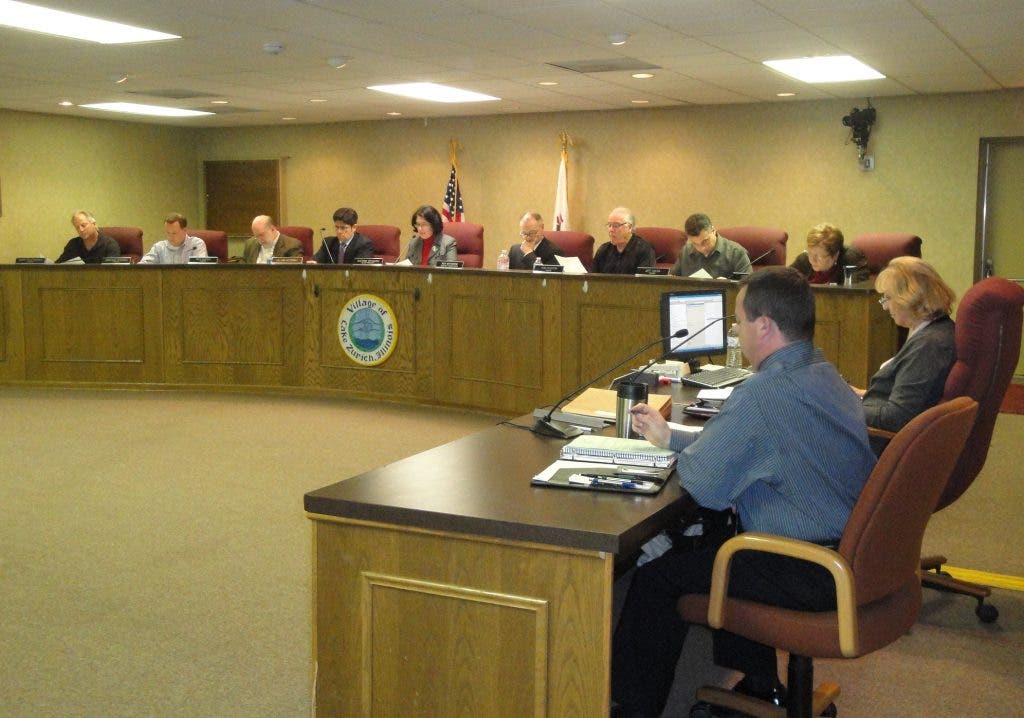
On Monday, the heard from water planning experts about their proposed guidelines for a long-term plan that could govern all future decisions about water in Lake Zurich.
Those decisions would relate not only to the water supply itself, but also in regard to how storm water and wastewater are managed — in addition to how all three are interconnected.
The recommendations are the result of a 10-month cooperative project team led by the Metropolitan Planning Council, the Center for Neighborhood Technology, the Chicago Metropolitan Agency for Planning and the Illinois-Indiana Sea Grant.
Find out what's happening in Lake Zurichfor free with the latest updates from Patch.
The team analyzed data relating to water, provided community surveys assessing concerns and willingness to participate in conservation efforts, and interviewed residents, business owners, village leaders and other stakeholders.
From that data, the group analyzed the strengths and weaknesses of the village’s water resource management goals and examined how its recommendations could fit into the long-term strategic plan.
Find out what's happening in Lake Zurichfor free with the latest updates from Patch.
“Based on the report, we need the infrastructure to make the water move; but before we do that, there are things we all can do as residents to conserve water and improve the current situation,” said Trustee Rich Sustich, who initiated the effort to bring the group in to conduct the study.
What Can Residents Do?
A step residents can take right away is to use rain barrels, which is a recent effort that grew out of the .
“To change our footprint on our own property, using rain barrels is one way to avoid using drinking water and capture storm water. It can then be used to water lawns and for other landscape purposes,” Sustich said.
In addition, when residents decide to replace their driveways, they could reduce the volume of storm water runoff by installing a "greener," more permeable alternative.
Residents also can use native grass species for their lawns, Sustich said.
“If residents change their vegetative environment by moving to the use of more native species of grass on their lawns, there will be lower maintenance and less fertilizer runoff,” Sustich said.
An idea the village could take advantage of is to use captured rainwater — like that held in industrial or commercial detention ponds — to fight fires, instead of using drinking water.
“All of these initiatives are low-cost and would reduce the water cost for residents based on water use levels. This would also lessen the demand on the infrastructure system,” Sustich said.
Highlighting how drinking water, wastewater and storm water begin to relate to one other also was a goal of the study. A domino effect can be seen.
When storm water is captured and reused, less drinking water is needed, which in turn lowers the water bills for residents. Subsequently, less stress is put on the water infrastructure, which then increases the length of time before it needs updating or replacement.
Water and Sewer Rates
The additional water volume without conservation efforts not only requires expanding infrastructure, but also would in turn increase rates charged by Lake County to handle the wastewater collection and treatment.
The group also looked at the water and sewer rates residents have been charged dating back to 2007. Prior to January, there hadn’t been an increase in water and sewer rates for the last four years. Residents saw a , which resulted in a roughly 10 percent jump in out-of-pocket costs.
The village plans to increase rates an additional 10 percent in August, which will show up as a 5 percent hike on the bill because the increase doesn’t apply to debt service or the charges from Lake County for wastewater collection and treatment.
Another suggestion that came from the study is that the village consider doing a yearly water and sewer rate analysis to avoid having to implement larger increases every few years.
A number of the suggested initiatives are costly, and the village does not have the resources to expend, Trustee Dana Rzeznik pointed out at the meeting.
Larger-cost items included in the recommendations are addressing the interceptor sewer that collects wastewater and transports it to Lake County, and dealing with areas in the village that are prone to severe flooding.
Public Works Director David Heyden said his department already is working to determine what funding is available through grants. The department is implementing lower- to no-cost recommendations.
Another suggestion from the team was to continue a dialogue and provide more education for the public about moving to as a new water source while moving away from the village’s deep aquifer.
“The recommendations as a whole represent a healthier way of approaching an integrated water system instead of looking at water, sewer and storm water as separate systems,” Sustich said. “These steps will improve our water footprint at every level by having a long-range vision for the village.”
As part of the overall review of village operations, the board will use the recommendations to help to guide future activities relating to water management.
Get more local news delivered straight to your inbox. Sign up for free Patch newsletters and alerts.