Arts & Entertainment
Two-Time Heart Transplant Patient Writes to Inspire Others
Local man's memoirs inspire hope for others in similar situations.
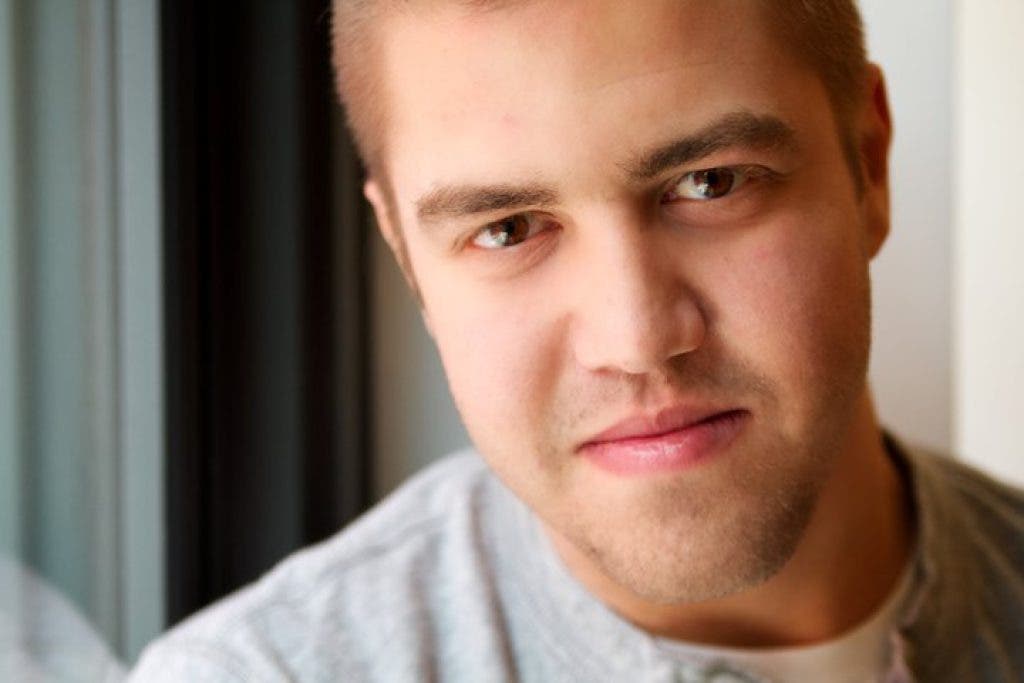


For Bill Coon, the reality of being an infant heart transplant patient didn’t fully register until after his 20th birthday, two decades after the surgery saved his young life.
That’s when Coon, by then a college student on summer break, began having excruciating stomach pains. Soon after, the problem was traced to his heart. He would have to face a second heart transplant, as well as a kidney transplant.
To get through it, Coon began putting pen to paper.
Find out what's happening in Lake Zurichfor free with the latest updates from Patch.
“I began journaling,” said Coon, who grew up in Barrington and attended Lake Zurich schools. Each day, he said, he chronicled his thoughts, feelings and insights as his medical situation unfolded.
The story of how he found the strength to cope eventually evolved into his book, “SWIM: A Memoir of Survival,” a self-published volume available on www.amazon.com. The title is a reference to a song titled “Swim,” by Jack’s Mannequin, a song that carries lyrics especially meaningful to Coon.
Find out what's happening in Lake Zurichfor free with the latest updates from Patch.
An advertising and communications major at Columbia College, Coon uses his facility with words to convey the enormity of the challenges he faced and explore how he found the fortitude to stare them down.
He said he hopes his story will offer help to those in similar situations.
“I‘m really trying to reach out to cancer patients and organ donor patients,” he said.
Already, he said, he’s received messages and letters from scores of transplant patients, as well as from cancer survivors.
“I’ve been hearing from people from all over the country,” he said. “It’s unbelievable, the way it’s affecting different people.”
Coon’s story begins when he was just 21-days-old. He was born with a heart condition known as hypoplastic left ventricular syndrome.
“Within 24 hours, I was airlifted to Children’s Memorial Hospital,” he said. Three weeks later, with hopes for his survival fading, a donor heart became available, just in time.
Coon said his surgery was the eighth infant heart transplant ever done in the United States up to that point, the fourth such surgery performed in the Midwest.
As Coon grew older and stronger, he continued taking anti-rejection medicine, a fact of his life that he incorrectly assumed applied to other children his age.
“My mom told me that not everyone has a scar on their chest. I just assumed everyone did,” he said. “If my mom never told me, I would never have known.”
Otherwise, he said, he led a normal, active life and his health was good.
“I literally had no problems. I had zero complications my entire life,” said Coon.
But in June 2009, something went wrong. Coon was 20.
“It’s like the heart, out of nowhere, just aged,” he said, explaining that he was diagnosed with transplant vasculopathy.
After several rounds of tests and exams, Coon entered the hospital in August 2009. He wasn’t released for 70 days.
He said he underwent a second heart transplant on Oct. 21. The next day, he had a kidney transplant made necessary by a lifetime of taking anti-rejection medicine.
“The kidney and the heart came from the same donor who passed away,” Coon said.
Coon said his book takes readers with him on the journey, through the uncertainty, to finding the will to set goals and keep up the struggle. It includes journal entries made as early as July 5, 2009.
“It was the first day I felt like hell,” he said, adding that he finished the book Feb. 22, 2010.
Coon said his book takes a look the serious medical and personal issues transplant patients must grapple with.
“It’s just about what you have to do to survive. You have to set goals, what you want to fight for,” he said.
His book deals with the psychological and spiritual issues that confront transplant patients, including the complicated feelings that can arise from being a transplant recipient.
“You’re mourning the death of someone who has to die for you to live,” he said.
Coon said he continues to work toward increasing awareness of the vital role organ donation plays in saving lives. His book is helping him do that.
“My story has already earned me the prestigious honor of accepting an award on behalf of Columbia College Chicago in Washington, D.C. from the Public Relations Society of America,” Coon wrote in an e-mail message.
He’s also involved in a heart-health awareness project in conjunction with Northwestern Memorial Hospital’s Bluhm Cardiovascular Institute. In February, he said, a series of heart sculptures will adorn Michigan Avenue, including one designed by Coon.
For more information about Coon and his book, visit www.billcoonbooks.com.
.