Schools
D113A Referendum Q&A: Superintendent Talks Rate Increase, Plans For 40 New Classrooms
Voters will be asked to approve a limiting rate increase to fund expansions at all four schools. Here's how much it would cost taxpayers.


LEMONT, IL —Lemont-Bromberek CSD113A Superintendent Courtney Orzel recently took part in a Q&A with Patch as the district asks voters to approve a limiting rate increase this November.
The question on the Nov. 3 General Election ballot asks:
"Shall the limiting rate under the Property Tax Extension Limitation Law for Lemont-Bromberek Combined School District Number 113A, Cook and DuPage Counties, Illinois, be increased by an additional amount equal to 0.360000% above the limiting rate for levy year 2024 for the purpose of providing educational programming and instruction and operating, maintaining, improving and constructing school buildings and facilities and for other school purposes, and be equal to 2.320037% of the equalized assessed value of the taxable property therein for levy year 2026?"
Find out what's happening in Lemontfor free with the latest updates from Patch.
According to the District, the referendum is intended to address enrollment growth that has exceeded expectations.
"Actual growth last year was more than 500 students over what was projected in 2017 and exceeded what was anticipated from the 2024 study," the District website states.
Find out what's happening in Lemontfor free with the latest updates from Patch.
The District said that the student growth has been driven by "successful schools and community, turnover of existing homes to young families, migration from private and parochial schools, and new housing developments."
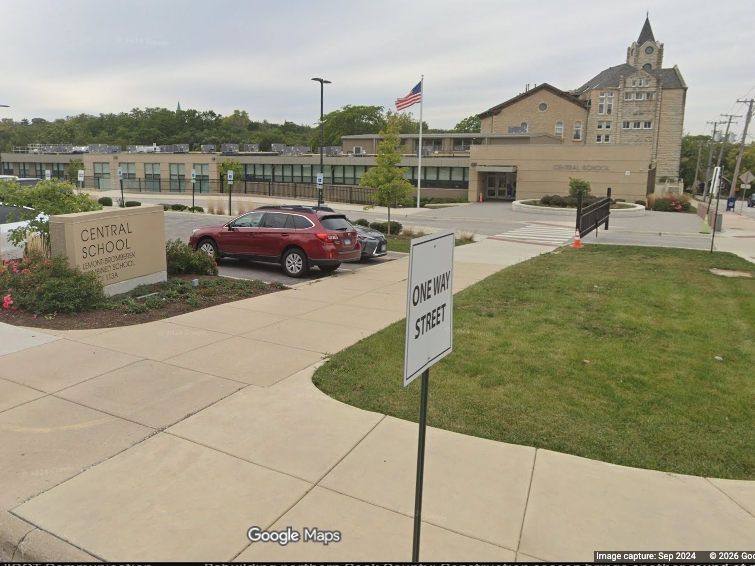
If approved, the rate increase would fund expansions at each of the District's four campuses, including seven new rooms at Oakwood, seven new rooms at River Valley, 14 new rooms at Central and 12 new rooms at Old Quarry.
The limited rate tax increase would provide $6 million annually in additional revenues, and the estimated impact to the average homeowner would be $480 to $550 per year, according to the District.
To address some common questions about the referendum and what it means for the community, Patch had a Q&A session with Superintendent Courtney Orzel:
1. How did the District decide on this amount for a limiting rate increase ($6 million annually in additional revenues)?
Orzel: The District arrived at the $6 million figure after reviewing enrollment projections, facility needs, long-term financial forecasts, and the ongoing operating costs associated with serving a growing student population. The proposal is not simply about constructing additions. If approved, the additional revenue would allow the District to create additional classroom space at all four schools and provide the ongoing funding necessary to staff, maintain and operate those spaces while keeping class sizes reasonable and preserving academic programs, transportation and student support services. The District also considered the impact on taxpayers when determining the amount of the request.
2. How were additions determined for each school? Why is Central School getting the biggest addition?
Orzel: The proposed additions were developed based on enrollment projections, current building capacity, grade-level needs and the physical configuration of each campus. Central has the greatest space pressure relative to its recommended capacity and serves all of the District’s fourth- and fifth-grade students. We have already converted spaces at Central that were not originally intended to be general education classrooms, including a multipurpose room on the lower level as well as the Library Resource Center, to accommodate enrollment. Also, Central’s classroom square footage is the smallest of all four of the current buildings. The proposed addition at Central reflects existing capacity constraints as well as projected enrollment needs. Across the District, the goal is to add the classroom capacity needed at each building based on its specific needs. The plans remain draft renderings and will continue to be refined.
3. Could the District utilize its own funds to do smaller-scale projects or additions at one school at a time?
Orzel: The District is planning to commit $5-10 million of fund balance reserves to share in the cost of the project. Additionally, the District does use existing resources for capital improvements and has already taken a number of steps to maximize existing space, including reopening Central School in 2022, repurposing internal spaces and acquiring property adjacent to Central for additional parking. However, using existing operating funds for major additions would require those dollars to be redirected from other District needs and would not address the ongoing cost of staffing and operating the additional classrooms. Addressing one building at a time would also not resolve the broader capacity issue because enrollment pressure exists across the District. The proposal was designed as a long-term District-wide solution rather than a series of short-term projects.
4. If the referendum fails, what options does the District have to address class sizes?
Orzel: If the referendum is not approved, the District will continue educating every student who comes through our doors, but the options become more limited. As enrollment continues to increase, class sizes would increase at most grade levels. The District would also have to continue repurposing spaces such as libraries, multipurpose areas and dedicated specials classrooms into general education classrooms. Some programs could become mobile or potentially be reduced or eliminated to create additional classroom space. Temporary modular classrooms have also been considered, but they are costly and pose safety and security concerns.
5. If the referendum is successful, what does the construction timeline look like? Will all schools be under construction at once?
Orzel: If the referendum is approved in November, the District would move quickly into final design, engineering, permitting and bidding. Construction of additions across four active school campuses is a significant undertaking, and the overall process could take up to approximately two years. The goal is to have the additional classroom spaces available for the 2028–29 school year. Work would be carefully phased and coordinated with the architects and contractors to minimize disruption to students and staff and to take advantage of summers and other periods when students are not in the buildings. During the year, construction would continue in the additions with the goal of all additions opening the fall of 2028 and the District would likely have to start school after Labor Day to accommodate construction.
For more information on the referendum, tax impact, enrollment studies, and draft building addition renderings, you can check out the District website.
Get more local news delivered straight to your inbox. Sign up for free Patch newsletters and alerts.