Community Corner
Perseid Meteor Shower: What Viewing Conditions Will Be Like
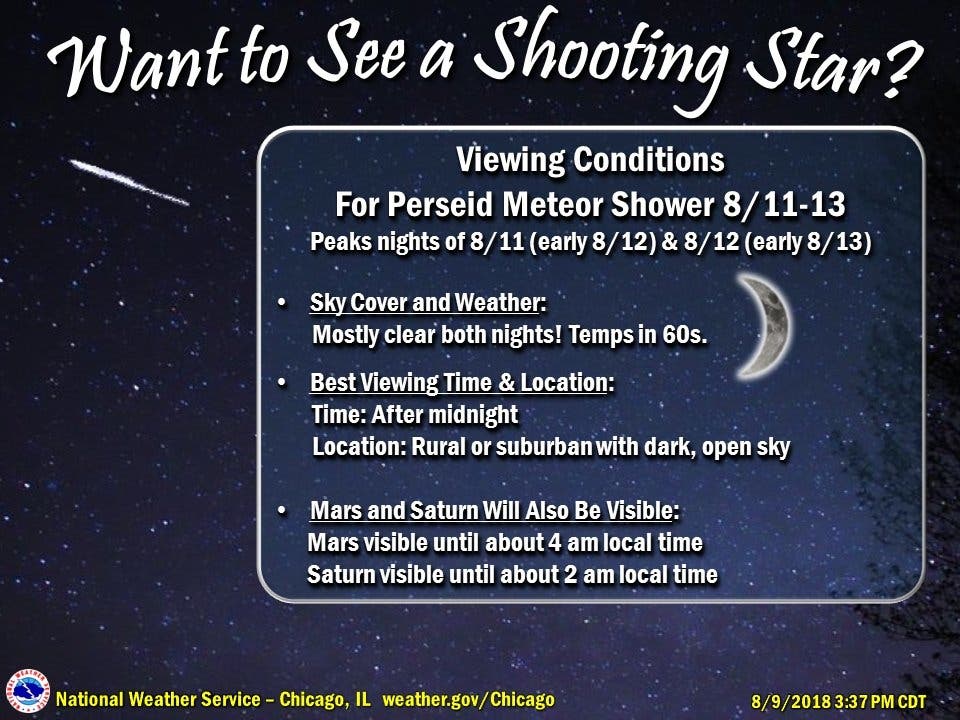
Temps will be in the 60s during the peak nights of the shower on Aug. 11 and Aug. 12.


If you were hoping to see the Perseid Meteor Shower this weekend, you're in luck. The National Weather Service said skies will be mostly clear on both Saturday and Sunday nights. Temps will be in the 60s during the peak nights of the shower on Aug. 11 and Aug. 12.
According to the NWS, the best time to see the meteor shower is after midnight in rural or suburban locations with a dark, open sky. Mars and Saturn will also be visible to stargazers, and Mars will be visible until 4 a.m. and Saturn until 2 a.m.
In most years, the Perseids produce about 60-70 meteors an hour, and they're typically rich in fireballs. In outburst years, such as 2016, the rate can more than double to around 150 to 200 meteors an hour.
Find out what's happening in Lemontfor free with the latest updates from Patch.
(Get Patched In: Subscribe to free daily email, news alerts, Facebook fun and more from Patch. Also, download the free Patch iPhone app or free Patch Android app.)
If you're in the Chicago area, head about an hour east to the Indiana Dunes State Park, a great spot to see the show. An hour west, and you'll also get a prime viewing spot in Silver Springs State Park. Both are great choices to escape the city's light pollution to get a full view of the meteor shower. Another good option: Cruising out on Lake Michigan past the city lights.
Find out what's happening in Lemontfor free with the latest updates from Patch.
The Perseids, which run annually from July 17-Aug. 24, are produced as the Earth passes through dust left behind by the comet Swift-Tuttle, discovered in 1862. The peak occurs when the Earth passes through the densest, dustiest area.
The pieces of debris heat up as they enter the Earth's atmosphere and burn in a bright burst of light as they travel across the sky at about 37 miles per second. Most of the meteors are about the size of a grain of sand, so there's little chance one will make it down to Earth as a meteorite.
The meteors fall between the constellations Perseus and Cassiopeia, but just look up and you should be able to see them from anywhere in the sky.
Patch Editor Shannon Antinori contributed to this report.
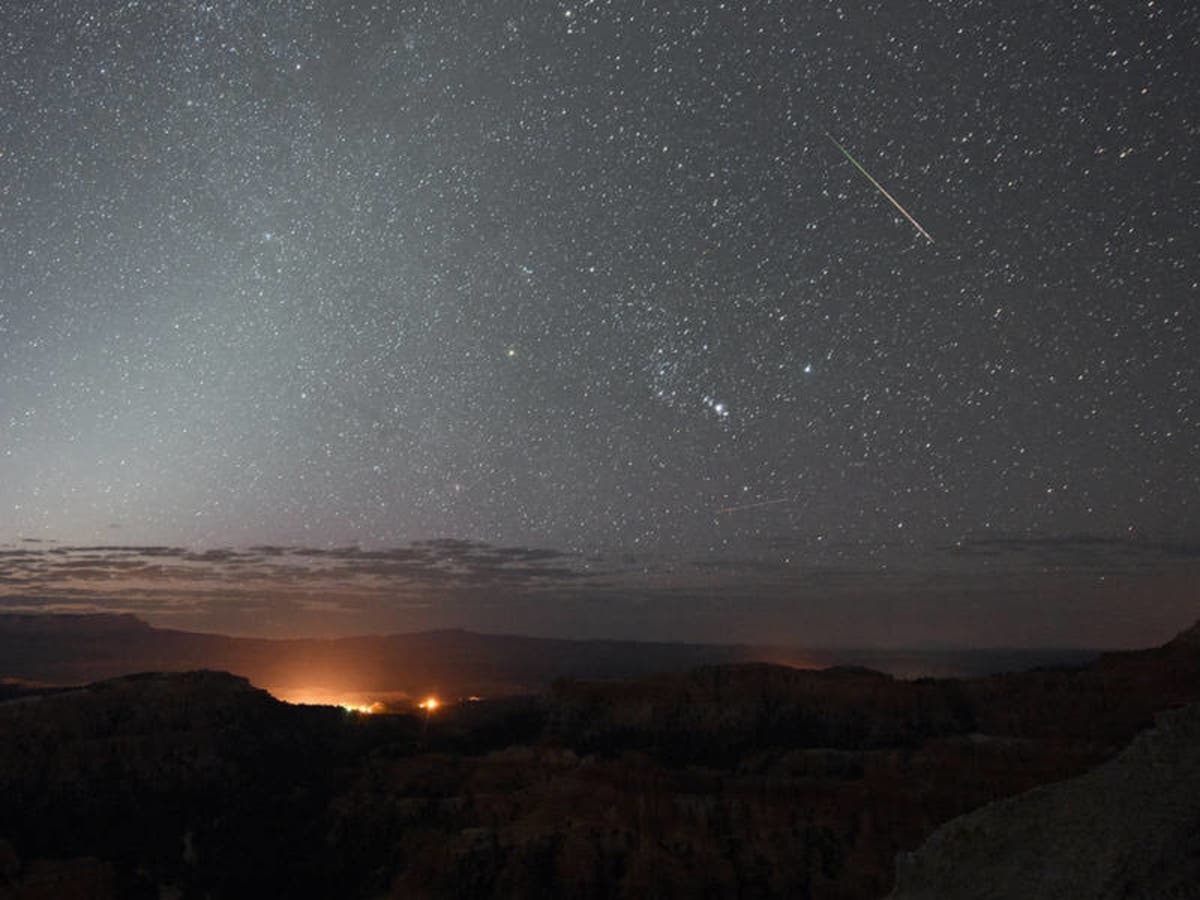
Image: A Perseid meteor streaks across the sky above Inspiration Point early on Aug. 12, 2016, in Bryce Canyon National Park, Utah. The annual display, known as the Perseid shower because the meteors appear to radiate from the constellation Perseus in the northeastern sky, is a result of Earth's orbit passing through debris from the comet Swift-Tuttle.
(Photo by Ethan Miller/Getty Images)
Get more local news delivered straight to your inbox. Sign up for free Patch newsletters and alerts.